
If you are looking for the most authentic things to do in Pantelleria, you have landed in the right place. This raw, wind-swept volcanic island between Sicily and Tunisia is one of Italy's best-kept secrets, and this guide covers everything from soaking in thermal pools and hiking ancient craters to sipping world-class wine at sunset. We have done the legwork so you can skip straight to the good part.
My partner is Sicilian, which means I have spent more time in Sicily than most, island-hopping through the Aeolian and Egadi archipelagos and slowly working my way through every corner of this extraordinary region. Pantelleria was the one that genuinely surprised us both, an island that feels nothing like the rest of Italy, closer in spirit to North Africa, shaped by lava, capers, and a wind that never quite lets up.
On this island, you can float in a volcanic crater lake, hike to a natural steam cave, swim through a lava arch, and end the day with a glass of Passito made from vines that are a UNESCO heritage site. It sounds like a lot, and it is, in the best possible way. This guide covers all the highlights of Pantelleria so you can make the most of every single day. Short on time? Skip straight to my Pantelleria itineraries, which include what to do, where to go for aperitivo, and my favorite restaurants.
Please note: This post contains affiliate links, meaning I may earn a commission if you purchase by clicking a link (at no extra cost to you). Learn more.
Quick Pantelleria Planning Guide
TOP PICKS FOR ACCOMMODATIONS
- Luxury Pick: Pantelleria Dream Resort
- Traditional Dammuso: Tenuta Bukkuram
- Locally Run: Agriturismo Le Lanterne
- More options: Explore Hotels in Pantelleria
BOOKING RESOURCES
- Top activity: Boat Tour around Pantelleria
- Best Wine Tasting: Wine Tasting in a Vulcano Crater
- Travel Insurance: SafetyWings
- Ferry Tickets: Check schedule and prices
H3: Where is Pantelleria?
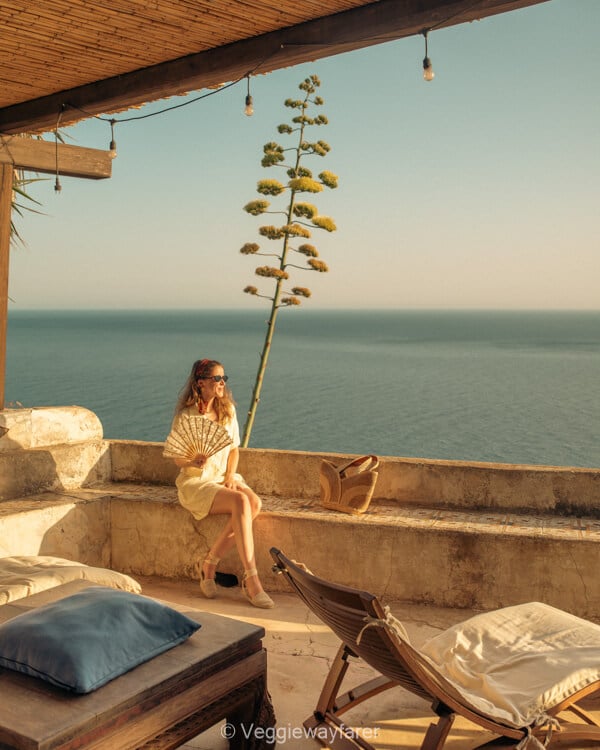
Pantelleria is a volcanic island in the Sicily region, sitting out in the Mediterranean between Sicily and Tunisia. It’s part of Italy, but it feels closer to North Africa in landscape, light, and architecture (hello, dammusi).
H3: How to get to Pantelleria
Most travelers arrive either by flight (seasonal frequency varies) or by ferry/hydrofoil from Trapani. The Trapani–Pantelleria connection has fast hydrofoils, with the quickest crossings around 2.5 hours (times vary by service/season).
H3: How to get around Pantelleria
Pantelleria is not a “walk everywhere” island. For first-timers, the easiest combination is: a rental scooter for land exploration + a boat day to reach swim coves you can’t easily access by road.
H3: Where to stay (quick guidance)
- Pantelleria town/port area: easiest base for logistics, pickups, and dinners.
- Scauri: a popular area for sunsets and swimming access.
- Tracino / northeast: great for iconic spots like Arco dell’Elefante.
12 Things to Do in Pantelleria, Sicily
1. Sweat it out at Grotta Benikulà
Pantelleria is often called the island of wind: a raw, volcanic outpost shaped by lava and centuries of Arab-Norman heritage. But beneath its dramatic ridges, the island holds another secret: it is still geothermally alive. Nowhere is that more tangible than at Grotta Benikulà, a cave on the flanks of Montagna Grande that locals have used as an open-air sauna since antiquity.
The cave is split into two chambers, a cooler outdoor space carved with ancient stone seats, where you sit and take in a sweeping view over the olive-dotted Monastero plain, and an inner chamber where steam seeps through a crack in the volcanic rock at around 40°C (104°F). Delivering a free wellness treatment handed to you by the earth itself. Bring a swimsuit, a towel, and plenty of water; you will need all three.
To get here, follow the road from the hamlet of Sibà toward Scauri and look for the turn-off to the left. There is a small parking area at the trailhead, perfectly manageable with a car, and from there it is just a 10-minute walk. The National Park also runs a small info point and restrooms at the parking lot, a welcome surprise given how wild and untouched the rest of the trail feels. That being said, it is one of the most popular activities in Pantelleria, so you will not be alone on the trail. No food or drinks are available, so stock up in Sibà or Scauri before heading up.
THERMAL BATHS TOUR | If you are a little hesitant about traipsing around Pantelleria, book yourself a thermal baths tour. This 5-hour tour (in English) takes you around various thermal baths on the island.
2. Soak in the hot water pools at Gadir Cove
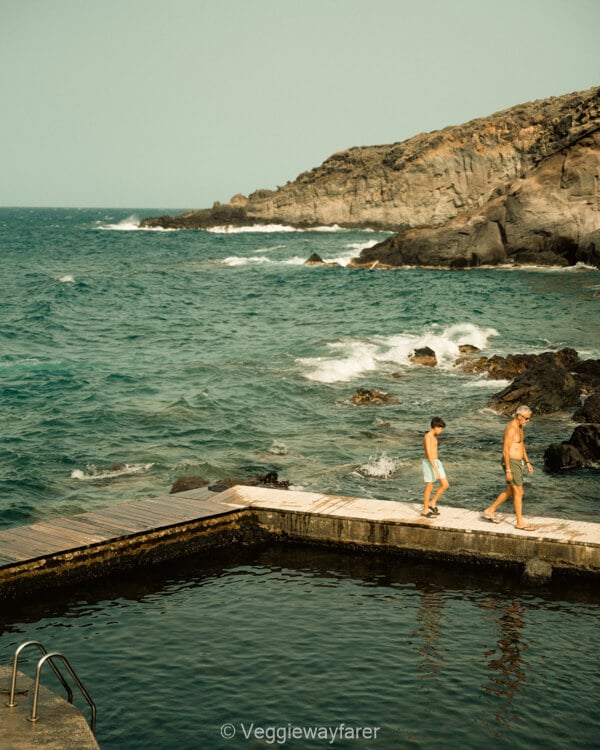
Pantelleria's Arabic past runs deep, even in the names. Gadír comes from the Arabic word for hidden place or pond of water. On this volcanic island where the earth is never truly at rest, hot mineral-rich water seeps up through the black lava rock right at the edge of the sea, filling a series of natural basins that locals have soaked in for millennia.
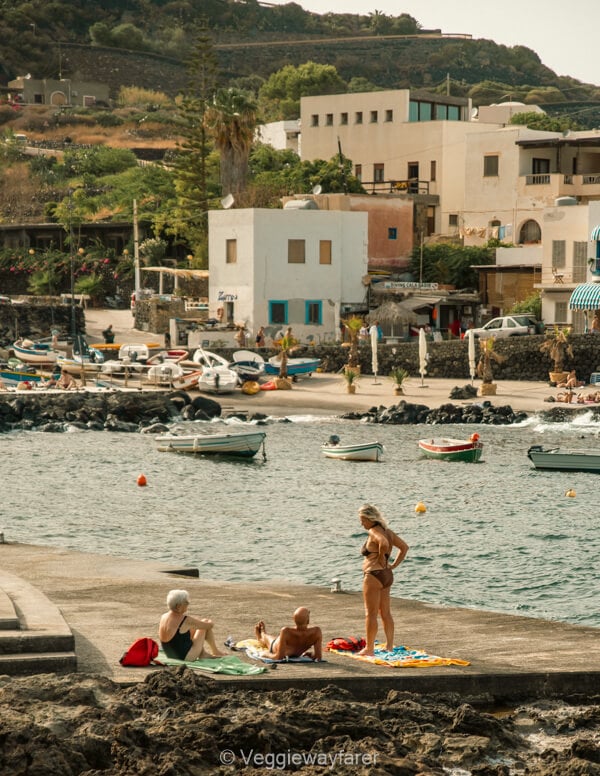
The setup of Gadir Cove is disarmingly simple: a handful of rock pools of different sizes, carved into the lava at the foot of a tiny whitewashed fishing hamlet. The water ranges from a balmy 39°C in the larger main pool to a scalding 55°C in the hottest pockets — so enter slowly and test before you commit. Floating in the warmth while cool waves lap just inches away is one of those only-on-Pantelleria moments that is genuinely hard to describe.
Exploring Gadir Cove was one of our favorite things to do in Pantelleria. We liked it so much, we went twice in a week, not least because of the lovely diving school whose base is a few steps away from the pool, where you can either learn to dive or have a nice drink. Admittedly, the other attraction for us was the road to get there: The inland road from Scauri cuts through the island, going up and down through small winding roads filled with vineyards, caper trees, and old dammusi - a taste of the real Pantelleria. One word of caution: Parking is very limited!
3. Go hiking on the inland trails
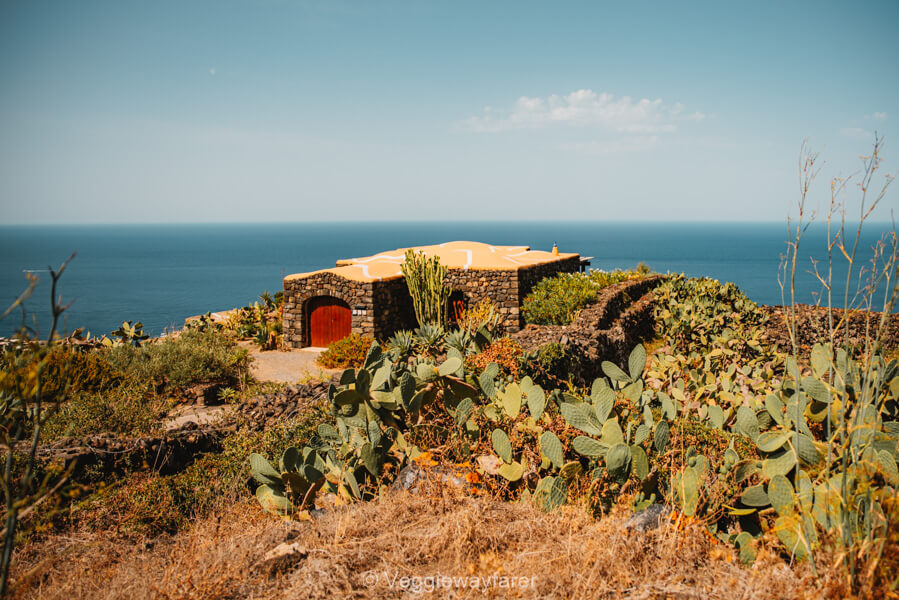
Most people come to Pantelleria for the sea — and honestly, fair enough. But if you only ever look outward from this island, you miss half the story. The interior of Pantelleria is a world of pine forests, ancient lava fields, terraced vineyards, and dormant craters that remind you, quietly but firmly, that you are standing on a volcano. And you have 23 routes covering over 130km of trails to explore this less-visited part of the Island of the Wind.
The crown jewel is the hike up Montagna Grande, the island's highest peak at 836 meters, which rewards the climb with a 360-degree panorama stretching all the way to the Tunisian coast on a clear day. For something wilder, the trail to Balata dei Turchi — once a pirate landing spot — cuts through jagged cliffs and untamed scrubland before arriving at one of the most dramatic coastlines on the island.
All trailheads are accessible by car, and the main parking area at Sibà Alta serves as the starting point for several routes. There are no cafés or water sources on the trails themselves, so stock up before you go and carry at least two liters per person — the summer sun is unforgiving inland. However, if you intend to make hiking a core part of your holidays, I'd recommend you choose May-June or September/October, when temperatures are more manageable.
GUIDED HIKES | There are a lot of options for guided hikes in Pantelleria on GetYourGuide. Prices range from €47 to €350 for a group hike. Depending on your fitness and what you are hoping to see (volcanic craters, lush forests, archaeological remains), you can book different types of guides. Check options on GetYourGuide

4. Take a boat day around Pantelleria (for coves you can’t reach by road)
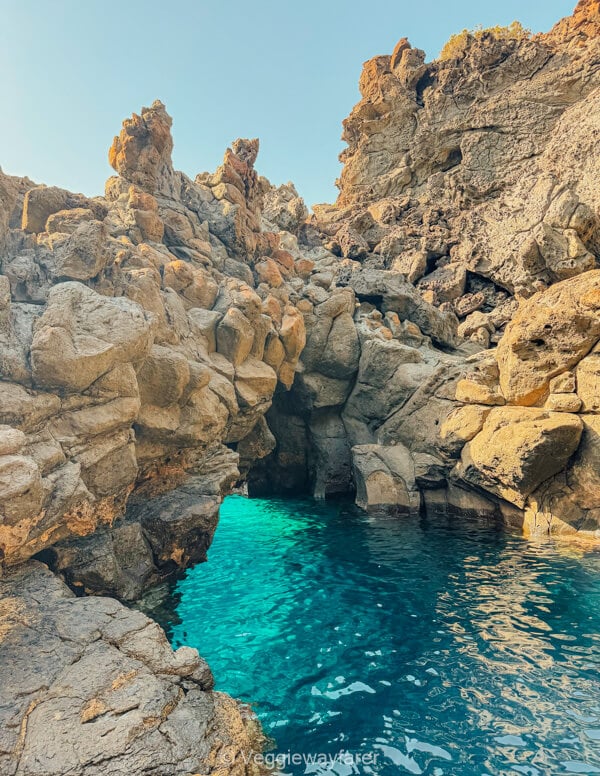
For all its volcanic drama on land, Pantelleria's real secret is what the road simply cannot reach. The coastline is a succession of jet-black lava cliffs, sea arches, and hidden coves with names that sound like poetry: Cala dei Cinque Denti, Nikà, Scarpetta di Cenerentola. The only way to access most of them is from the water, and a full-day boat excursion is, without question, the best thing we did on Pantelleria.
Most tours depart from the main harbor around 9:30 am and spend a full seven hours circling the island, with the route depending on the wind (because yes, the island of wind runs the show here too). Highlights typically include a stop at Nikà, where a semi-submerged volcanic cave pushes warm thermal water directly into the sea, and a drift past the Arco dell'Elefante, a natural rock arch shaped like an elephant's trunk that has become Pantelleria's most iconic image. Add in multiple swimming stops in clear turquoise water, and you have a day that is very hard to top.
Local Pick | We had our tour with the amazing couple who owns and manages the Barca Sant'Allegria, a beautiful boat that offers smaller, more private tours, with hand-made and vegetarian-friendly local food - and the absolutely required glass of white wine! We paid €100 a person for the tour. Worth every penny!
MORE BOAT TOURS | Tours start at c. 50 eur/person (book here) and up to 150 for the smaller, more private ones (book here). For the latter, we'd strongly recommend booking at least a few days ahead in July and August, as boats are small and fill up fast.
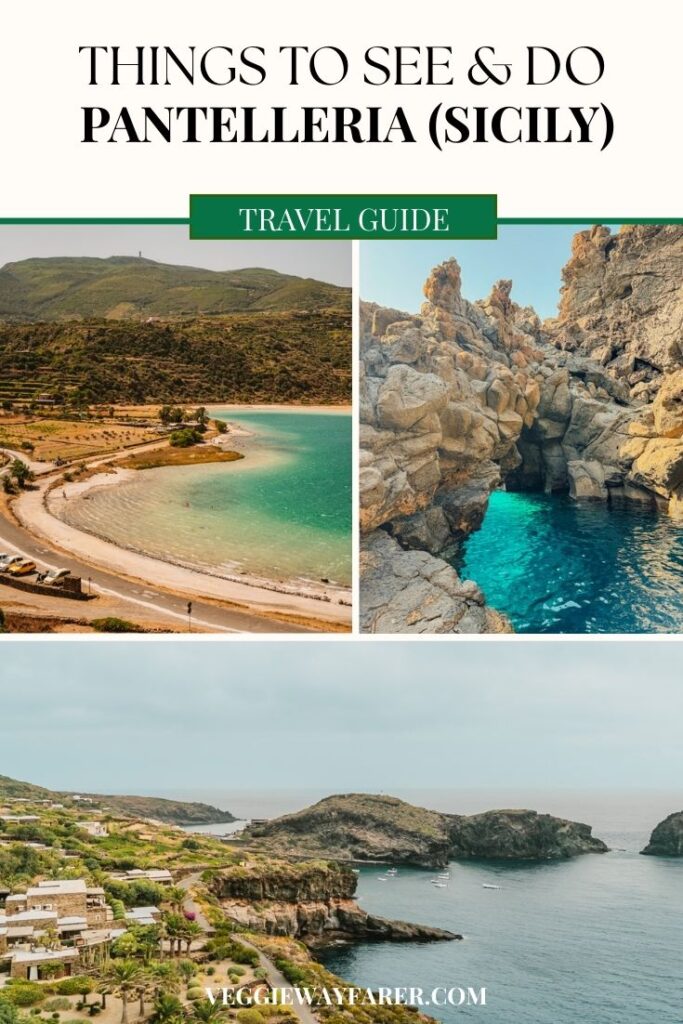
5. Float in Lago di Venere (Specchio di Venere) + try the volcanic mud
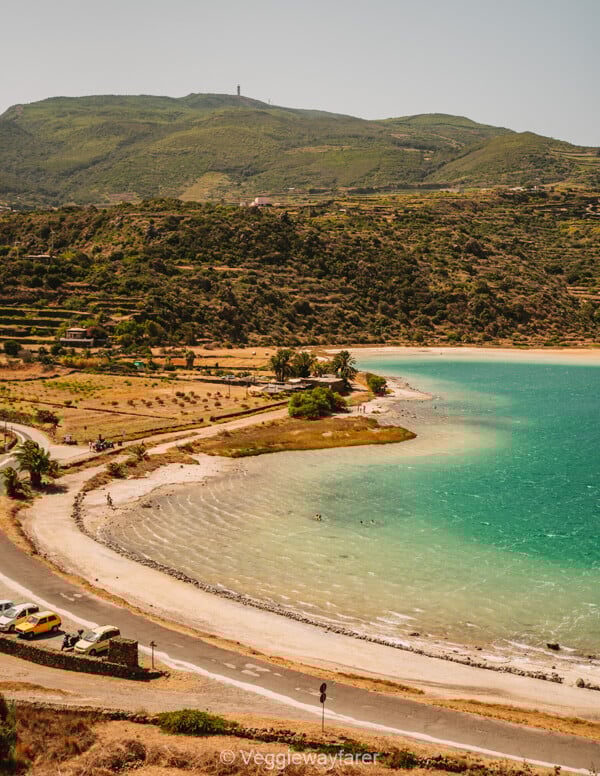
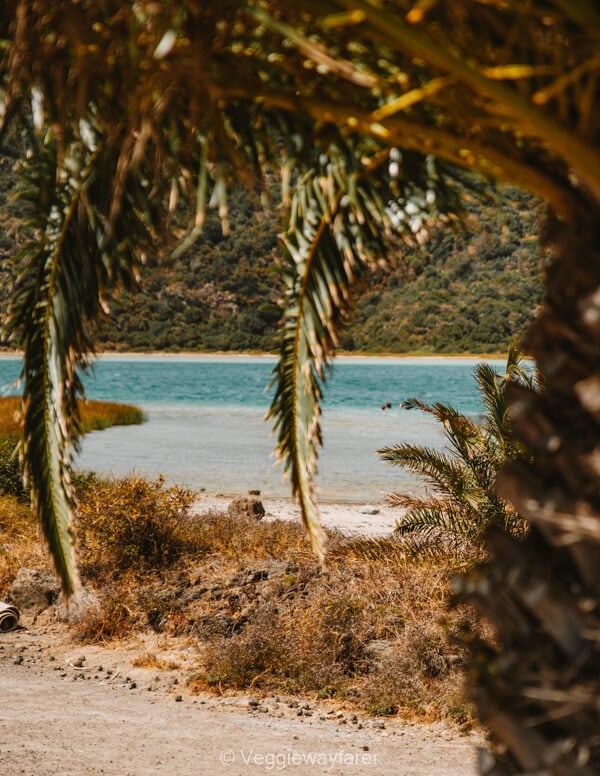
Pantelleria has no sandy beaches, but it does have something far more otherworldly: a volcanic crater lake with waters so mineral-rich they shimmer between milky blue and deep violet depending on where you stand. Locals call it Specchio di Venere, the Mirror of Venus, and the name makes complete sense the moment you see it. We rounded a bend in the road, and both fell silent, because nothing quite prepares you for the view.
The real ritual here is the mud. Along the southern shore, thermal silt bubbles up from the lake bed, and visitors scoop it up and coat themselves head to toe, waiting for it to dry before rinsing off in the warm water. It sounds absurd, and it feels incredible, and we both walked away with the softest skin of our lives. The Romans apparently had the same idea, as archaeologists found a shrine dedicated to Venus right here on the northern shore.
Parking is free at the lake entrance, though spaces fill quickly in high season. Be aware that it is probably the hottest place in the entire island, but thankfully, there are a few shaded cafés around the lake. My partner ended up feeling unwell because of the heat (we were there in July). The walk around the shore takes about 30 minutes and is well worth doing, especially if you want to find the best mud pockets on the southern side.
6. See Arco dell’Elefante (the island’s icon)
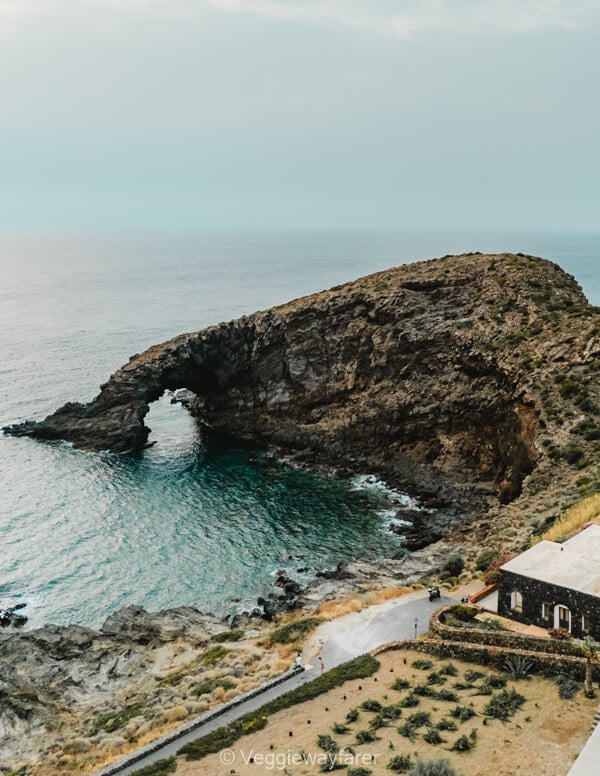
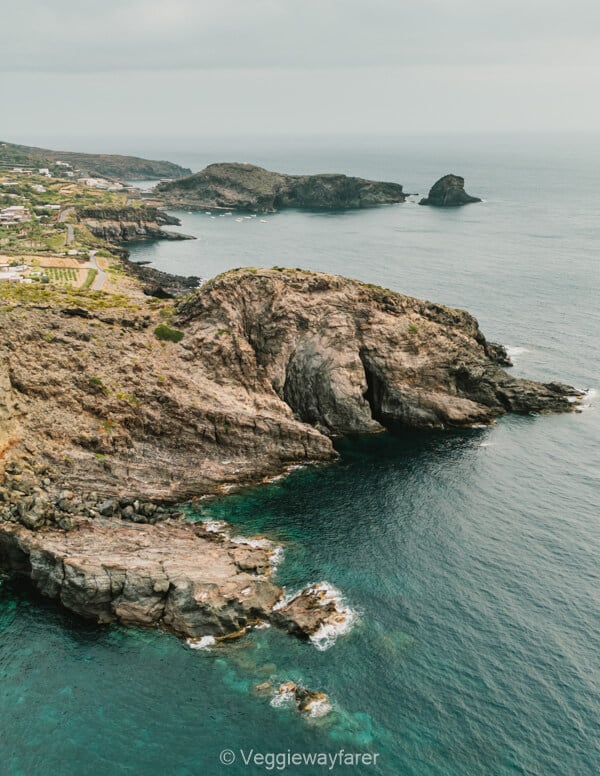
If Pantelleria has one image that ends up on every postcard, every Instagram grid, every "natural hidden gem of Italy" listicle, it is this one. The Arco dell'Elefante is a natural lava arch on the island's northeastern coast, shaped so uncannily like an elephant dipping its trunk into the sea that you almost expect it to move. We had seen the photos a hundred times, but being there and imagining how generations of locals have brought their significant other here to declare their love stopped us in our tracks.
This highlight of Pantellaria sits at the edge of Cala Levante, a rugged rocky cove with some of the clearest water we found on the whole island. You can swim right through the arch itself, and the snorkeling underneath is excellent, with seagrass beds and the odd grouper drifting past in no particular hurry. Reef shoes are strongly recommended as the lava rock is sharp and uneven at the water's edge.
Getting here is straightforward: follow the coastal road toward Cala Levante and continue south for about 700 meters to the parking area. The site is free to visit, and there are no facilities on site, but it is jus besides the little village of Tracino, where bars and restaurants abound. My recommendation: get a spritz at Le 2 Cale for the best views over sunset.
GOOD WEATHER TIP |
7. Swim Pantelleria’s best coves by road
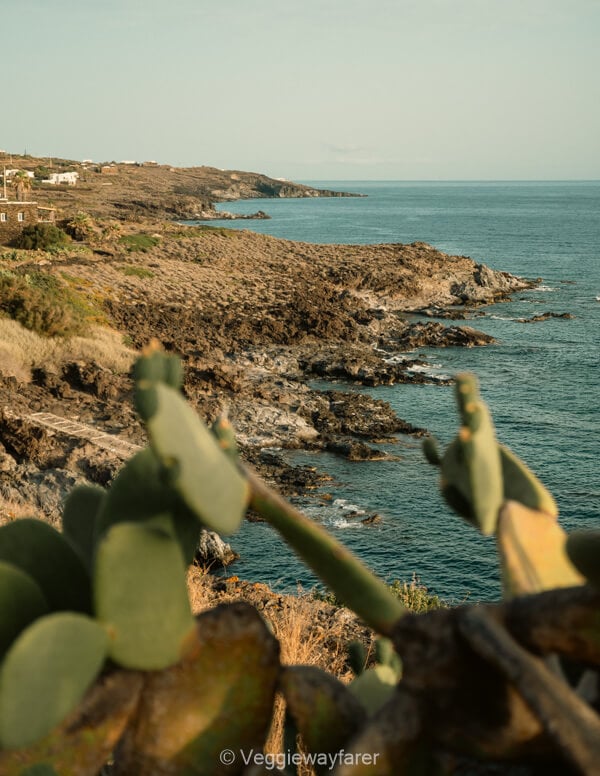
If you picture a Mediterranean island, you probably picture sandy beaches. Pantelleria will happily shatter that image. This volcanic island has no sandy shores to speak of, only dark lava platforms, jagged black rock, and coves where the water shifts from turquoise to deep cobalt depending on the depth. We found ourselves reaching for our reef shoes every single morning, because once you have swum here, regular beaches feel a little underwhelming.
Cala Bue Marino is the closest cove to Pantelleria Town and a great first swim. The lava rock slopes gently into shallow, clear water, making it one of the friendliest entries on the island, ideal if you are travelling with kids or just want a relaxed dip. A small snack bar nearby means you can grab a cold drink without any planning ahead.
Cala Tramontana, right next door, is slightly wilder and quieter, with a beautiful underwater landscape that rewards anyone with a mask and snorkel. The two coves actually shelter each other from different winds, so between the two, there is almost always a calm option. We ended up ping-ponging between them across two different days.
Laghetto delle Ondine, near Punta Spadillo on the northeastern tip, is a natural seawater pool carved into the lava rock by the sea itself. Even when the open water is rough, this sheltered basin stays calm, and it stays blissfully uncrowded even in peak season. Getting here requires a short walk along a rocky coastal path, but the effort is well worth it.
Reef shoes are non-negotiable across all of these spots; the lava is sharp and uneven underfoot. Most coves have free roadside parking, and with a scooter, you can reach all four in a single day without any stress. Pack a picnic and plenty of water, as facilities are limited outside of Cala Levante.
8. Visit the Caper's Museum
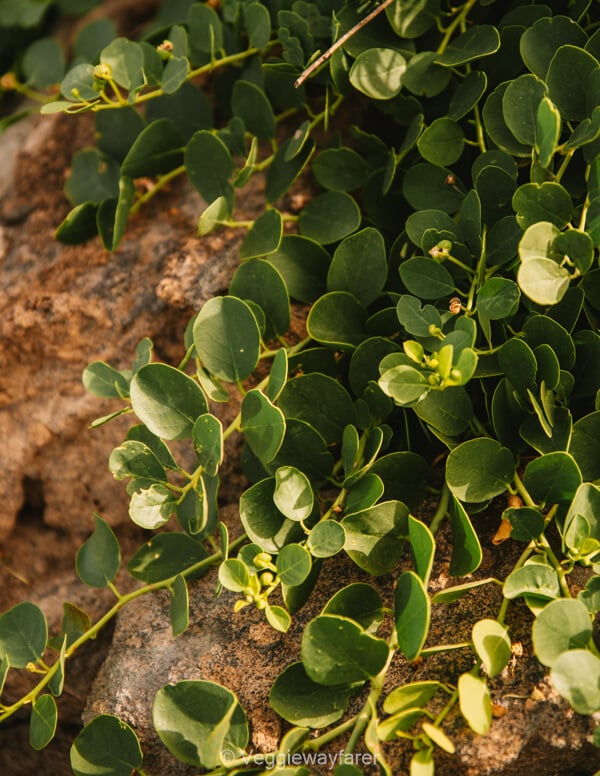
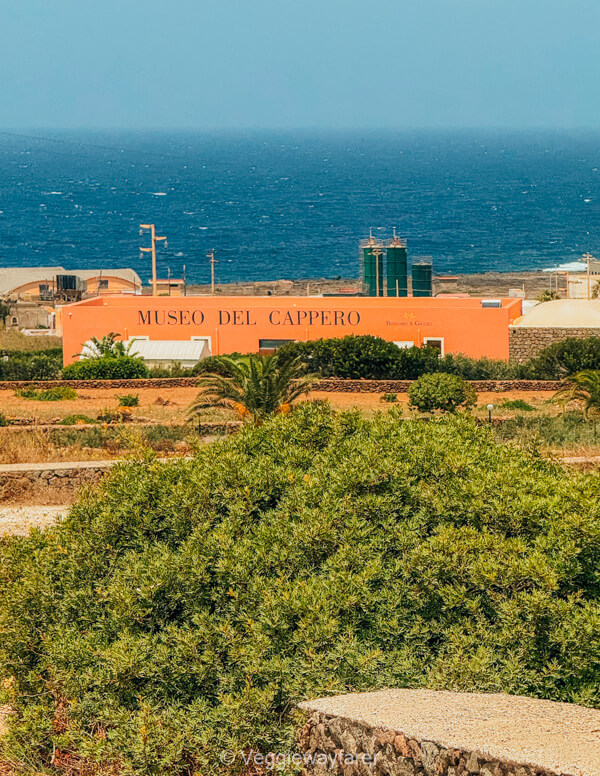
Nested along dirty roads and capers' plants, you'll find an unassuming low building called Museo del Cappero (Caper's Museum). It is simply fitting that the most iconic plant of the island would have an entire museum dedicated, given its central role in Pantelleria's life, from its omnipresent bushes dotting the road to its role in the Island's cuisine. Sadly, most guides to Pantelleria make no reference to this little museum, pay them no heed and go anyway!
While the Museum is a rather quick experience, I strongly recommend you pay a visit: the knowledgeable guides will bring you along a journey in the agricultural past and present, of the Island, the role of Capers in Pantelleria's economy and history, and the subtle but important variations of this plant. Plus, you'll be able to shop for some amazing products at the end, for a price that's simply a steal for European and American standards.
The museum is open from Monday afternoon to Saturday, from 9 am to 1 pm and from 3 pm to 7 pm - as tradition wants everywhere in Sicily, the hours between 1-3 pm are reserved for lunch and rest, especially important in the scorching summers. The entry ticket is 6 euros, but it includes a 100 g bag of Capers, so it's effectively free! Kids up to 18 years old enter for free.


9. Have an aperitivo at sunset with a view
Aperitivo has an almost sacred character in Italy, and if you are in the middle of the Mediterranean sea, on an island where wine is part and parcel of its culture, you know you are in for a treat. Pantelleria is packed with water-facing, sometimes water-touching, places to catch the last light of the day while sipping some local mineral white wine. Here are some of my favourite places:
SESSIVENTI | Sesiventi is arguably the most beautiful and famous place for Aperitivo in the entire island. You are welcomed in a gorgeous garden and then a member of the staff will bring you on top of the white-washed roof of the typical Dammuso, where an unobstructed west-facing view welcomes you. Once there, just sit down, order a glass or a bottle, I won't judge, of Zibibbo and some typical finger food (the aubergine arancine are to die for), and enjoy. You have arrived in Paradise.
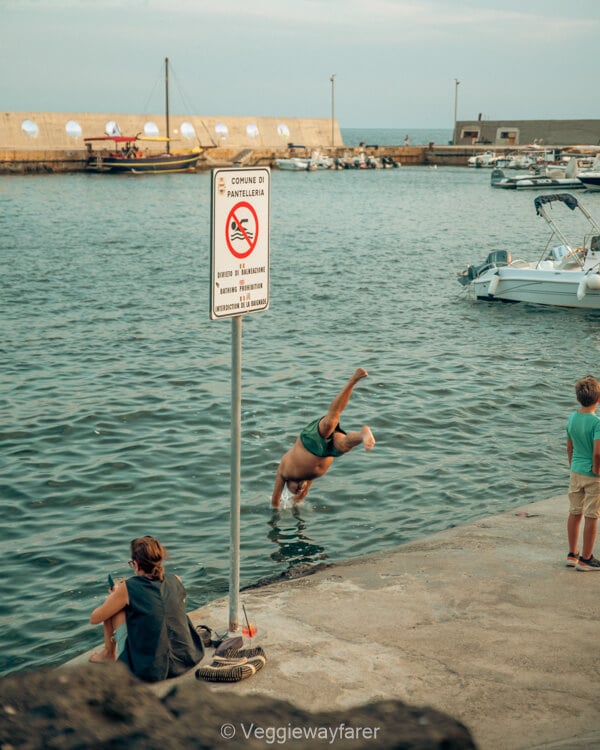
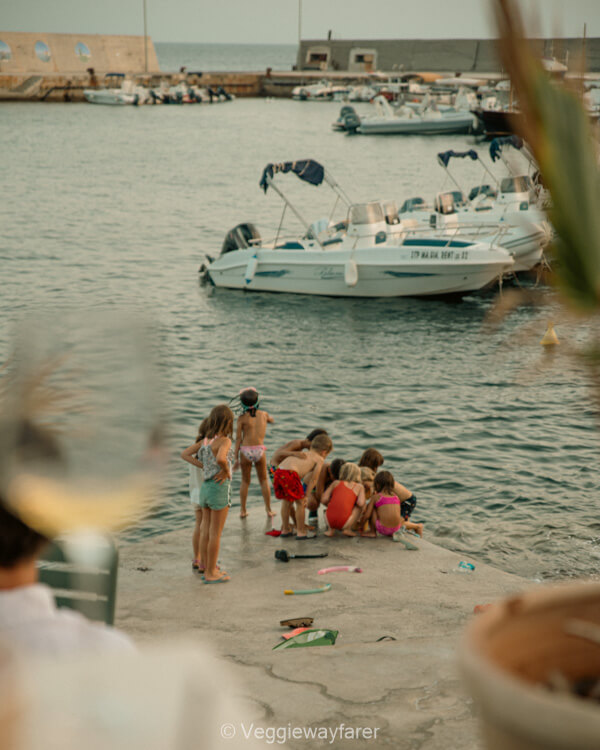
KAYA KAYA | Another great spot we loved and came back to more than once is Kaya Kaya. While its views are admittedly less stunning than Sesiventi's, this little bar settled in the small harbour of Scauri is the quintessential Italian summer experience: Kids that jump in and out of the water beside you, friendly locals enjoying a glass at the end of a long, hot day, and amazing food and wine. Seriously, what else do you need?
LE 2 CALE | On the opposite side of the island, Le 2 Cale is another great option. It's just above the Arco dell'Elefante, has a terrific view and incredible Granite, the sort-of-frozen fruit, sort-of-ice cream wizardry that Sicilians have made an art of, and that no one else seems to be able to replicate. As usual, when it comes to Sicily, don't ask too many questions: just order one and enjoy it.
10. Try the local specialities
Let's be honest, you are in Italy, and you are not expecting anything less than amazing food. Well, get ready to have your expectations blown away. Food in Sicily is particularly good even for Italian standards, and Pantelleria elevates it with incredible local products and traditions dating back to the Arabs.
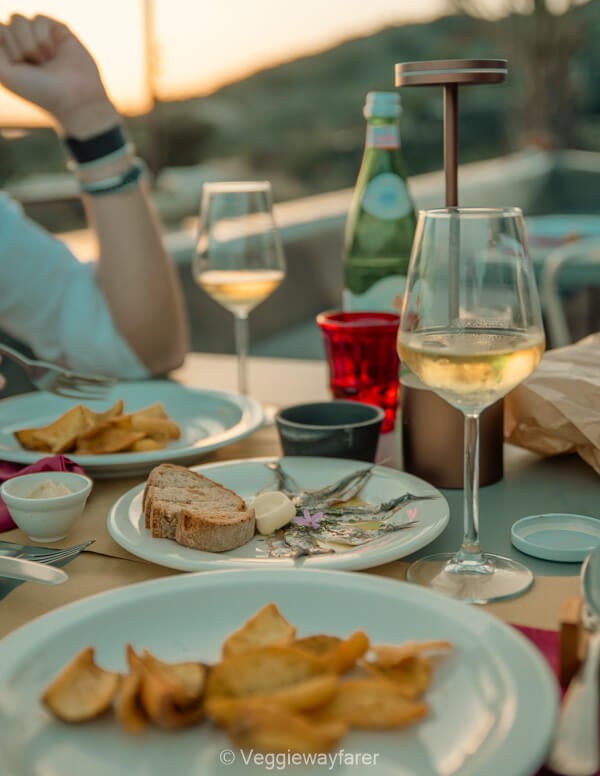
Fish is, of course, the king of the table, especially Tuna and Sardines. Everything you'll get in the island is hyper fresh, caught by a local fisherman, often the very same day.
But fish is not everything that Pantelleria has to offer: Insalata Pantesca (i.e. of Pantelleria), the island's most iconic side dish, a salad of boiled potatoes, tomatoes, capers, olives and onion, , is an incredible way one-dish meal in hot days; Pasta with Pesto alla Pantesca, a cold sauce of tomatoes, capers, olives, garlic and olive oil, is the local take on the traditional Genovese recipe - and trust me, it's to die for. I might or might not have had it almost every day, everywhere we went.
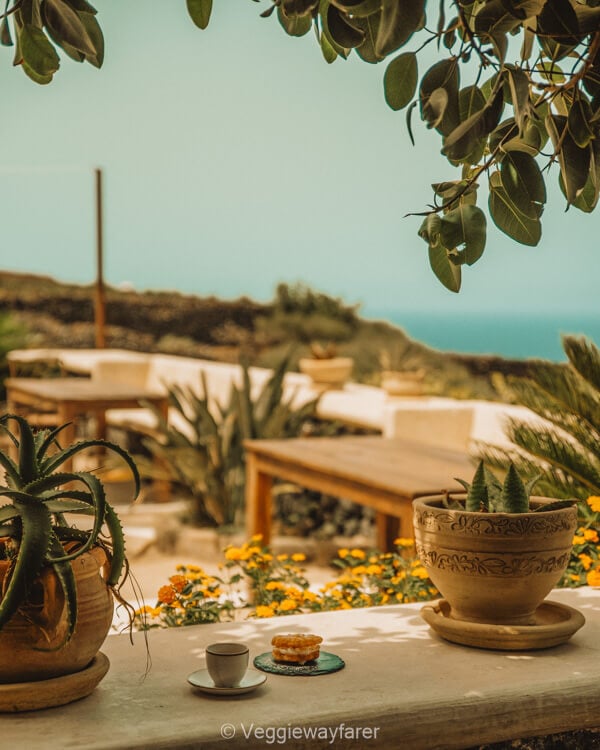
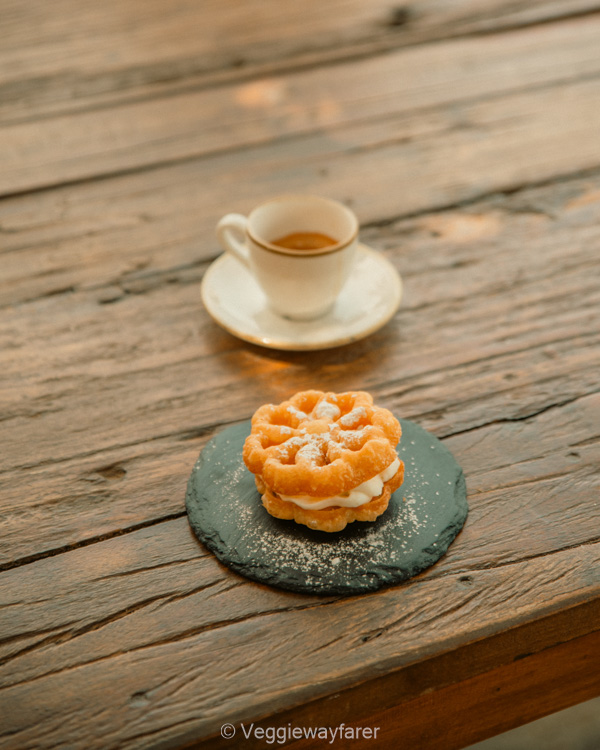
Sicilians have a particular sweet tooth, and Pantelleria is no exception. So desserts are not for want in the island: the most famous are the Baci Panteschi, fried pastry parcels filled with ricotta and orange flower water. If you want to try something older, dating back to the Arab roots of the island, try the Mustazzoli — spiced fig and almond cookies.
Finally, I would be remiss if I didn't mention the Passito di Pantelleria, the crown jewel of Pantelleria's food scene, a golden dessert wine made from sun-dried Zibibbo grapes, sweet, complex, and deeply aromatic
COOKING CLASS | If you want to get hands on with local ingrediënts, you could look into booking a cooking class. Includes going to the market to shop for ingrediënts and then cooking up a 3 course meal at your local host's home.

11. Book a wine tasting
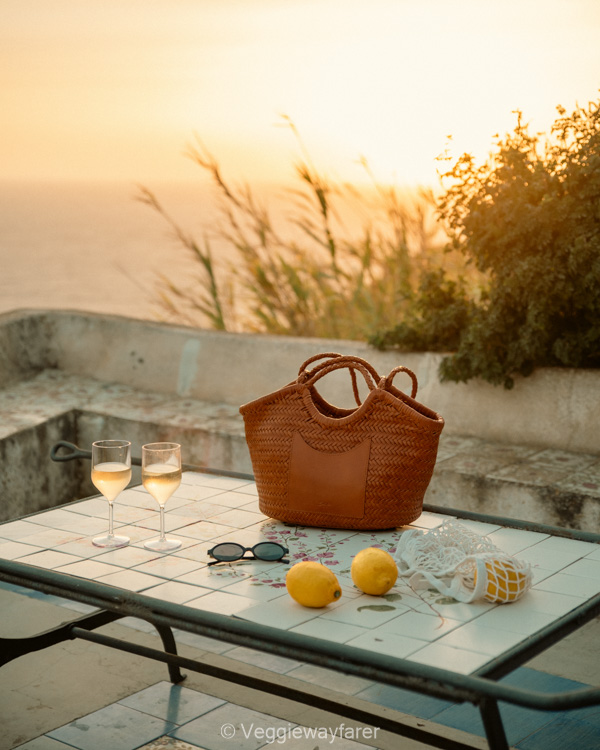
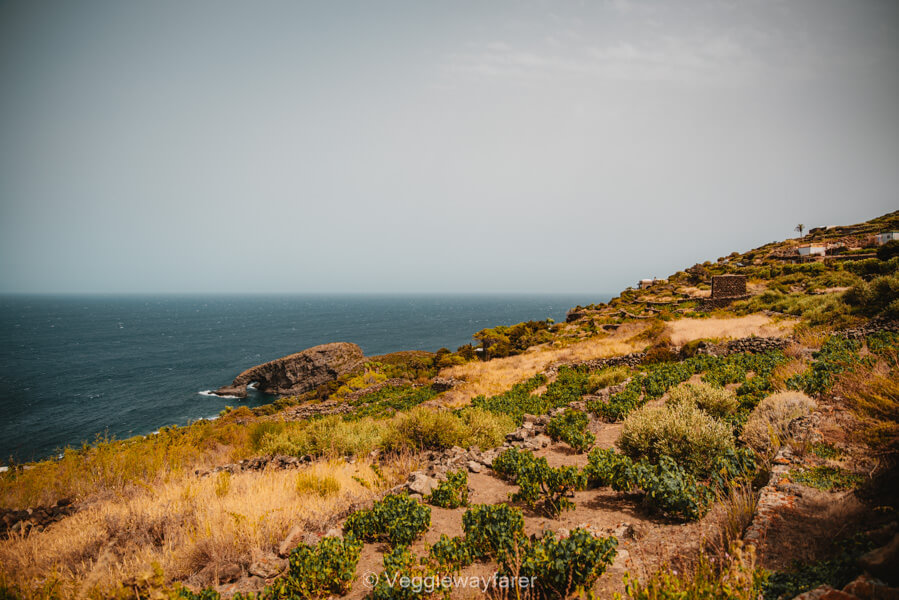
Wine on Pantelleria is not just a drink; it is a landscape, a history, and a UNESCO heritage site all in one glass. Every vine on the island is the same grape, Zibibbo, brought here by Arab traders over a thousand years ago and grown as low, wind-hugging bush vines called alberello pantesco, trained close to the volcanic ground to survive the relentless scirocco. What makes it extraordinary is its range: the same grape produces a crisp, mineral dry white with a salty kick, a lightly sweet Moscato, and the legendary amber Passito, one of Italy's great dessert wines.
Donnafugata is the most famous name on the island, known for their Ben Ryé (meaning "son of the wind") Passito, consistently rated among the finest dessert wines in the world. They offer guided vineyard tours with tastings from around €24, including a visit to a traditional giardino pantesco, a circular walled garden unique to the island. Book well ahead, as spots fill up fast in summer.
Solidea is the insider pick: a small, family-run winery with an intimate food and wine pairing experience that feels nothing like a formal tasting. We heard about it from a local, and it turned out to be one of the warmest, most genuine evenings of the whole trip. Tiny operation, so book this one before you even sort your accommodation.
Abraxas is the one for sundowners, a winery and enoteca perched on a hill with sweeping sea views, pouring both dry Zibibbo whites and full Passito alongside local capers, ricotta and couscous. It is relaxed, unhurried, and exactly the kind of place Pantelleria does so well. A perfect way to end an afternoon.
WINE TASTING IN A VOLCANIC CRATER | On our very last day in Pantelleria, with Denny from Azienda Agricola. A super passionate local from Pantelleria who offers a plethora of tours, including a wine tasting in a volcanic crater. We discovered this option too late, but next time we visit Pantelleria, this is absolutely on the itinerary!

12. Hunt down the most islands' most epic viewpoints
On an island shaped entirely by volcanic forces, the views are not a bonus; they are the whole point. Pantelleria rises steeply from the sea, and its winding roads reward anyone willing to pull over at the right moment with panoramas that stretch all the way to the Tunisian coast on a clear day. If you love photography as much as I do, you know that every to-and-from will have at least 5 unexpected stops. After all, what's the point of travelling if not taking in the beauty of what's around you?
Montagna Grande is the island's highest point at 836 meters, and the 360-degree view from the summit is the one that puts everything into perspective. The volcanic crater, the alberello vineyards below, the open sea in every direction, it all clicks into place from up here. Access by car gets you most of the way, with a short trail covering the final stretch to the top.
Belvedere di Khamma is the locals' pick for sunset, a quiet lookout above the eastern coast that most tourists drive straight past. The light at dusk turns the lava fields a deep copper, and the sea goes completely still below you. Parking is easy, and there are no crowds, which on Pantelleria feels like its own kind of luxury.
Punta Spadillo, on the northeastern tip, pairs a striking WWII-era lighthouse with sweeping views over Cala dei Cinque Denti, the jagged five-toothed rock formation that drops into electric blue water below. It is one of those spots where the photo never quite does it justice, but you take it anyway. A short coastal loop trail from the parking area makes for a lovely 30-minute walk.
Mini Pantelleria Itineraries
Pantelleria in 2 days
Two days in Pantelleria is tight but doable if you focus on the essentials.
Here is how to make the most of it:
Day 1
- Morning swim at Cala Levante or Cala Tramontana
- Visit Specchio di Venere (Mirror of Venus) for a thermal mud bath
- Sunset aperitivo at Sesivento
- Dinner at Ristorante Al Tramonto
Day 2
- Soak in the hot springs at Gadir
- Visit the Arco dell'Elefante for a swim and snorkel
- Aperitivo at Le 2 Cale
- Dinner at Il Principe e il Pirata
Pantelleria in 3–4 days
If your trip to Pantelleria is around 3-4 days, you can squeeze in a lot more activities. Aside from the above, I would add in the following activities:
- Wine tasting: Either at the Donnafugata winery or with the wine tasting in a volcanic crater
- Full-day boat tour around the island
- Visit Grotta Benikulà or take a thermal baths tour
- Aperitivo at Kaya Kaya Bar
- Dinner at Rifugio Firiçiakki and Dispensa Pantesca
Pantelleria in 4–7 days
This is the sweet spot for truly slowing down and discovering the quieter corners of the island. We spent 4 days and could easily have spent another two.
- Explore inland Pantelleria while hiking (or take a guided hiking tour)
- Drive or scooter to the wild southern tip of the island and swim at Balata dei Turchi
- Wander the narrow cobbled streets of Pantelleria town and visit the lava stone castle
- A morning at Laghetto delle Ondine, a natural saltwater pool carved by the sea
- Visit the Museo del Cappero to learn about the island's famous caper farming heritage
- Take a cooking class
- Aperitivo at Lido Shurhuq
- Dinner at I Giardini dei Rodo or Trattoria da Pina
Where to Stay in Pantelleria
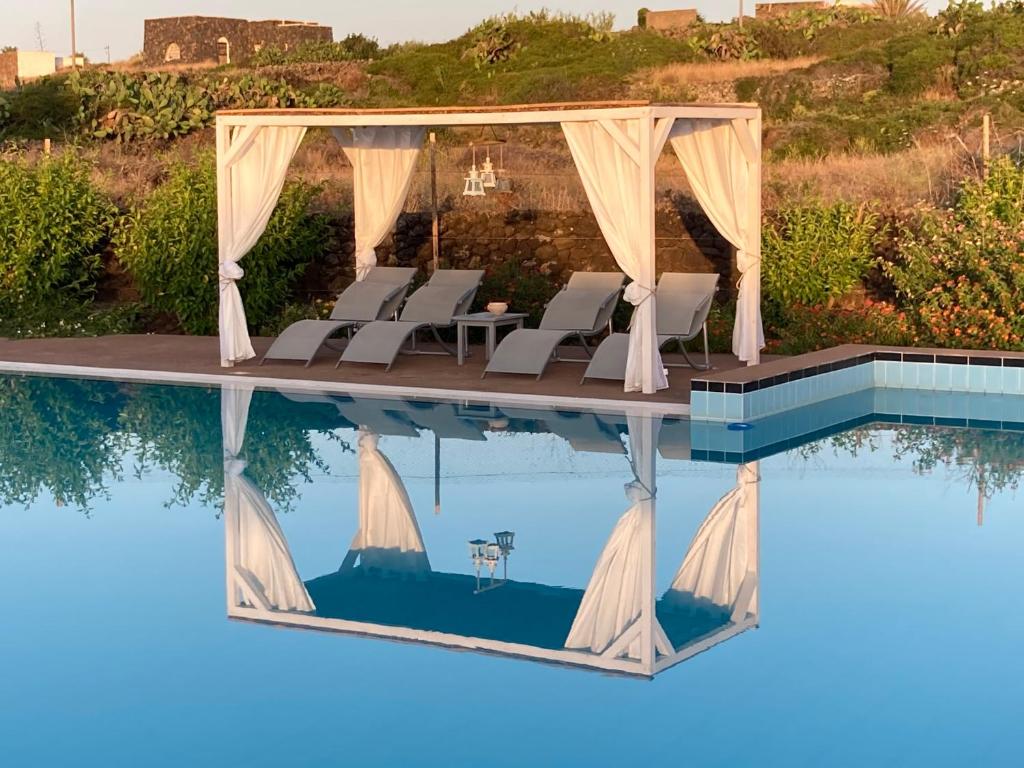
LOCALLY RUN: AGRITURISMO LE LANTERNE
Book Agriturismo Le Lanterne if you want a quiet, nature-wrapped base in Pantelleria with an infinity pool. It’s also a great location, you’re near Cala del Bue Marino. Reviews consistently praise the warm hosts and excellent breakfast with local products.
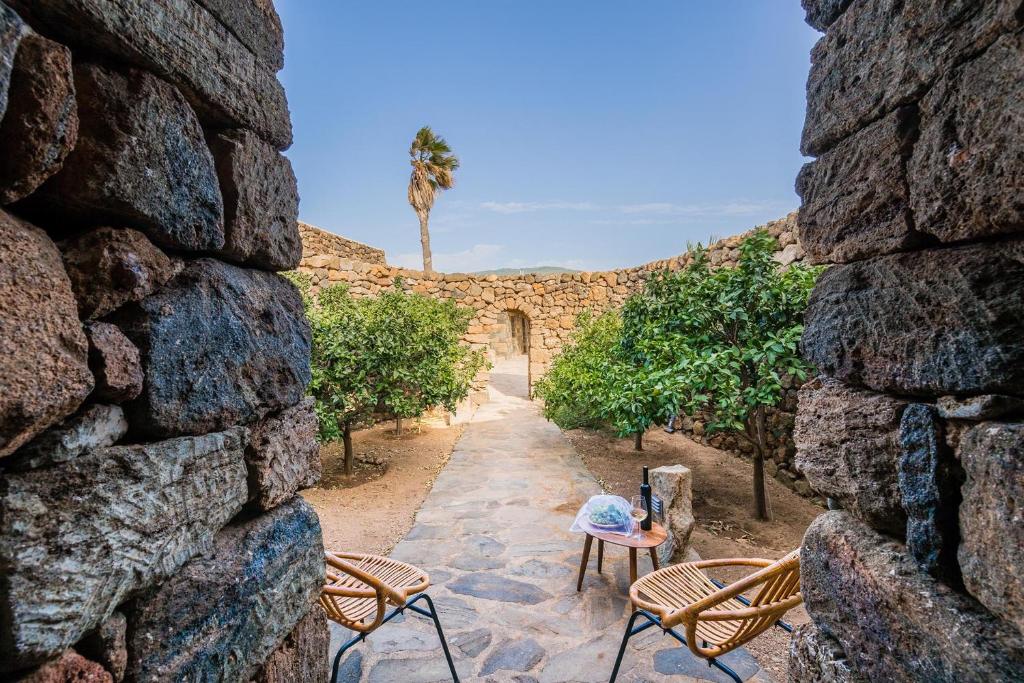
TRADITIONAL DAMMUSO: TENUTA BUKKURAM
Book Tenuta Bukkuram if you want to stay in a working vineyard in traditional Pantelleria-style surroundings, with terraces and wide-open sea views that make sunset feel like part of the property’s design.
It’s also wonderfully easy logistically: the listing highlights perks like free airport shuttle and on-site parking.
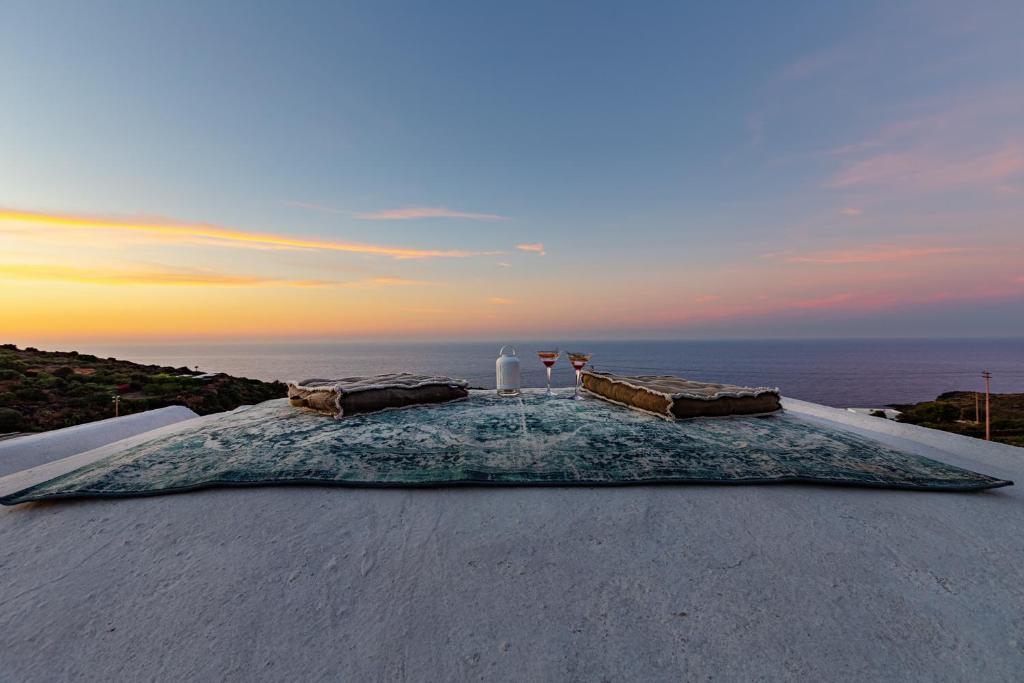
LUXURY PICK: PANTELLERIA DREAM RESORT
Book Pantelleria Dream Resort if you want a traditional stone dammusi with private terraces and panoramic sea views. It has two outdoor pools, an on-site restaurant, and a great location: you’re a short walk from Cala Tramontana.
Practical Tips for Visiting Pantelleria
MEALTIME | Pantelleria runs on classic Italian timing: coffee-and-cornetto in the morning, lunch between 01.00 and 03.00 pm, and dinner around 8:00–9:30 pm. If you want the best tables, especially anywhere with sunset views, make sure to book a few weeks in advance.
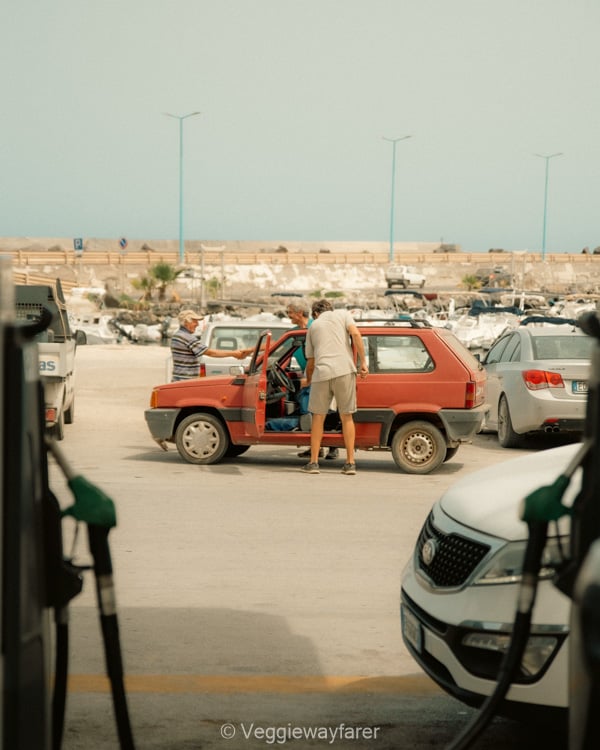
GETTING AROUND | Rent a car or a scooter. Pantelleria is rugged and spread out, so you need your own set of wheels. Practical notes: roads can be narrow/steep, and the island has a lot of wind. Unless you are a very confident scooter driver, I would opt to rent a car.
PACKING | Bring water shoes (many entries are rocky), reef-safe sunscreen, and a dry bag for boat days. Add a light layer for evenings (it can get breezy), and if you’re planning thermal spots, pack a swimsuit that is not new.
GETTING THERE | You can fly into Pantelleria Airport or take sea connections from Sicily (commonly via Trapani, depending on season/operator). We ended up taking the ferry in, but had to take a flight out as the winds hitting the island were too strong. This is a common occurrence, so if you are running on a tight schedule, you might want to stick to flights.

FAQ: To Do in Pantelleria
H3: Where is Pantelleria, and why would I go?
Pantelleria is a small Italian volcanic island between Sicily and Tunisia, known for rugged coastlines, natural hot springs/saunas, capers, and dammusi (traditional stone houses).
H3: How many days do you need in Pantelleria?
Most travellers spend around 4–7 days: enough time to loop the island slowly, swim in multiple coves, and do the thermal spots without rushing. We spent 4 days and felt we needed a bit more time to explore inland Pantelleria.
H3: Can you do Pantelleria as a day trip?
No, the island is too far and too large for a day trip from Sicily. Flying into Pantelleria from Palermo takes about 45 minutes if you are taking the ferry from Trapani, the fast crossing takes 2h30.
H3: Is it true that flights get disrupted because of wind?
Yes, Pantelleria is famously windy, and strong winds can make flying trickier than on mainland routes. We had issues with our ferry, which was cancelled for an entire week. Flights kept flying in and out of the island for another two days before being grounded for the rest of the week.

MORE TRAVEL RESOURCES FOR VISITING SICILY
SICILY: 3-5 day Sicily itinerary
USTICA ISLAND: 10 Things to do in Ustica
AEOLIAN ISLANDS: What to do on Lipari Island, Sicily // First time guide to Vulcano
WHERE TO STAY - The best areas to stay in Sicily, and which ones to avoid!
INSPIRATION - Quaint little villages to explore while visiting Sicily
INSPIRATION - Most beautiful places in Sicily
FOOD - A local guide to the best Palermitan street food
PALERMO - A local guide to Palermo
Things to do in Pantelleria - Pin it


RELATED POSTS
 Sicily Itinerary (3, 4 & 5 Days): 2 Routes (Palermo vs Catania) + Where to Stay
10 Things to Do in Vulcano: The First-Timer Guide to Sicily’s Scenic Island (+ Map)
Sicily Itinerary (3, 4 & 5 Days): 2 Routes (Palermo vs Catania) + Where to Stay
10 Things to Do in Vulcano: The First-Timer Guide to Sicily’s Scenic Island (+ Map)
 Sicily Itinerary for 7 Days: An Easy East Sicily Route for First-Time Visitors
 Western Sicily Itinerary for 7 Days: Roadtripping from Palermo to Trapani


0 Comments