
Tucked into the far western tip of Austria sits a region most travelers overlook. While the crowds funnel into Tyrol and the lakes of the Salzkammergut, Vorarlberg remains untouched by overtourism. This is one of the most diverse little corners in the Alps and the perfect place to unplug and reconnect with nature. Time to discover everything there is to do in Vorarlberg.
As I write this, European summer is in full swing. It is my favorite season at home, and I am far from alone in that: the continent sees in excess of 255 million arrivals across July and August. With my family-in-law living in Italy, that is usually where I wash up for the holidays, and I will be the first to admit that a cold Aperol Spritz in front of the sea does wonders for one's mental health.
This year, though, I was craving a holiday away from the crowds and, if I am honest, away from my phone. Working in social media means I am chronically online, and most days my nervous system is all but shot. So I went looking for somewhere authentic and not overrun by mass tourism, with ample hiking and space to reconnect with nature. That is how I ended up in Vorarlberg.
So what are the best things to do in Vorarlberg? This is a region stitched together by trails that wander from mountain huts to alpine pastures and impossibly turquoise lakes. My own route wove through Montafon and Brandnertal before winding down on the shores of Lake Constance, and along the way I rode green-powered cable cars into the peaks, ate my way through some of the oldest cheese traditions in the Alps, and spent an unforgettable night in a remote refuge. It was a veritable reset for my nervous system. Read on to plan your reset!
Please note: This post contains affiliate links, meaning I may earn a commission if you make a purchase by clicking a link (at no extra cost to you). Learn more.
Vorarlberg Guide: Quick Planning Guide
WHERE TO STAY IN VORARLBERG
- Montafon (Schruns): Hotel Zimba
- Brandnertal (Brand): Biotel Bertel Naturappartements
- Hiking Hut: Sarotla Hut
HIGHLIGHTS OF VORARLBERG
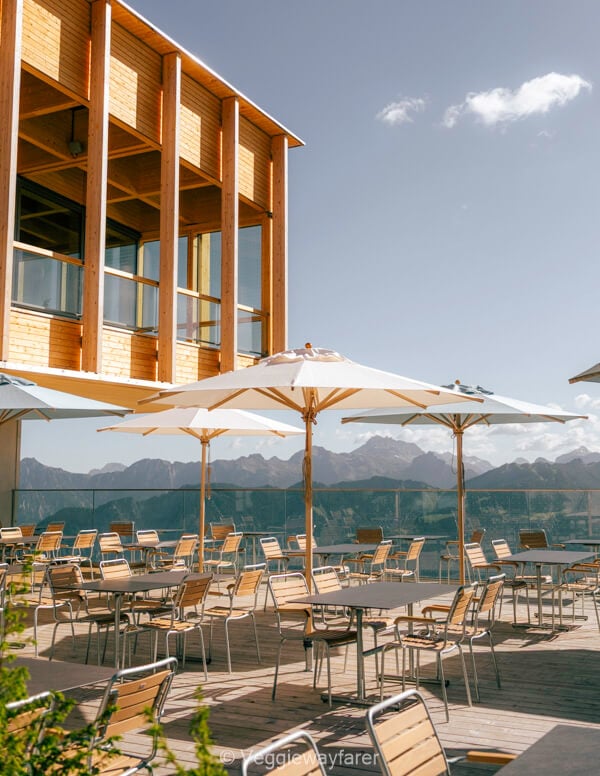
- Best Views: Restaurant Feineck am Golm
- Favorite Hike: Brand to Sarotla Hut
- Best Veggie-friendly Restaurant: Brandnerhof (Brand)
BEST TIME TO GO: Late June to September for hiking and alpine pastures in full bloom. December to March for near climate-neutral skiing.
GETTING THERE: The capital of Vorarlberg, Bregenz, is very well connected to most destinations in Europe. Leave the car at home and hop on the train over.
OFFICIAL TOURISM WEBSITE: Vorarlberg Tourism
GETTING AROUND: Regional trains and buses. Depending on the region they are free with the guest card (Alpenregion Bludenz, Bodensee-Vorarlberg from the first night on, Bregenzerwald & Großes Walsertal from three nights on). Plan journeys on vmobil.at, not Google Maps, as the timetables for the Vorarlberg public transport are not reliable in Google Maps
A Brief Introduction to Vorarlberg
Here is a confession to start: before this trip, I could not have confidently placed Vorarlberg on a map. And I am not alone. Austria's smallest and westernmost state is a quiet enigma, even to seasoned travelers.
It dangles off the far western edge of the country, hemmed in by Germany, Switzerland, and Liechtenstein. In dialect, food, and temperament, it often feels closer to its neighbors than to Vienna. The locals speak an Alemannic German, which to my untrained ears, was impossible to understand.
The reason for this linguistic and cultural difference can be traced back to the 13th and 14th centuries when the Walsers decided to settle in. These early migrants from the Swiss canton of Valais crossed the passes and decided to stay! They gave Montafon its name and left behind that Swiss-tinged dialect, along with a fierce love for the mountains.
What this little region lacks in fame, it makes up for in sheer range. In a straight line of just 80 kilometers, the land rises from the almost Mediterranean shores of Lake Constance, at around 400 meters, to glacier-topped peaks near 3,000 meters. Few places in Europe pack so many different worlds into so small a space.
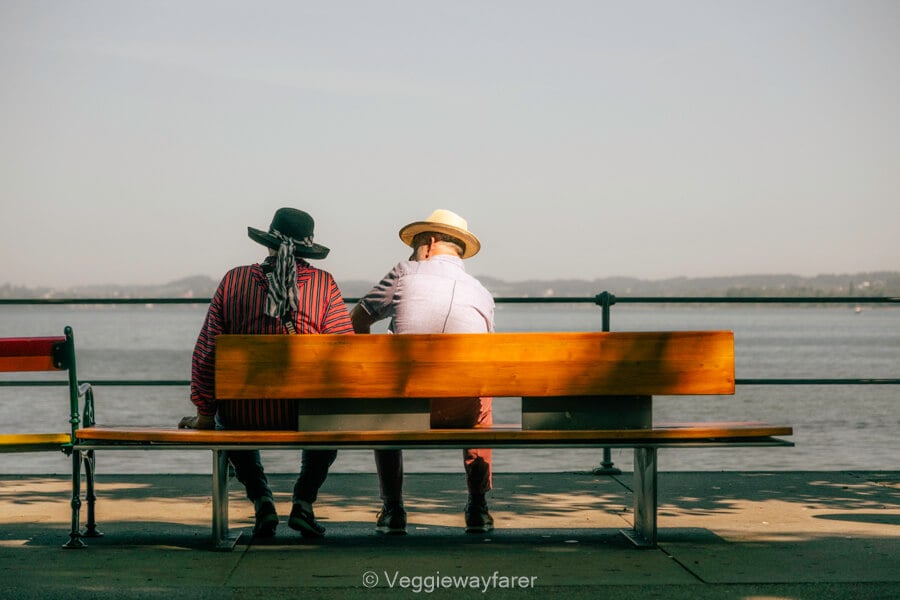
Getting Around Vorarlberg
Many a traveler might not realise how easy it is to get around Vorarlberg. We opted to take the train from Brussels to Schruns and therefore did not have a car available. This turned out to be a complete non-issue.
Regional trains link the main valleys, and a dense web of buses handles everything else, right up to remote trailheads and cable car stations. Services are punctual and run often, even to tiny one-track village halts. On my last day, I had to get from the tiny village of Brand to the capital of Bregenz to catch my train back to Brussels. Truth be told, I was stressed, because it involved taking a bus and a train. I ended up making it to Bregenz with 2 hours to spare. More on that below!
GOOD TO KNOW Ask your hotel for the Guest Card (Gästekarte) on arrival. Beyond free transport, it often bundles in discounts on cable cars and activities, so it pays to understand what yours includes.
IF YOU DO DECIDE ON A CAR | If you are doing a longer road trip through Austria and decide you want to rent a car, try going for an electric car. Plenty of charging stations can be found dotted across the region, even in the smaller villages; they are abundant. For car rental, we always use Discovery Car to check and compare prices.
Unmissable Things to Do in Vorarlberg
1. Walk the Gauertaler AlpkulTour (and Meet the Cows)
If you do one hike in Montafon, make it this one. The Gauertaler AlpkulTour has three different routes (6,11 and 13 km). We opted for the 11-kilometer route with a gentle 500 meters of elevation gain, dotted with thirteen art installations by local artist Roland Haas.
It is long but forgiving, a route a reasonably game family could manage. I walked it with a friend, which meant we spent a lot of time laughing and ended up getting lost because we forgot to look at the GPX route. Oops! There are a lot of hiking trails crisscrossing this patch of mountains, so make sure to keep one eye on the signs.
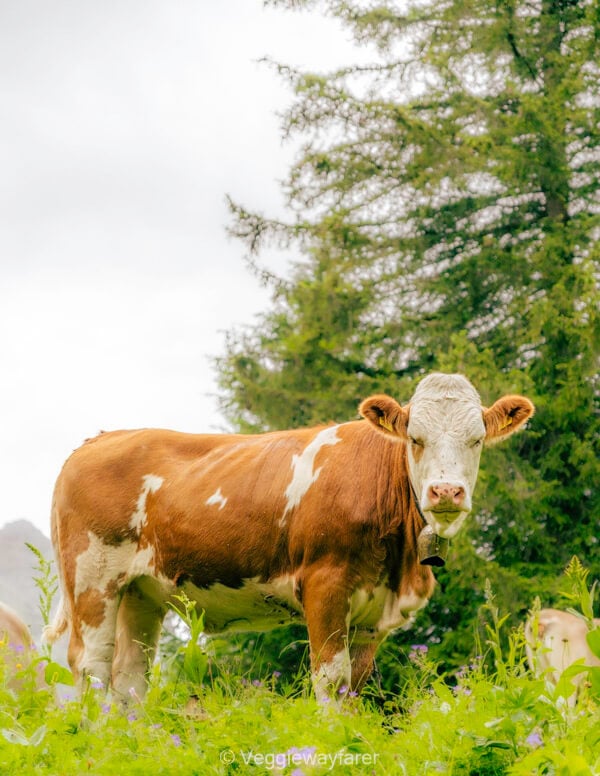
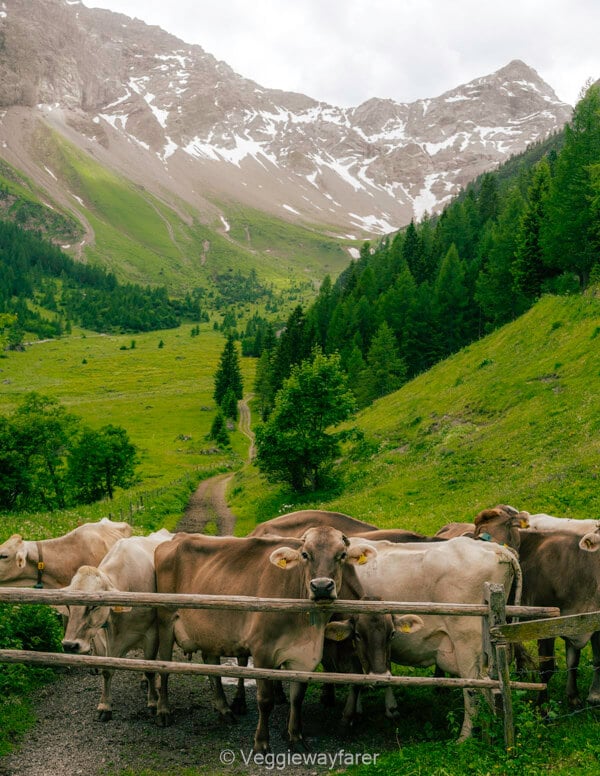
This hike was probably one of my favorite things to do in Vorarlberg. We hiked across fields carpeted in yellow, purple, and white spring flowers to the tune of gravel underfoot and the faint sound of cow bells. Up here, you are just as likely to run into a fellow hiker as you are a herd of cows. The latter spend the summer months here grazing on rich herbs and grass.
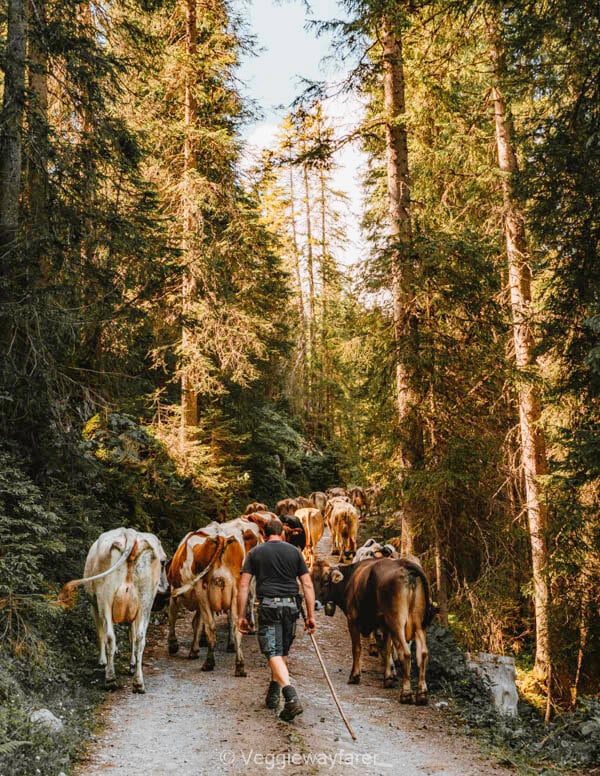
I did indeed meet many fluffy, curious cows with enormous bells who ambled over. At one point, a farmer arrived to bring his herd down for milking, and since their route was also mine, I spent ten happy minutes shuffling along behind a parade of swaying cow bottoms. Please do not touch the cows without explicit consent from the farmers.
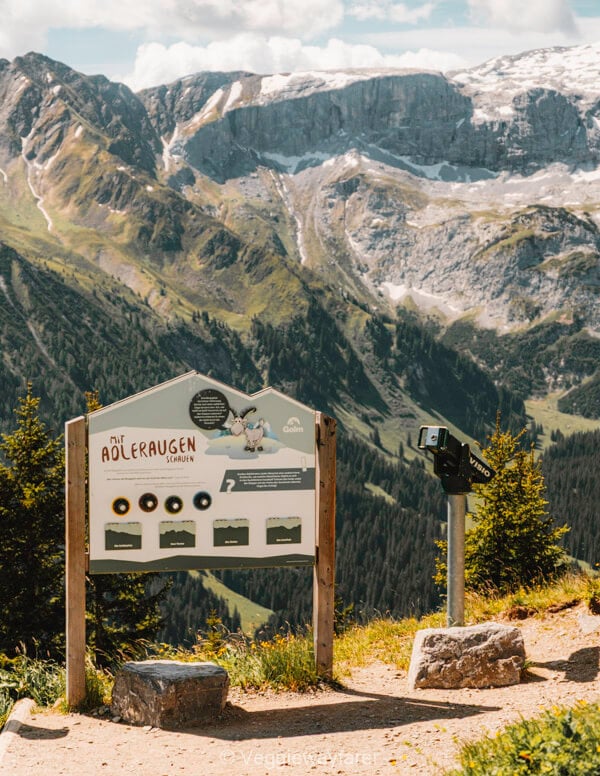
PRACTICAL | The hike starts by taking a cable car (Golmerbahn) from its valley station in Latschau to the Grüneck mountain station at 1,890m. Next to the mountain station, you will find Restaurant Feineck, which uses seasonal produce from selected Vorarlberg and Montafon growers, serves à la carte dishes and a mountain breakfast, and is open year-round.
GOOD TO KNOW The trail is signposted, but download the GPX track in case you wander off to photograph some fabulous mountain scenery (like yours truly did). Huts along the way, including the popular Lindauer Hütte, take card payments and offer beds if you want to string together a multi-day route.
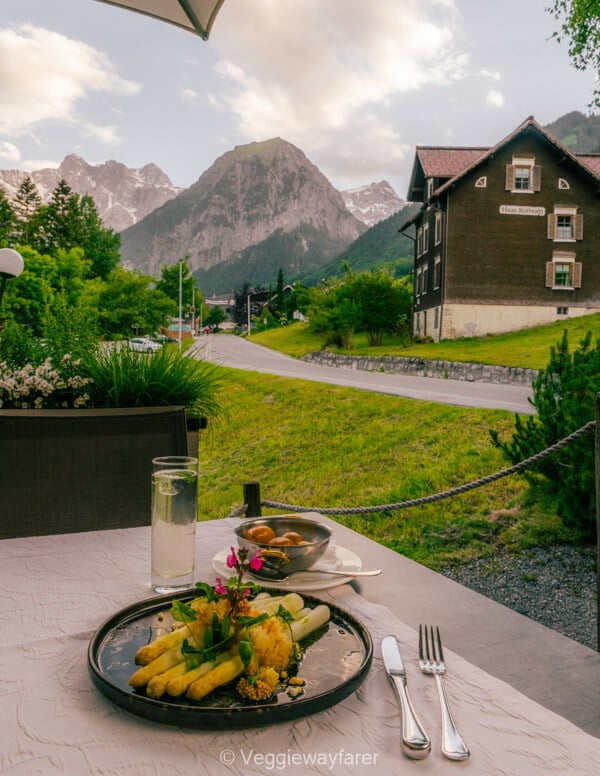
2. Eat Your Way Through Vorarlberg's Regional Specialties
Austrians are too down-to-earth to be swayed by trends, especially in the culinary scene. While using locally sourced ingredients, in accordance with the season, is slowly gaining traction globally, it has been part and parcel of the traditional Austrian cuisine for centuries. Here are some vegetarian regional dishes you need to try when traveling to Vorarlberg.
MONTAFON CHEESE | Start with the cheese, because those fluffy cows in the mountains produce some stellar milk. Montafon Sura Kees is the local treasure, a tangy, low-fat sour-milk cheese made in wooden vats without added cultures. Production here traces back to around 1240, making it one of the oldest cheese traditions in the entire Alps. Order it the traditional way, with potatoes, or folded into Keesknöpfli, the local take on cheese dumplings.
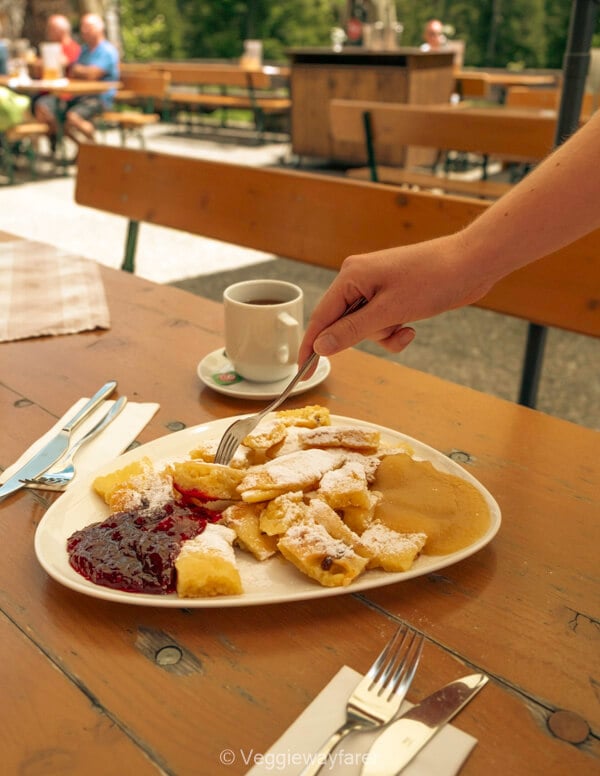
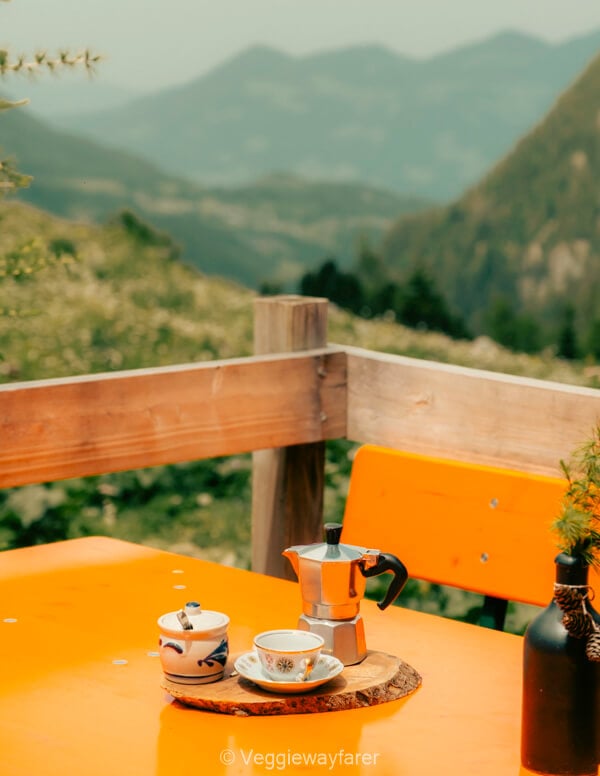
RIEBEL | A humble pan of fried cornmeal served sweet with applesauce or cinnamon sugar. I had it for breakfast at the hut, and it powered me down an entire mountain. Look out for Brösel, a similar corn dish eaten in the morning or evening.
MONTAFONER POLSTERZIPFEL | Fried sweet pastries
KASEKNOPFLE | Served in a wooden bowl called a "Brenta," with potato salad
TRAVELING IN AUSTRIA AS A VEGETARIAN | Contrary to popular belief, Austria is very easy for vegetarians. Vegetables and starches form an important part of most meals.
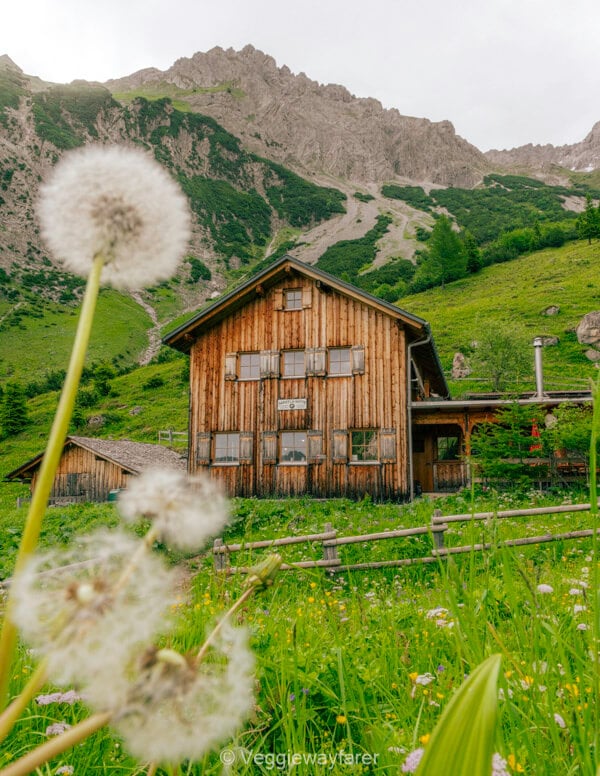
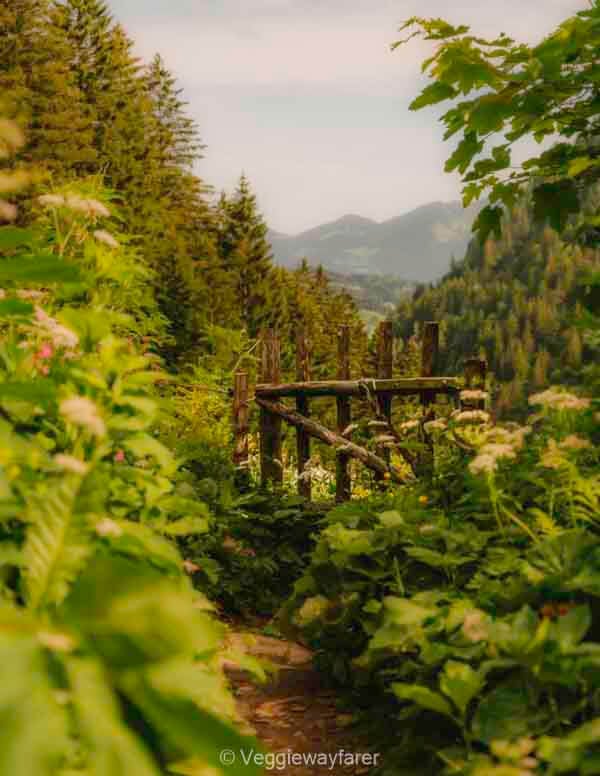
3. Spend the Night at the Sarotla Hut
From Montafon, I moved to Brandnertal, a region tucked hard against the Swiss and Liechtenstein borders. Getting there is easy! With your Guest Card, public transport is easy, and you can simply hop on the direct train from Schruns to Bludenz (check the schedule on vmobil.at).
WHERE TO BASE YOURSELF | My base was Brand, a village that looks like it strolled out of a fairy tale, ringed so tightly by mountains that they feel close enough to touch.
There is a beautiful local word, "zemma," meaning together, that captures the deep sense of community still woven through these villages. This is absolutely the word I would use to describe my time in this part of Vorarlberg. In today's world, where we seem to do nothing but rush towards our individual goals, it was a nice reminder to slow down and reconnect with both nature and the community.
The hike up to the Sarotla Hut
Distance: around 5 km one way | Ascent: roughly 600 m | Time: about 2.5 hours up | Difficulty: moderate, steady climbing but no scrambling
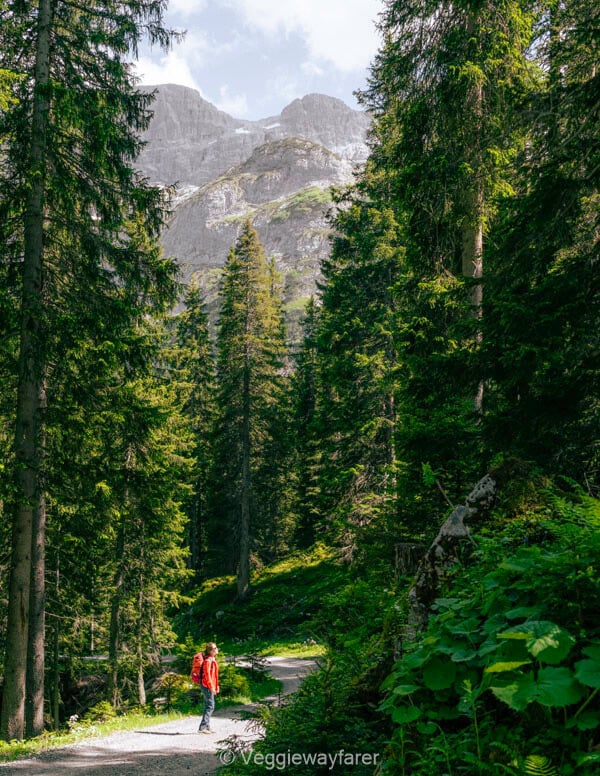
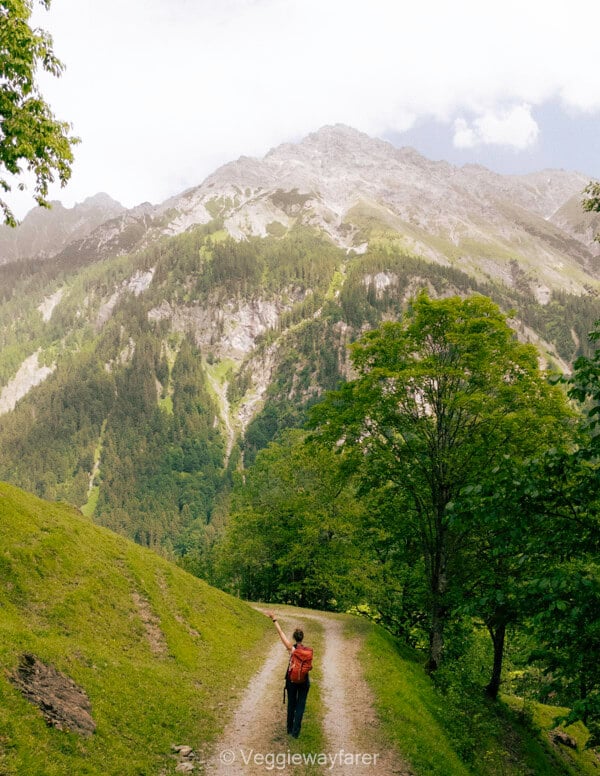
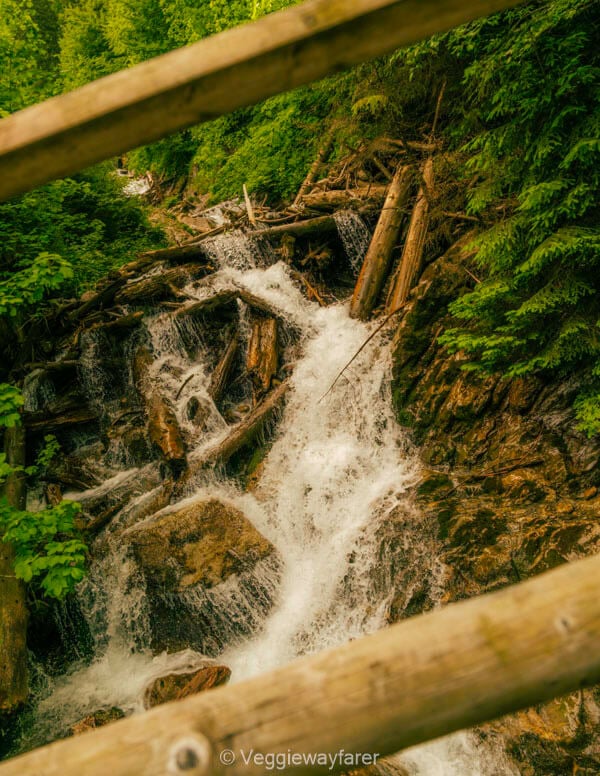
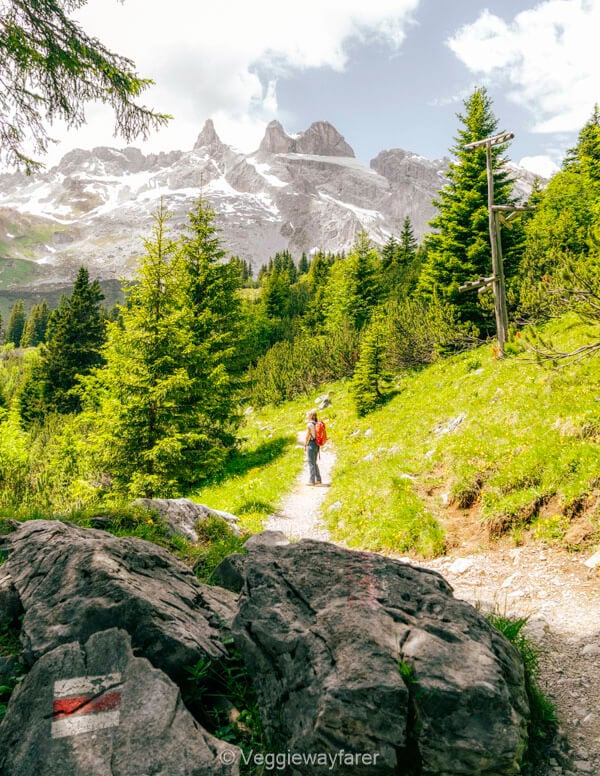
From Brand, the trail follows the Alvierbach stream past the golf course, then picks up the historic Walserweg through forest and into the Sarotla valley. Expect wooden pasture gates to open and close behind you, drinkable streams, waterfalls, and meadows full of alpine flowers. The payoff comes when the forest opens onto a wide green bowl with three waterfalls and a mountain wall behind, a scene straight out of Lord of the Rings, especially on a moody, overcast day.
GOOD TO KNOW Budget around two and a half hours to walk up. Wear sturdy boots and bring a warm layer and a full change of clothes, as the temperature drops sharply at altitude. Pack a refillable water bottle, and download the GPX track, even though the route is pretty self-explanatory (up towards the hut and back down on your way back to Brand)
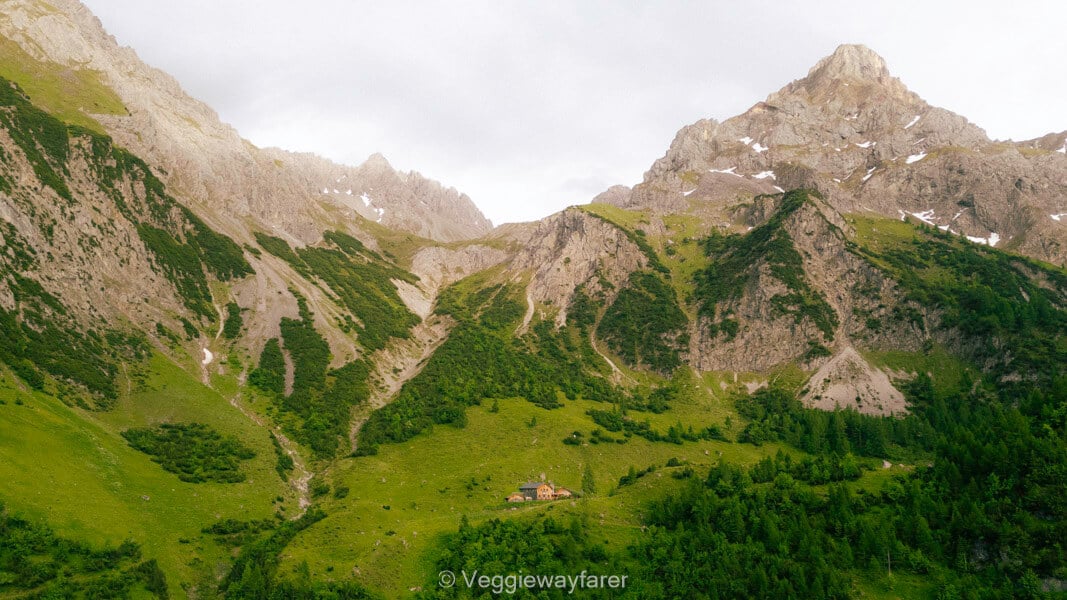
What to expect when staying in the Sarotla hut
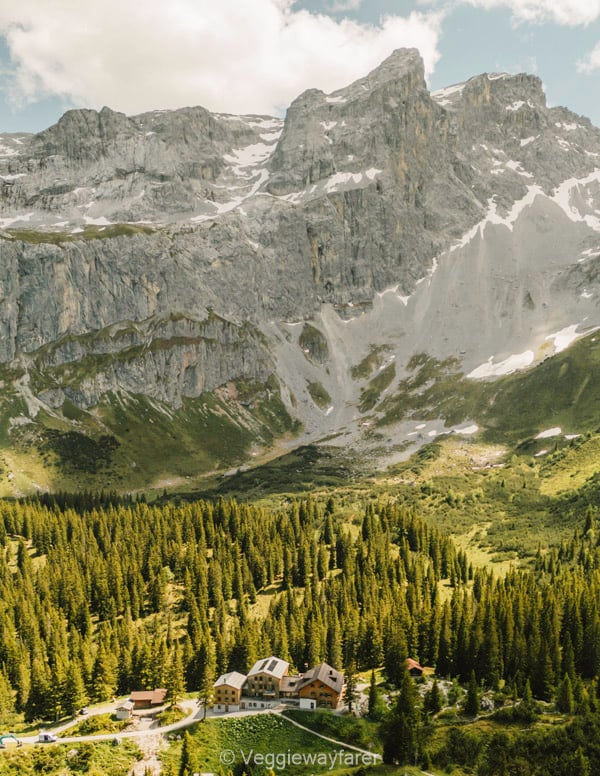
The Sarotla Hut sits at 1,611 meters at the foot of the dramatic Zimba peak. An Alpine Club refuge, it was originally built in 1902, flattened by an avalanche in 1999, and rebuilt the following year. Today, it is run by its guardians, Fabian and Isabel, who have given the place a real soul.
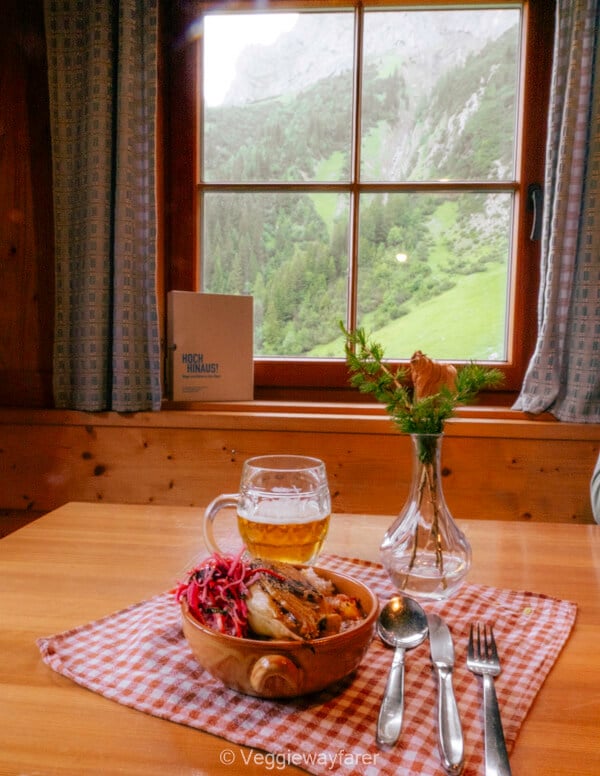
You step inside to find old books repurposed as menu covers and a kitchen that cheerfully ignores the usual hut clichés. Fabian is a trained chef, so instead of the standard schnitzel, you get lentils, curries, fresh sourdough, and a generous run of vegetarian and vegan dishes. Thanks to long-standing ties to Nepal, Nepalese specialties appear on special occasions.
The Sarotla Hut is not reachable by road. Everything you see was carried or flown in, helicoptered at the season's start, and hauled up on foot the rest of the time. Most ingredients are sourced within 50 kilometers, and what can be preserved is pickled or fermented on site. Power comes from a small water turbine and solar panels, and the hut holds the Alpine Club's environmental seal.
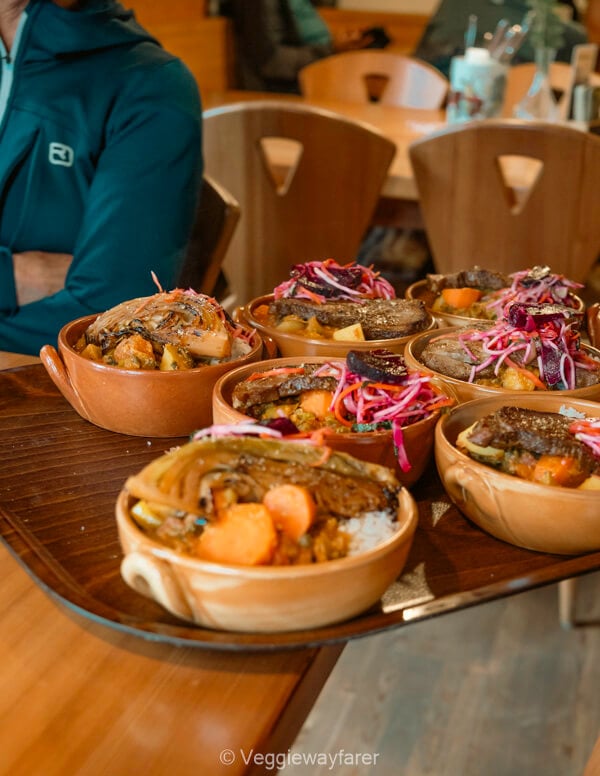
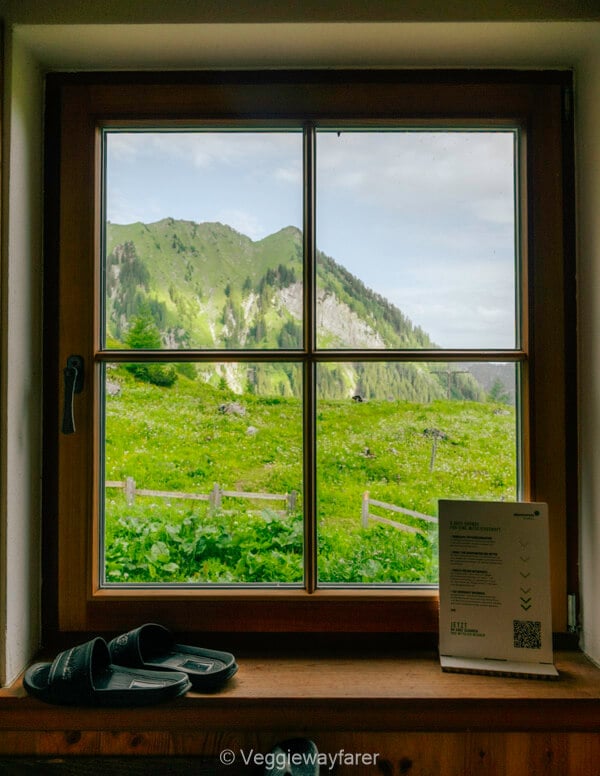
Sleeping in the hut means bunking down with fellow hikers. I was a little weary about spending the night alone, but that fear proved entirely unfounded. The hut has faint Wi-Fi but no real mobile signal, which means people are not attached to their phones and instead engage in actual conversation (a novelty in today's digital age). I was swiftly adopted by a couple of retired teachers, and we spent a lovely evening swapping travel stories.
Guests staying at the hut book a half-board pension, which includes a three-course dinner. Let me tell you, it was finger-lickin ' good! By 10 pm, with a full belly, sublimely relaxed from lack of digital stimuli, I crawled into bed and slept a blissful 8 hours. By 6 am, I was wide awake and ready to take on the world. There is something to be said for following the rhythm of the mountain: early to bed and to rise with a fully reset nervous system. An absolute must on any Vorarlberg itinerary!
GOOD TO KNOW The Sarotla Hut is open from early June to early October and can only be reached on foot. Sleeping is in simple dorms with a mattress, pillow, and blanket provided, but you must bring your own sleeping bag liner and a towel. There are no showers, just a washbasin. Shoes come off at the door, so pack slippers or thick socks. Book ahead and flag any dietary needs.
4. Hike Through the Zalimtal to the Untere Brüggele Alpe
Distance: around 4 km one way | Ascent: roughly 400 m | Time: about 2.5 hours up | Difficulty: moderate, a steep start then a gentle valley | GPX and Route: Download here
If there is one thing my time here taught me, it is that the best things to do in Vorarlberg tend to be the ones your legs are actively begging you to skip.
After the descent from the Sarotla Hut, my calves were lobbying hard for the easy option: a cable car up to a scenic restaurant, minimal effort required. I ignored them. The teachers I had shared dinner with at the hut had been adamant that the Alp Brüggele hut was something I could not miss, and by now I had learned to trust a local tip. So I rinsed off the trail dust, laced my boots back up, and set off again (calves in open revolt).
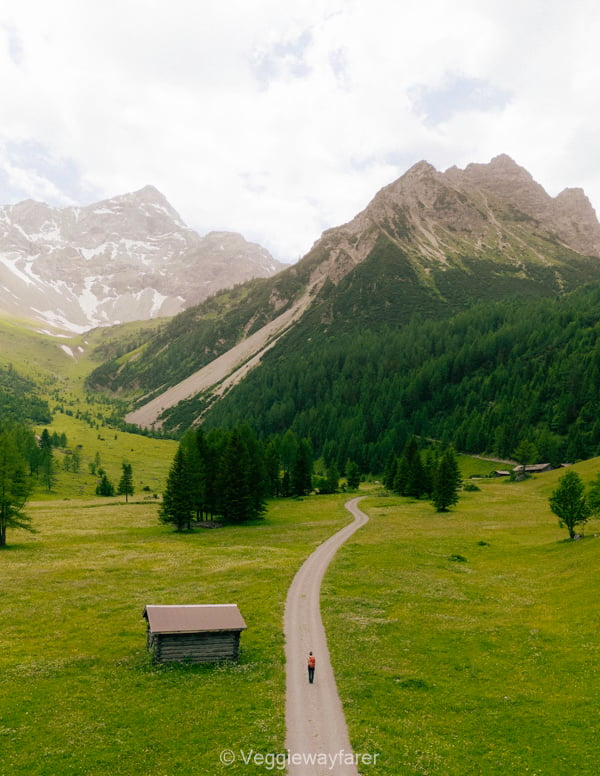
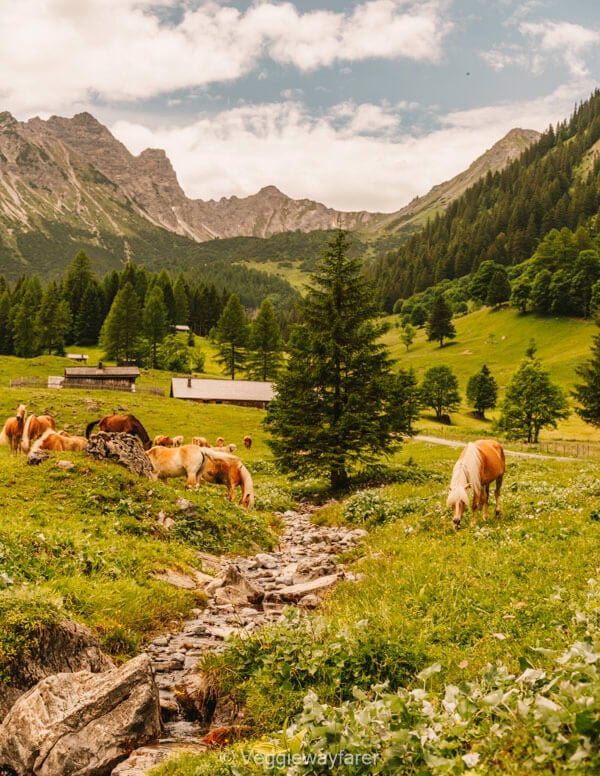
The first stretch climbs gently, around 400 meters, just enough to make me seriously reconsider every decision that had led me to this point. And then the trail tipped over into the Zalimtal, and all the complaining stopped mid-sentence. Cantering horses. Cows grazing beside their calves. A stream threading through the green, a scatter of old wooden huts. It was, for lack of a less obvious phrase, straight out of a storybook.
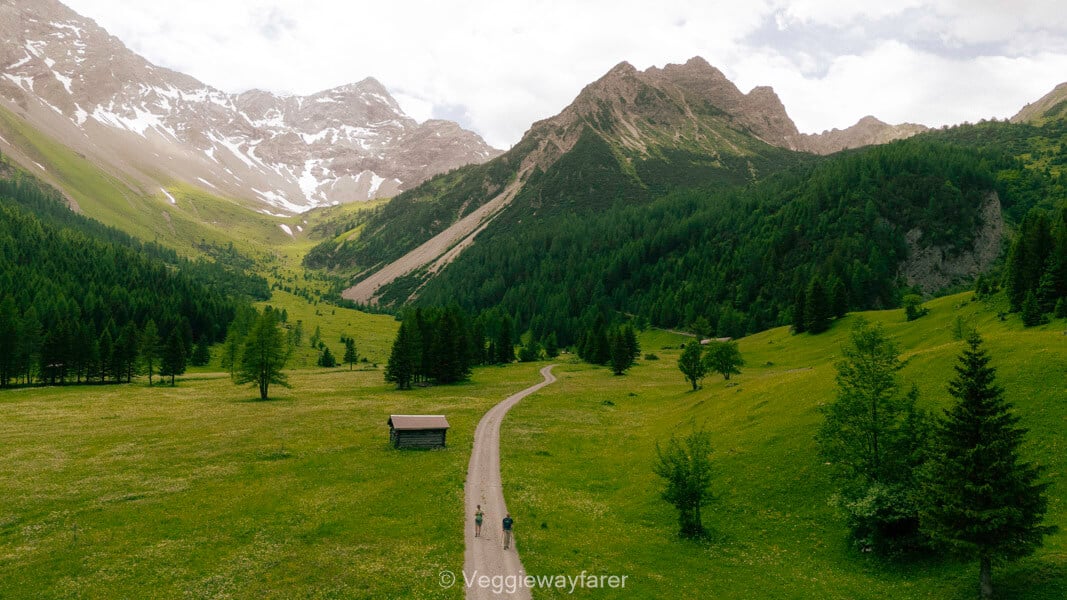
So I did the only sensible thing and sat down to watch. A curious cow ambled over for a scratch, and before long I was skipping through the meadows, photographing flowers and filming livestock like an overstimulated five-year-old. The locals working the fields must have wondered what on earth was wrong with me.
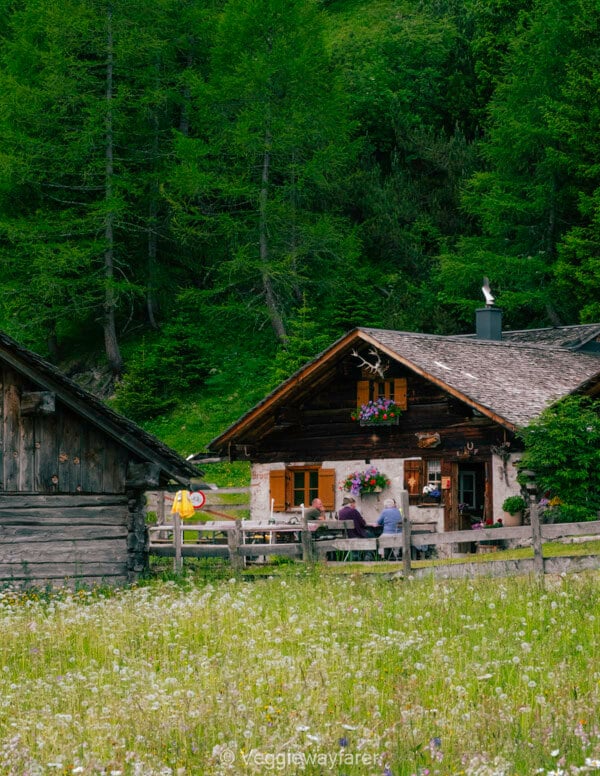
The hut itself is gloriously old-school: a deer head mounted over the door, intricate wood carvings, checkered cloths on the outdoor tables. It was supposed to be closed that day, but a few people were sitting out front, so I asked. "As long as people keep coming by," they shrugged, "we're open." Inside were a couple of young guys and the elderly couple who run the place.
Here was the catch: I had no cash, and cash is all they take. No matter, they waved, it's on the house. And so I found myself sharing a beer with total strangers in a hut that was technically shut, halfway up a mountain, with no real way to repay the kindness. This is the thing about Austrian hospitality. It is not showy or effusive. It is quietly generous, a little gruff around the edges, and utterly sincere. The locals have a word for it: Gemütlichkeit, that untranslatable blend of coziness, warmth, and unhurried ease.
PRACTICAL | If you want to hike through the Zalimtal or the well-known Lünersee, base yourself in Brand.
GOOD TO KNOW The trail into the Zalimtal starts near the Brand Innertal car park and is well signposted toward the Untere Brüggele Alpe. Sturdy boots, a warm layer, and cash are essential, as the alpe and smaller huts do not take cards. From Brüggele, you can continue up through switchbacks to the Oberzalimhütte for a longer day. Always close pasture gates behind you so the cattle stay put. If your legs are done, the Dorfbahn and Panoramabahn cable cars offer a gentler route up to Restaurant Frööd with the same big views.
5. Additional things to do in Vorarlberg
MORNING YOGA | From mid-May to August, Brandnertal hosts open-air morning yoga at the Alvierbad, an outdoor swimming pool set against a wall of mountains. Mats are provided, so all you need to bring is yourself and a willingness to greet the day slowly. I was too anxious about my train connections to join, which I now regret. If your schedule is calmer than mine was, it is a beautiful way to start a day in the mountains.
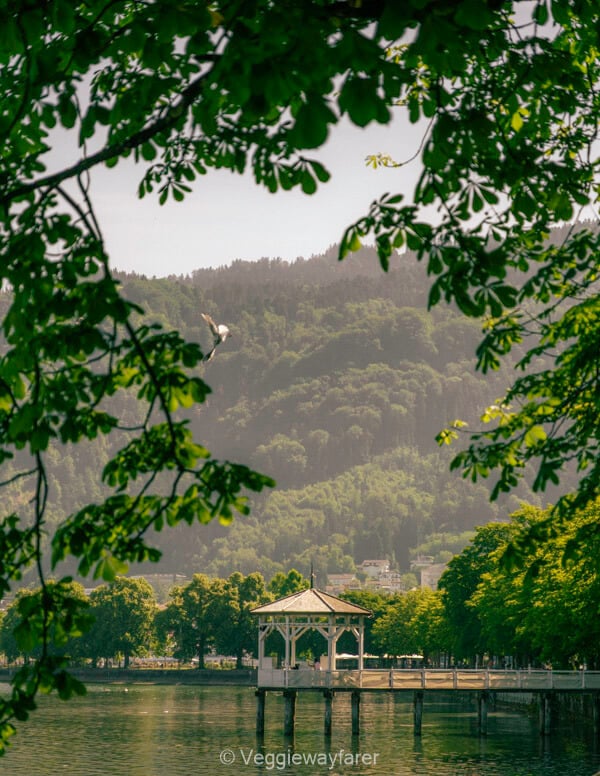
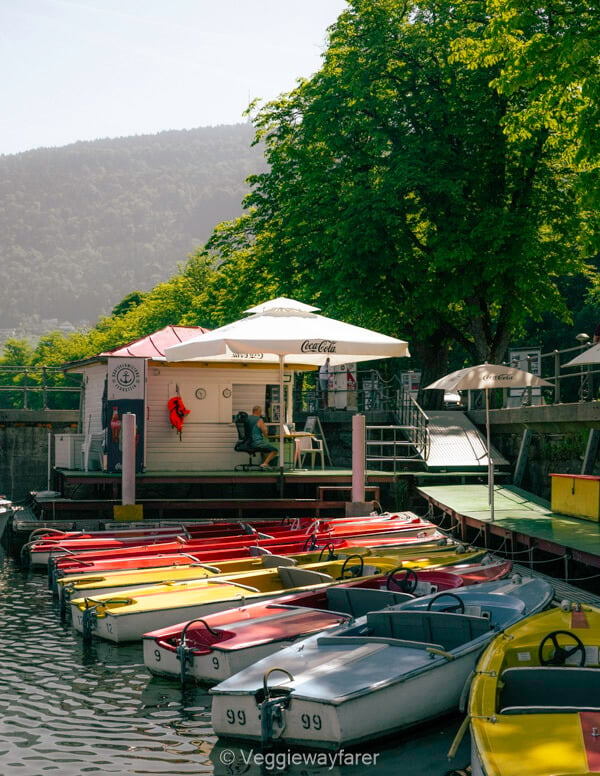
EXPLORE BREGENZ | Vorarlberg's lakeside capital sits right on Lake Constance and is a great gateway to the region. The town center is charming, but the real highlight is Lake Constance. Bregenz is superbly connected. If you are arriving from abroad by train, it makes a lovely first or last night before heading into the mountains.
HIKE AROUND LUNERSEE | Known as the Pearl of the Alps, this turquoise reservoir sits at nearly 2,000 meters at the head of the Brandnertal, ringed by the rocky peaks of the Rätikon. A cable car carries you up from the valley floor, and an easygoing loop circles the water, the first half gentle enough for a pushchair. Stronger hikers can climb on toward the Totalp Hut and, beyond it, Schesaplana, the highest peak in the Rätikon. It is reachable car-free: take the train to Bludenz, then bus 580 to the cable car valley station, open roughly from June to October.
Where to Stay in Vorarlberg
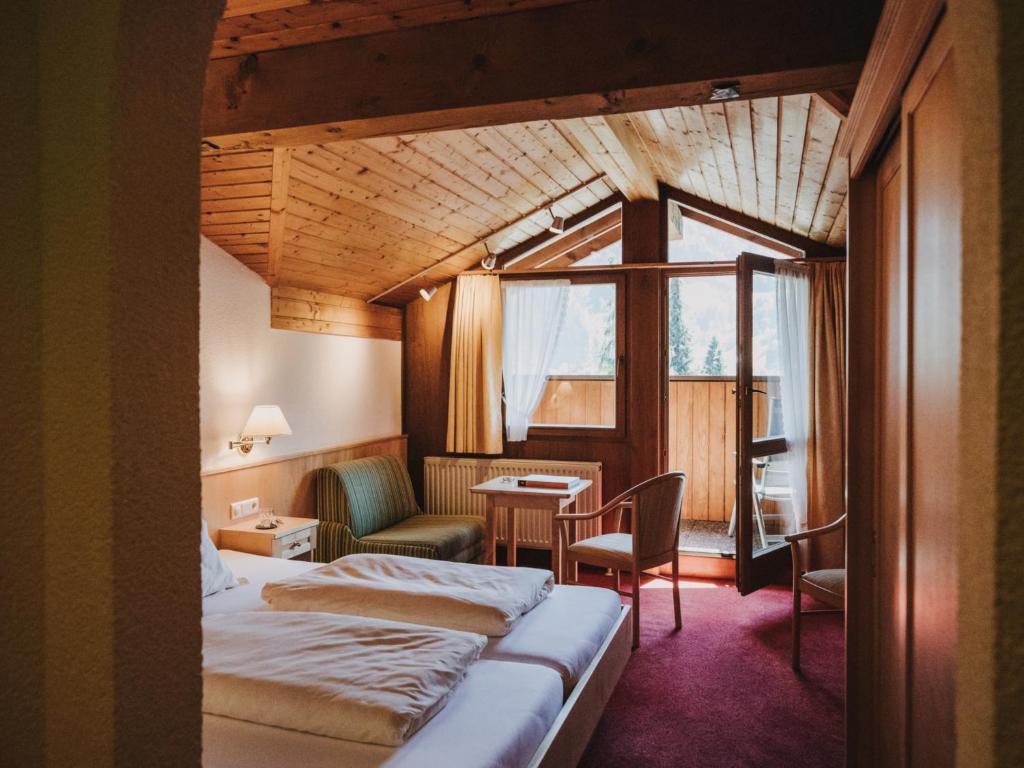
WHERE I STAYED IN MONTAFON: Hotel Zimba
A certified green hotel built in the style of a traditional hut, but fitted with thoroughly modern comforts. There is a genuinely excellent spa and a gym better equipped than mine at home, which I found both impressive and faintly insulting. It sits a two-minute walk from Schruns station, and the half-board dinners are hearty, with a generous salad buffet and a proper vegetarian main each night.
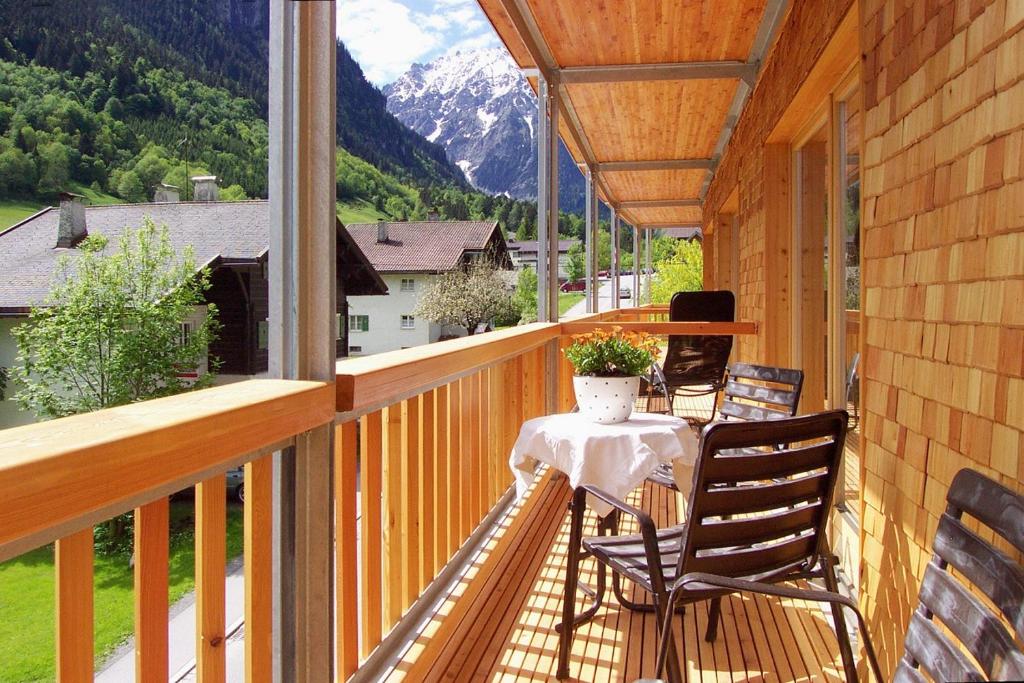
WHERE I STAYED IN BRANDNERTAL: Biotel Bertel Naturappartements
An organic-minded hotel in the storybook village of Brand, where I had a roomy apartment-style space to myself with sweeping views toward the sunset. It is a peaceful, nature-focused base, ideally placed for the hikes around Brandnertal. Just note it does not serve breakfast, so plan your mornings accordingly
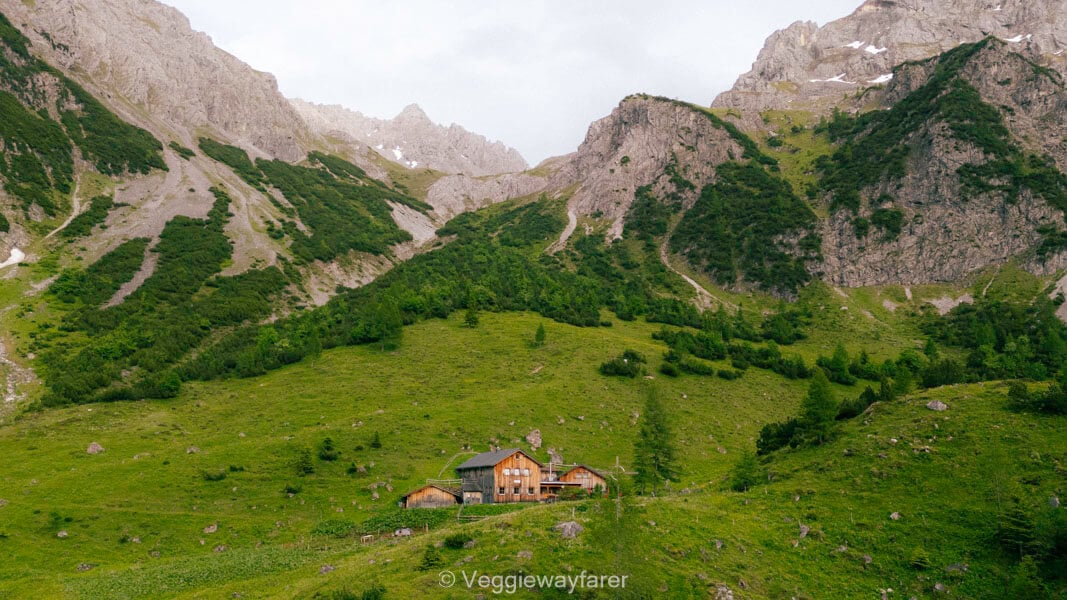
WHERE I STAYED IN THE MOUNTAINS: Sarotla Hut
Not a hotel, but the most memorable bed of the trip. Simple shared dorms, requires a hike to get to, offers halfboard (breakfast/dinner), and has ample vegetarian options available. I would recommend it to anyone who wants to properly unplug. See the full rundown in the Sarotla section above.
Make Your Trip to Vorarlberg More Sustainable
BRING A REUSABLE WATER BOTTLE | Water from the tap is drinkable.
LEAVE THE CAR AT HOME | Take the train to Bludenz or Bregenz, then hop on regional buses to Schruns, Brand, and the trailheads. Plan routes on vmobil.at, since Google Maps shows the wrong local times.
EAT THE VALLEY | Order Montafon Sura Kees and Käsknöpfle, buy cheese straight from the honesty fridges on the Gauertaler AlpkulTour, and favor huts like Sarotla that source within 50km and pickle and ferment their own produce.
RIDE THE GREEN LIFTS | The Golm and Brandnertal cable cars belong to one of the first near-climate-neutral ski regions, where lifts run on green electricity and snow groomers on vegetable oil. Montafon even pioneered solar-powered cable cars.
TREAD LIGHTLY IN WALSER COUNTRY | Stick to marked paths to protect the wildflower meadows, close every pasture gate behind you so the free-roaming cattle stay put, and carry your rubbish back down to the valley.
CLEAN LITTER WHILE YOU HIKE | Many Austrian Alpine Club huts, including refuges like Sarotla, take part in the "Saubere Berge" (Clean Mountains) scheme. You will find dispensers of free, compostable corn-starch bags, made to carry your own rubbish, and any stray litter you spot, back down to the valley. The local motto sums it up nicely: let the trash hike into the bag.
Best Time to Visit Vorarlberg
Vorarlberg is a true two-season destination, which is rare in Austria and part of its quiet charm.
For hiking, aim for late June through September. I went in early summer, when the cattle had just moved up to the middle pastures and the meadows were carpeted in wildflowers. It was, frankly, idyllic.
For snow, December to March delivers that near climate-neutral skiing, with the same understated, uncrowded feel. If you want the famous Alpabtrieb, when cows are paraded back down crowned with juniper and rosemary to mark a safe season, target mid-September to early October.
GOOD TO KNOW Mountain huts like Sarotla operate on short seasons, often only June to early October, because of avalanche risk. If a hut night is on your list, plan around those dates and book early.
What to Pack for Vorarlberg
Vorarlberg is a region that has both water and mountains. I focused mainly on visiting the mountains and packed the following into my bag:
- Sturdy, broken-in hiking boots, non-negotiable for the hut trails
- Warm layers and a waterproof, as alpine weather turns on a dime
- A refillable water bottle
- A sleeping bag liner and small towel if you are overnighting in huts
- Slippers or thick socks for shoes-off hut interiors
- Cash, since smaller huts and farm fridges do not take cards
- External battery pack: Not all huts have the possibility to charge your electronics
- Sunscreen: Even on cloudy days you can still burn when out hiking
Is Vorarlberg Worth Visiting
If you have read this far, you can probably guess my answer is an emphatic yes.
Vorarlberg will not hand you blockbuster sights or a checklist of must-dos. What it offers instead is rarer and, I would argue, more valuable: some of the most beautiful hikes in Europe, a robust system of public transport and a wide variety of geography ranging from mountains to lakes.
I arrived with a serious case of digital overwhelm and general stress from work, which in practice meant I was having trouble sleeping. After 4 days in the mountains, my head felt a lot clearer, my smartwatch told me I had the lowest level of stress in over a year, and my body was super content from spending many hours a day reconnecting with nature. For a holiday that genuinely resets you, I cannot think of many places that do it better.
Vorarlberg FAQs
How many days do you need in Vorarlberg?
Four to five days lets you explore two regions properly, as I did with Montafon and Brandnertal, including at least one hut night. With a week you could add the Bregenzerwald or linger longer by Lake Constance.
Do you need a car in Vorarlberg?
No. The train and bus network is excellent and, with the Guest Card, free for the length of your stay. Just plan journeys on vmobil.at rather than Google Maps, which shows incorrect local times.
Is Vorarlberg expensive?
It is broadly in line with the rest of Austria, and mountain huts and regional restaurants offer good value for genuinely good food. Free public transport via the Guest Card helps keep costs down.
Is Vorarlberg good for non-skiers?
Very. Summer is arguably the best time to visit, with world-class hiking, swimming, turquoise lakes, and pastures full of wildflowers and cattle. It is a true year-round destination.
What food is Vorarlberg known for?
Cheese, above all. Seek out Montafon Sura Kees, a tangy sour-milk cheese with roots going back to around 1240, plus Käsknöpfle (cheese dumplings) and Riebel (sweet fried cornmeal). The local milk and cheese owe their flavor to cattle grazing herb-rich high pastures each summer.
Is Vorarlberg a good destination for a digital detox?
Few places do it better. Many mountain huts have little to no signal, and the slow rhythm of valley and trail makes unplugging feel effortless. A night at a remote refuge like the Sarotla Hut is the ideal reset.
This article was sponsored by the Vorarlberg Tourism Board. All opinions, stories and images are my own.

MORE TRAVEL RESOURCES FOR VISITING EUROPE
Austria: Visiting Ischgl in Summer
Austria: Sustainable things to do in Graz
Austria: Off-the-beaten-path in Graz
Austria: Green parks in Graz
Belgium: 3 to 5 day Belgium itinerary
Montenegro: 7 Areas to stay in Montenegro
Italy: 7 Day Western Sicily Itinerary
To do in Vorarlberg - Pin it

RELATED POSTS
 From Plant-Based Scoops to Vintage Shopping: The Best Sustainable Things to Do in Graz
 Off the Beaten Path in Graz (With Training Wheels): How an Audio Guide Helped Me Venture beyond the Old Town
 A City Break for Nature Lovers: Exploring Green Spaces in Graz
 2 Day Brussels Itinerary: How to Spend an Unforgettable Weekend in Brussels


0 Comments