
Gabled guild houses crowding a Gothic town hall, a thirteenth-century village tucked behind the city walls, forty pubs ringing a single square and rolling green countryside barely ten minutes from the centre, are but a few of the things to do in Leuven awaiting the curious traveller.
Having studied here for three years in this famous Belgian university town, I can tell you with some embarrassment that I saw almost none of it. My days were spent between the lecture halls, the magnificent university library and, rather more often, the pubs of the Oude Markt, back when craft beer was not yet a thing and a lukewarm Jupiler was considered perfectly acceptable (the horror!).
Leuven is nestled right next to Brussels (a 20-minute train ride will get you there), yet somehow the city remains firmly off the tourist radar. There are no canals and no single world-famous sight. Yet with a plethora of craft breweries, a vibrant city centre and a lush wooded area on its doorsteps, it is well worth a gander. Read on to find what I would recommend friends to do both in and around Leuven.
Please note: This post contains affiliate links, meaning I may earn a commission if you make a purchase by clicking a link (at no extra cost to you). Learn more.
Things to Do in Leuven: Quick Guide
WHERE TO STAY
- Historical Character: Martin's Klooster
- The Romantic Pick: Begijnhof Hotel
- B&B in the Forest: B&B Miranosa
BEST TOURS
- Cycling Tour: Leuven Highlights & Beyond
- First timers: Guided Sightseeing Tour of Leuven
- More Cycling Guides: Routes & Pricing
GETTING THERE: Leuven is easiest reached by train (20 min from Brussels & Brussels airport). Book your train tickets via OMIO in advance. Train schedules can be consulted either on OMIO or via Google Maps (most up to date when there are delays, etc.)
GETTING AROUND: Rent a bicycle from Blue-bikes (pay per ride) or Fietspunt for €15 for a day.
USEFUL READING: The official website of Visit Leuven (the tourism office) and Visit Flemish Brabant (the tourism office of the region)
MORE GUIDES ON BELGIUM: As a Belgian, I have to admit I went a little crazy writing articles about Belgium to ensure travelers get to experience my country. Take a peek at all my Belgium guides to see if any strike your fancy.
Why Leuven Is Worth the Detour
Leuven was granted its city charter in the twelfth century and has been shaped ever since by two institutions: a university founded in 1425, the oldest in the Low Countries, and the brewing trade. By the middle of the eighteenth century there were 42 breweries along the banks of the Dijle, and brewing has been documented on the Den Hoorn site, where Stella Artois is still made, since 1366.
Both still define the place. Some 60,000 of the city's 160,000 residents are students, which gives Leuven a density of bars, bookshops and affordable eateries that a city this size has no business having. Five small breweries now sit within cycling distance of the Grote Markt, and the vegetarian cooking has gone from one dismal option (overcooked pasta) to an abundance of choice (one does not go on a diet when visiting Leuven).
What makes it worth the detour, though, is the geography. Ten minutes in any direction puts you in the Nationaal Park Brabantse Wouden, ten thousand hectares of woodland and river valley signposted for bicycles and boots, which means you can spend a morning under a UNESCO-listed ceiling and an afternoon decompressing in nature. Brb, just packing my bags.
13 Best Things to Do in Leuven
Like many medieval cities, Leuven was built around a waterway: The Dijle. This river once held no less than 42 breweries. These are alas a thing of the past, but the deep-rooted love for the brewing heritage has remained, and craft breweries are mushrooming up at a staggering rate.
Exploring Leuven means taking in culture in the historical centre, stretching your legs in the magnificent Brabantse Wouden around the city and fueling one's soul with delicious vegetarian food, washed down by a craft beer, or two, three.
GETTING AROUND LEUVEN | Leuven is awesome to discover by bicycle. You can either take a 2 hour cycling tour for €45 or alternatively rent a bicycle at Fietspunt for €15 for a day.
1. Explore de Grote Markt in Leuven
Address: Grote Markt, 3000 Leuven | Town hall: closed for restoration until 2029 | Cost: free
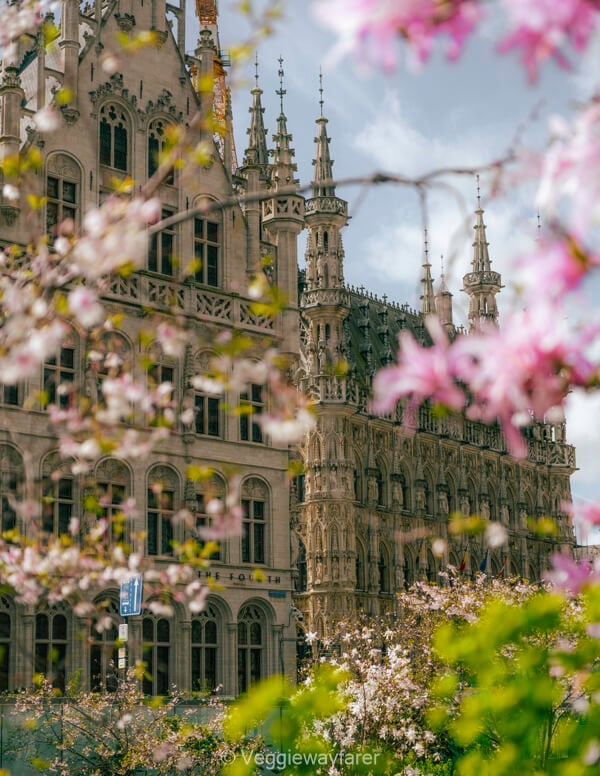
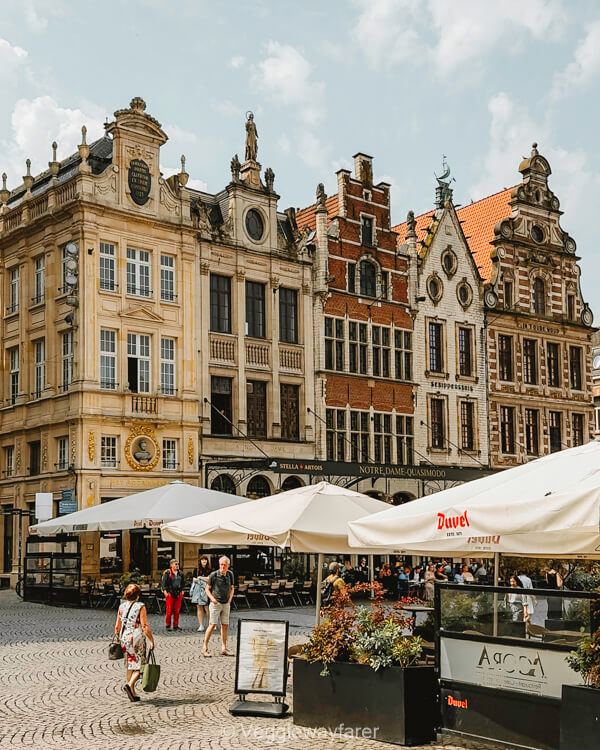
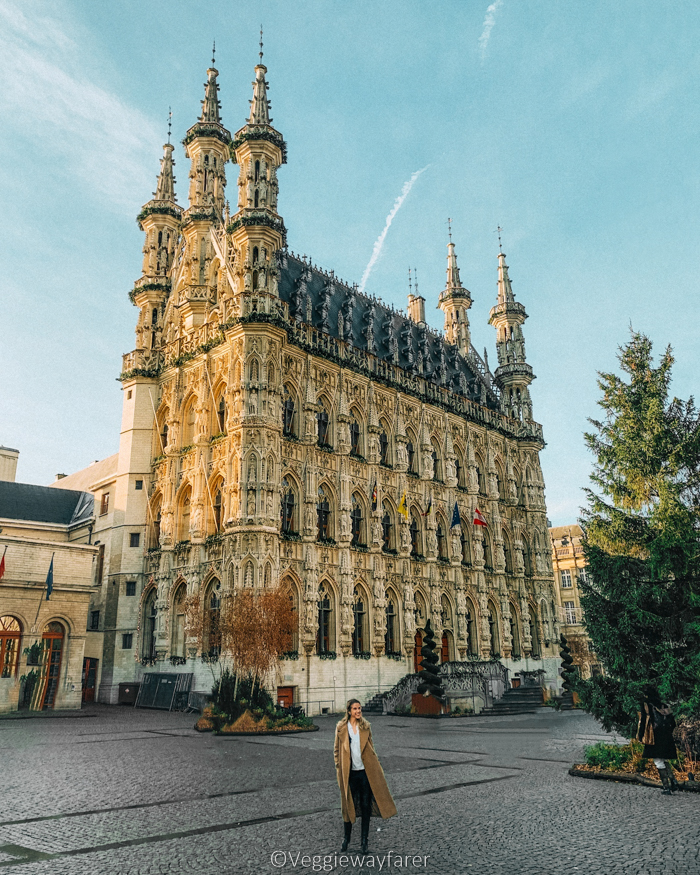
The Grote Markt is the finest square in Leuven and the natural place to begin, chiefly because its Gothic town hall is one of the most spectacular buildings in the country. It went up around 1450, took thirty years and three master builders to finish, and carries several hundred statues across a facade that has almost no flat surface left on it. For three years I walked past it on my way to lectures without giving it a second glance. Needless to say, that oversight has been corrected.
Facing it across the cobbles is Sint-Pieterskerk, and between the two stand the gabled houses of the merchants and guilds who paid for both. It is the clearest picture you will get of how a medieval Flemish city organised itself: church on one side, civic power on the other, money in between.
FOODIE TIP | Het Moorinneken at number 10 is where I go when I want a wholesome cup of coffee. Ask for it with a side of advocaat and their homemade biscuits.
GOOD TO KNOW | the town hall is wrapped in scaffolding until 2029 and cannot be entered. There is a 360 degree virtual tour of the interior online. The square itself is flat cobbles and fully accessible.
2. Go inside Sint-Pieterskerk and grab a tablet
Address: Grote Markt, 3000 Leuven | Opening hours: 10:00 to 16:30 | Ticket price: free
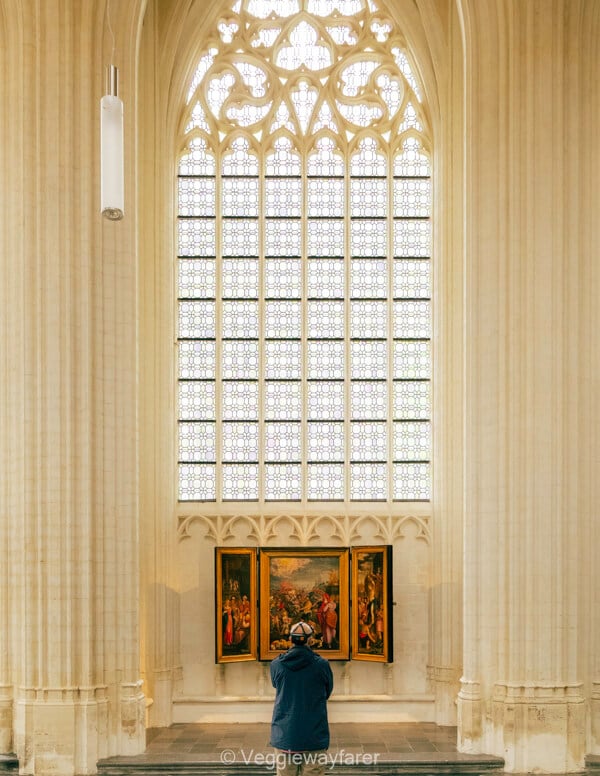
Sint-Pieterskerk holds some of the greatest Flemish painting in Belgium, and its stump of a tower is a monument to overreach. Begun around 1425 and running 93 metres long, the church was to have had three towers, the central spire reaching roughly 170 metres under Joost Matsys' 1505 design. The ground would not carry the weight, the money ran out, work stopped in 1541 at barely a third of the intended height, and collapses between 1570 and 1604 took it down further. Those unfinished towers have been UNESCO World Heritage listed since 1999.
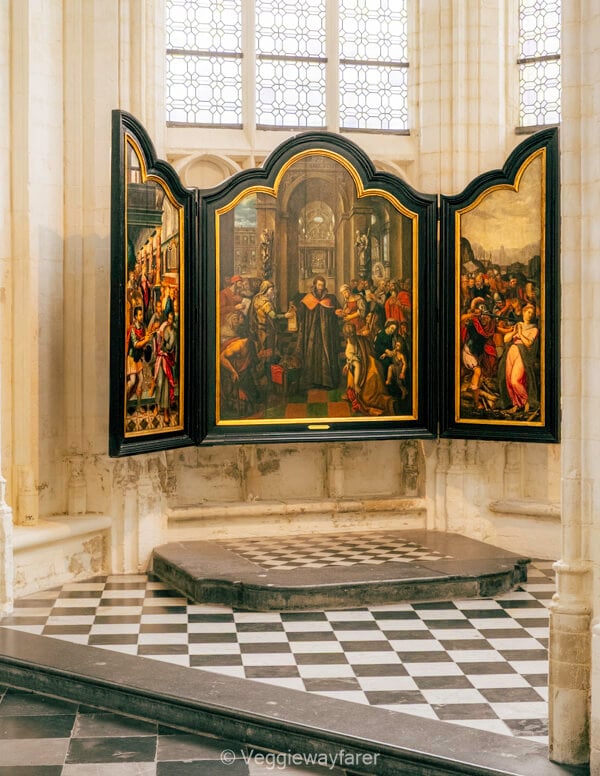
Inside hangs Dieric Bouts' Triptych with the Last Supper, painted between 1464 and 1468 and still in the chapel it was commissioned for. Bouts was Leuven's city painter, and the cycle route later in this guide is named after him. The commission is the detail I love: the university's theologians dictated the content and required that every scene contain bread.
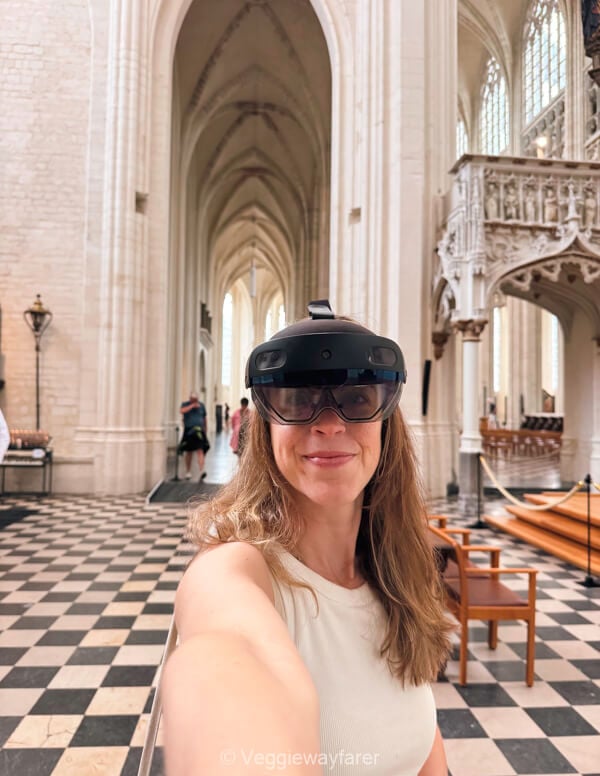
It is worth grabbing one of the tablets offered at the entrance to properly explore the twelve masterpieces (Beleef Bouts experience).
FUN FACT | The side chapels were paid for by Leuven's confraternities and guilds, and one of them was funded by the brewers' guild, which in a city that had 42 breweries on the river is not entirely unexpected.
GOOD TO KNOW | The chancel and ambulatory have functioned as a museum since 1998, which is what the ticket covers. Allow an hour with the HoloLens.
3. Wander into the Groot Begijnhof
Address: Groot Begijnhof 7, 3000 Leuven | Opening hours: permanently open | Entrance: free | From the Grote Markt: 1 km, 15 minutes on foot
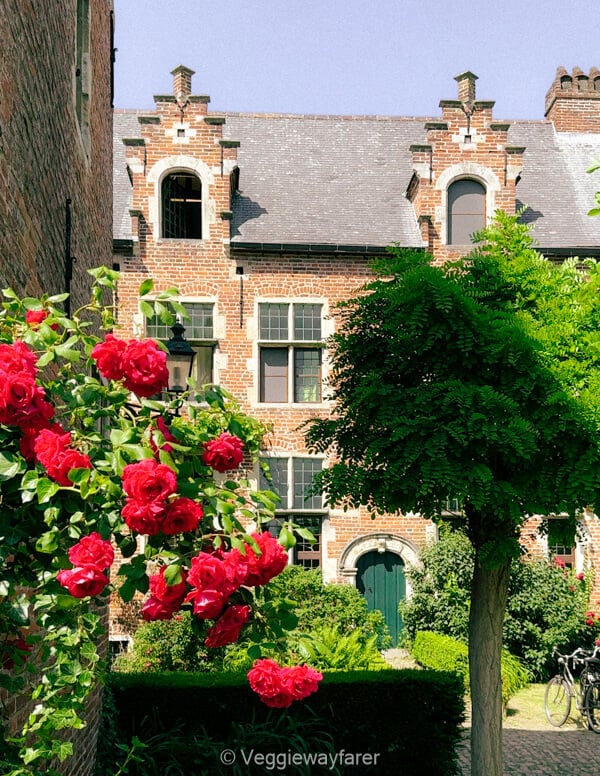
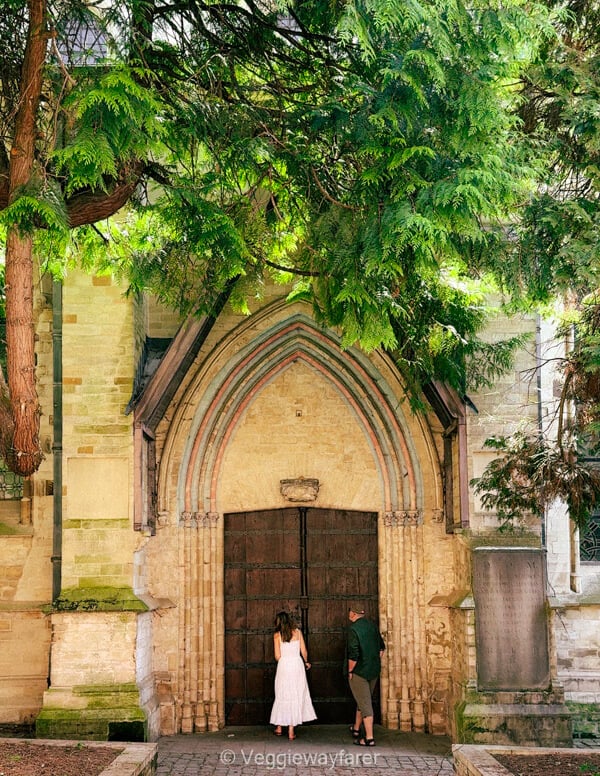
The Groot Begijnhof is a walled village of brick houses and cobbled lanes inside the city, and it shares its 1998 UNESCO inscription with the far more famous beguinage in Bruges. The latter sees millions of tourists each year and, in my opinion, is one of the least interesting places to see in the city. While in Leuven, it is definitely a highlight!
A begijnhof housed begijnen, women who lived a religious life in community but took no permanent vows and remained free to leave or marry. In the thirteenth century, that was close to radical, giving unmarried women somewhere to live independently when the alternatives were a husband or a convent. The oldest documents here date to 1232, and at its height between 1650 and 1670 some 360 beguines lived in these streets.
The university bought the entire beguinage in 1962 and spent twenty-five years restoring it, which is why roughly a hundred houses across three hectares survive intact rather than as a picturesque fragment. Students and visiting academics live here now, so it remains a place where people hang out washing, which is rather the point. Come on a date, find one of the benches, and see what the late afternoon light does to that brick.
GOOD TO KNOW | The road is made up of cobblestones, so leave the heels at home.
4. Spend a morning in Leuven's gardens
KRUIDTUIN
Kruidtuin: Kapucijnenvoer 30 | 8:00 to 20:00 May to September, 8:00 to 18:00 March, April and October, 8:00 to 17:00 November to February, one hour later at weekends | free
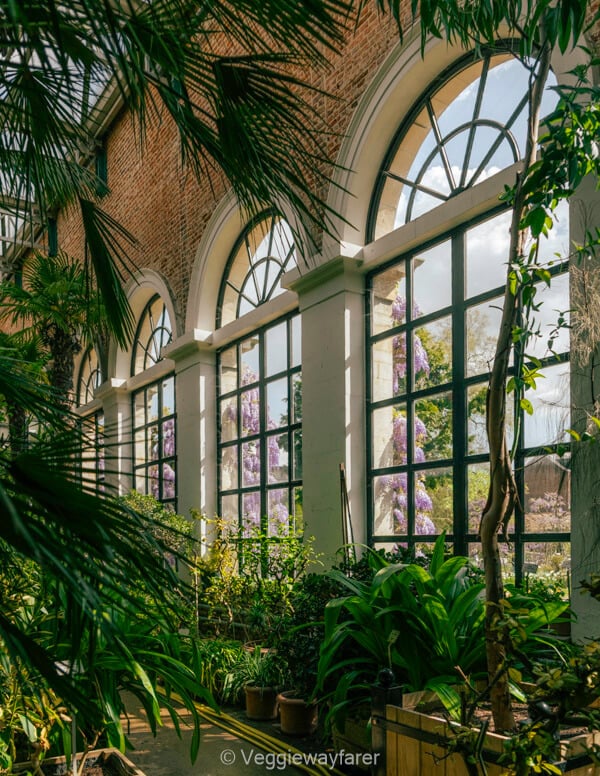
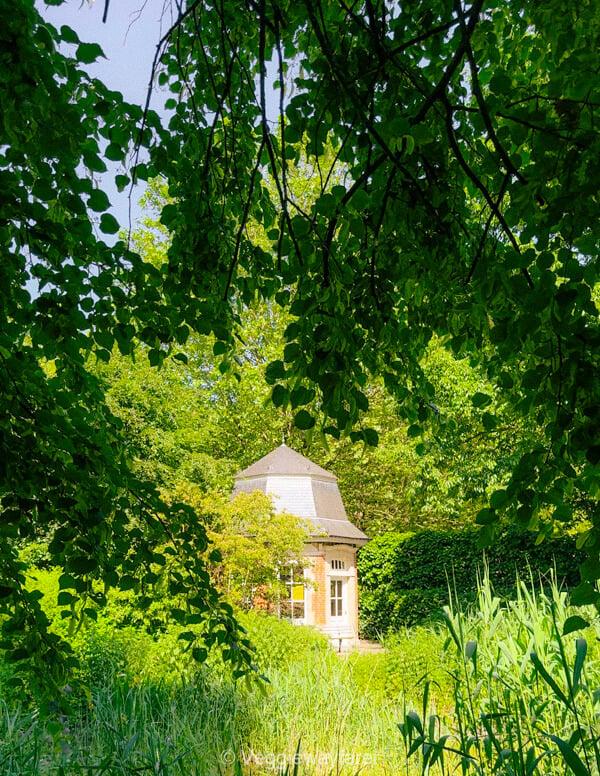
The Kruidtuin is the oldest botanical garden in Belgium, laid out in the university's name in 1738 so its medical students had specimens to study, and free ever since. There are 450 square metres of glasshouses holding medicinal, aquatic and sub-tropical planting, a Sunken Garden, and a Drought Garden of more than a hundred species that survive with no watering at all. Come between early May and mid-June for the wisteria, which is the finest I have seen anywhere in this country. Bring a book and stay a while, because nobody is going to hurry you.
DIJLEPARK
Dijlepark: Schapenstraat, entrance by the Dijle Duck statue | 9:00 to 21:30, closed in high winds | free
The Dijlepark I did not know existed. Three years studying in this city and I had never once heard of it, which tells you rather a lot about how well I knew the place I thought I knew. It opened to the public in 1994, so it was there the entire time.
The land had belonged to Victor Vander Kelen from 1893, who ran an industrial biscuit factory here under the brand Le Lion. An agreement with the city in 1987 turned what remained of the garden into public space; it opened in 1994, and the university took it over in 2003. Leuven's most romantic corner is the back garden of a biscuit works, wrapped on both sides by arms of the Dijle.
5. Visit the University Library
Address: Mgr. Ladeuzeplein 21, 3000 Leuven | Library with audio tour: €5, free for students | Library and tower: €10 / €8 / €5 | Under 12s: free
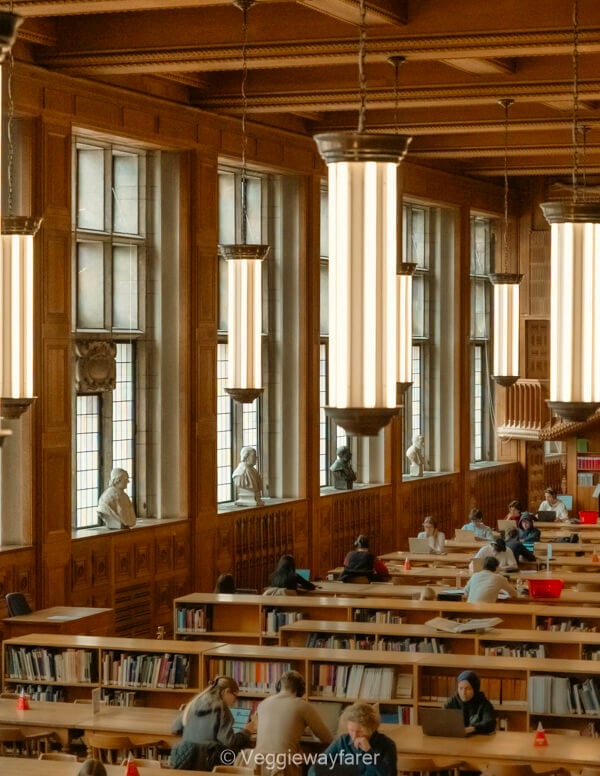
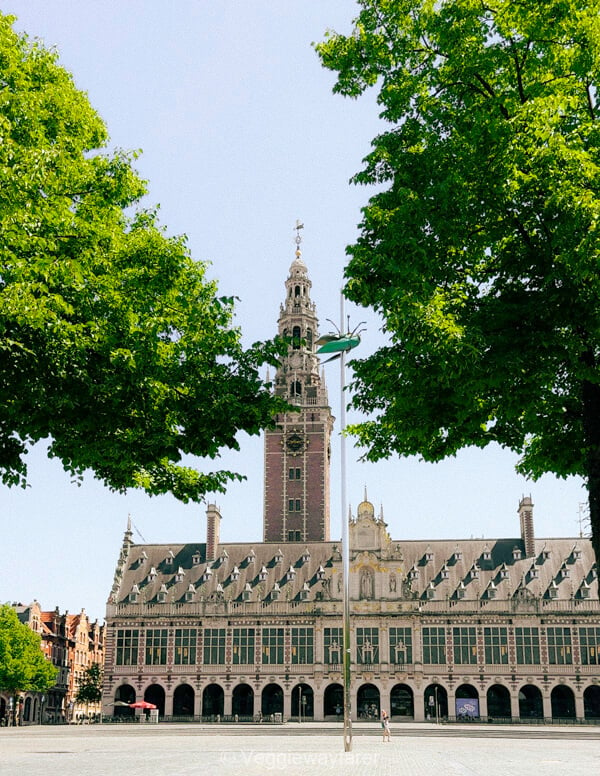
The Leuven University Library is the most extraordinary building in the city, and the reason is not its architecture but its history. On 25 August 1914, German troops set fire to it, destroying some 300,000 volumes along with the professional papers of 58 notaries, judges and professors. It burned for days and became an international symbol of the destruction of Europe's cultural heritage.
It was rebuilt between 1921 and 1928 under American oversight, designed by the architect Whitney Warren in Flemish neo-renaissance, and paid for through German reparations, with the Treaty of Versailles obliging Germany to hand over 13 million marks' worth of books. By 1939 the collection stood at around 900,000 volumes. On 16 May 1940 it burned again, taking nearly a million books with it. The building you walk into is the third one, and the permanent exhibition tells the story in five chapters, from "Leuven Burns" through "A Gift from America" to "War and Reconstruction, Again".
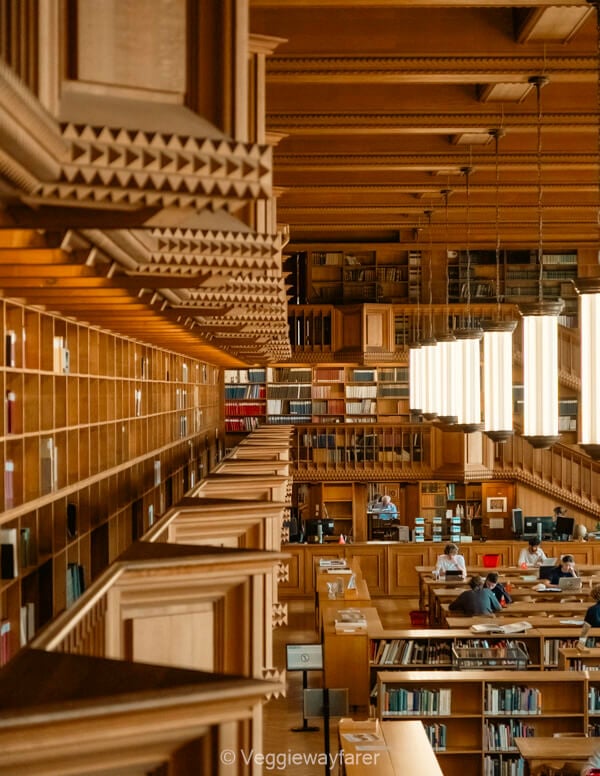
I spent a great deal of my degree in the reading room, usually four days before an examination, and never once gave any of this a thought. You can still visit that room, where students are genuinely working, so keep your voice down. Then climb. It is 289 steps across five floors to the balcony, and the stairwell narrows steadily until it becomes single file and one way only, so anyone claustrophobic should stop at the reading room. Out on the balcony you get the whole city and the countryside beyond it.
TIP | Climb on a Friday morning, when the market fills the square below until one o'clock. The carillonneur plays Tuesday evenings 18:30 to 20:00 and Wednesday lunchtimes 12:30 to 14:00, and you can sit in for €10, maximum 30 people. Tickets are refundable up to 48 hours ahead.
6. Have a drink on the Oude Markt
Address: Oude Markt, 3000 Leuven | Getting there: 1.2 km from the station
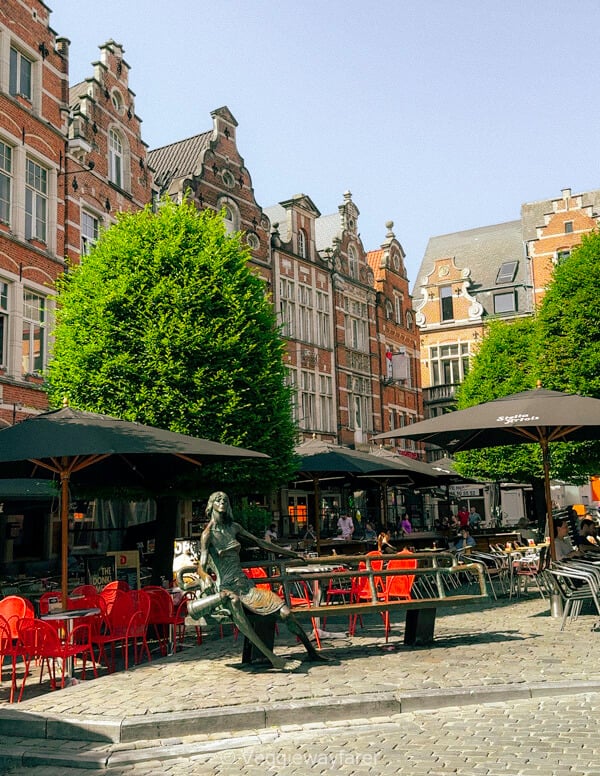
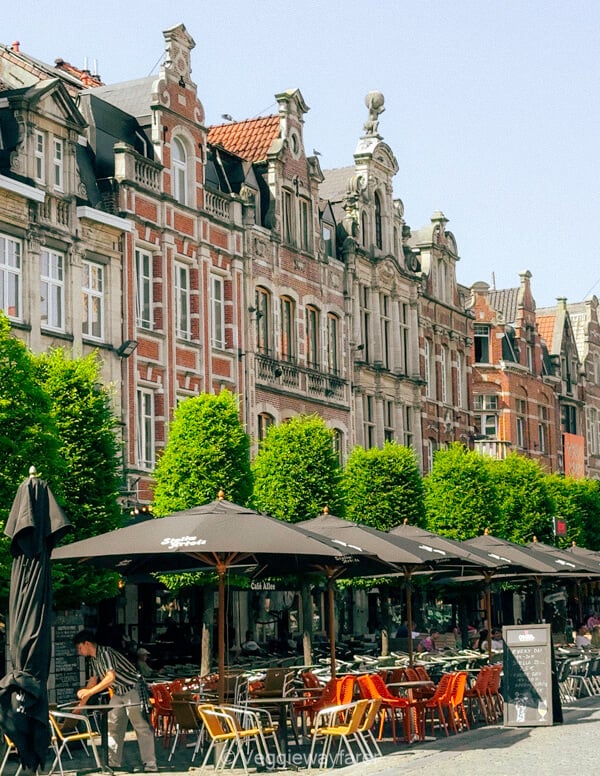
The Oude Markt is known as the longest bar in Europe, which is to say a single square ringed by some forty pubs and nothing else. Nowhere in Belgium packs that many licensed premises into one place. If you are hunting for the best bars in Leuven, this is both the beginning and the end of your search, and it is the heart of Leuven nightlife besides.
The square took its present form in a 1983 redesign, and it was the beating heart of my student life. Many an afternoon was spent here guzzling lukewarm Stella Artois, pining over my crush of the week. Not much has changed since I was a student many decades ago, and that is exactly why it's worth coming here for a drink!
Between your lukewarm sips, see if you can find the statue of a woman on a bench. That is De Kotmadam, sculpted by Fred Bellefroid as part of the same 1983 redesign, and she deserves an explanation. A kot is a student room, and the kotmadam was the landlady who ran the digs, part landlord, part chaperone and part surrogate mother to generations of students. The statue is a lovely tribute to a bygone era.
7. Take in a little culture at the museum
M Leuven: Leopold Vanderkelenstraat 28 | PARCUM: Park Abbey, Heverlee | Museum of Zoology: Charles Deberiotstraat 40, weekdays 8:00 to 17:00.
Leuven has seven museums, of which M Leuven, holding both historic and contemporary collections, is the one most visitors will want. I loathe to admit, I have yet to visit. Guess I know where I am headed next time I explore Leuven.
The one I have done is PARCUM, the museum of religious heritage at Park Abbey just outside the city, which I would send you to without hesitation. The Museum of Zoology holds the university's collection, assembled since 1850, and is gloriously odd. For both you can simply rock up and purchase a ticket on the spot during the openinghours.
The one to watch is the Vesalius Museum, opening 12 December 2026 in the city centre, dedicated to healthcare and scientific discovery and named for Andreas Vesalius, the father of modern anatomy, who studied here in the 1530s.
GOOD TO KNOW | The ILUV Leuven combi ticket at €19 includes M Leuven or Park Abbey alongside the library and tower.
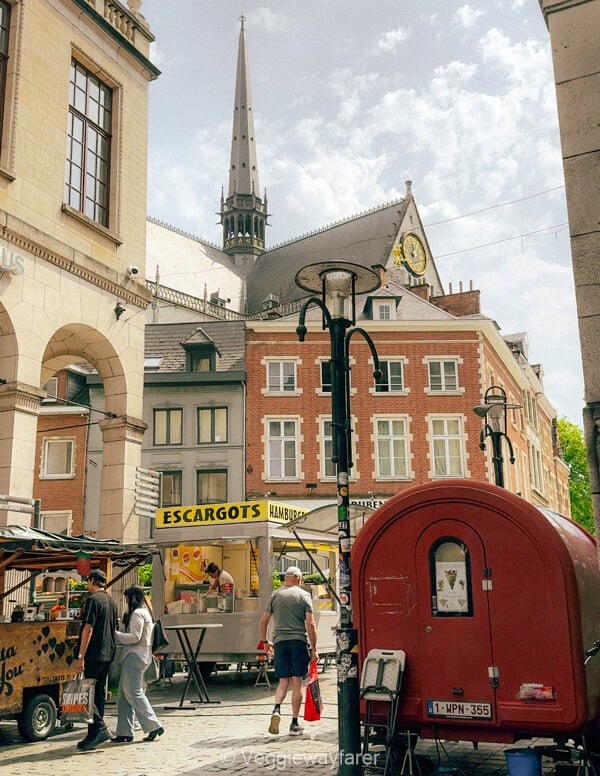
8. Time your visit for a market day
Friday: Ladeuzeplein and Herbert Hooverplein, 7:00 to 13:00 | Saturday: Brusselsestraat, Pensstraat and Parijsstraat, 9:00 to 18:00
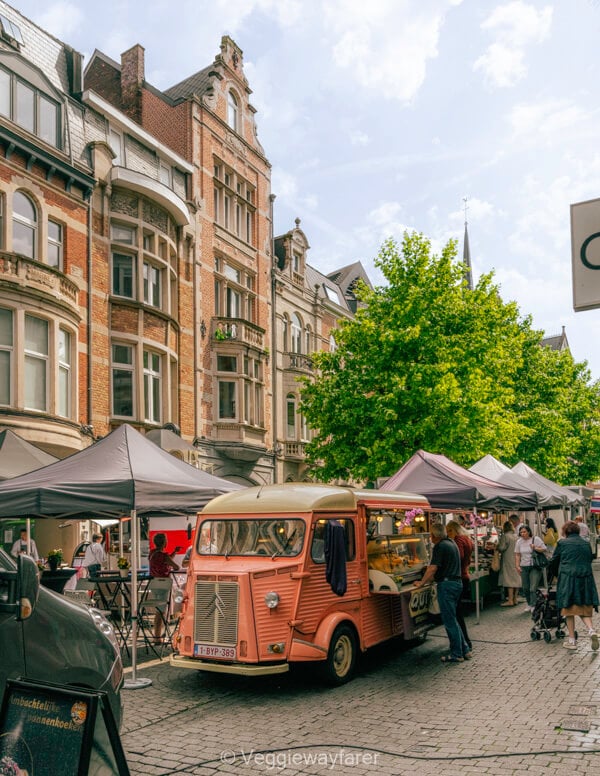
Leuven runs two weekly markets, and both are lovely to visit. Friday is the everyday one, food and flowers and fabric spread across the Ladeuzeplein and packed up by one o'clock. Saturday's market runs until 6 pm and is focused on food: dried goods, cheese, mushrooms, artisanal odds and ends
If you have only one day, come on a Friday. You get the market and the view down onto it from the library tower in the same morning, which is the single best hour I have spent in this city.
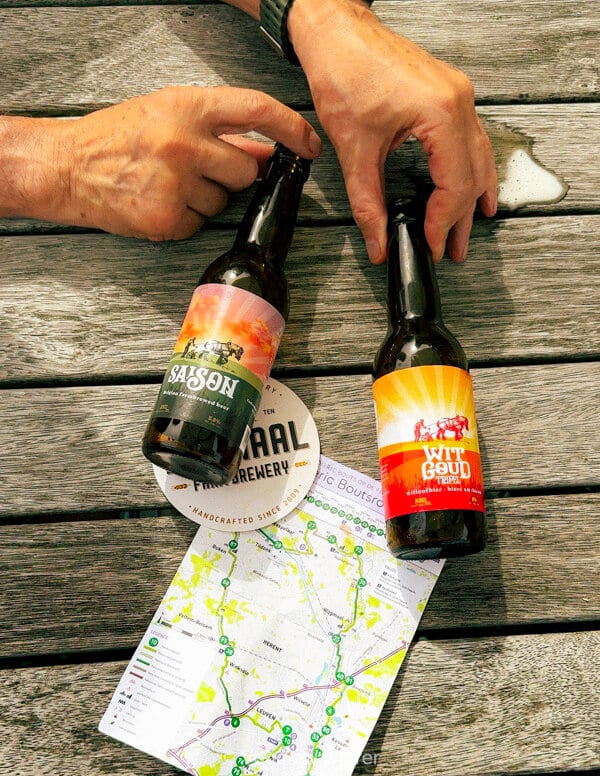
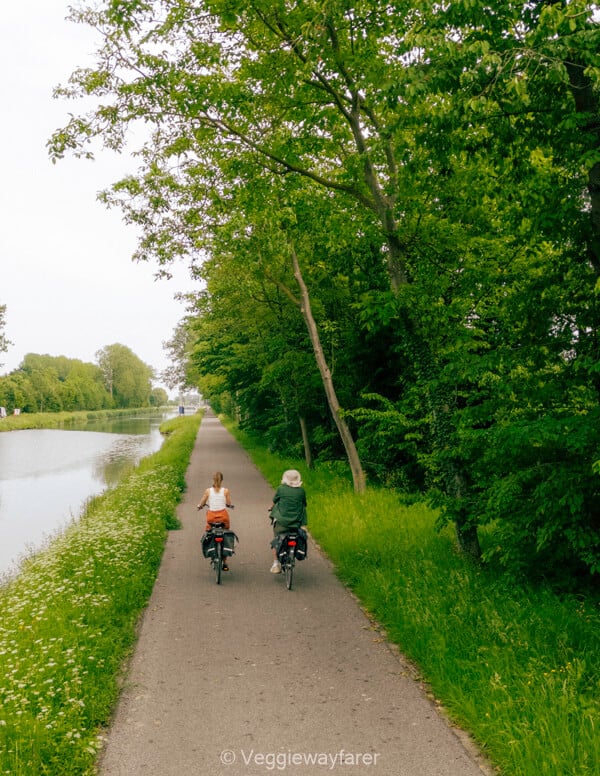
9. Cycle the Bouts and Beer Route
Distance: 46 km | Start: Sint-Pieterskerk, junction 10 | Knooppunten: 10-74-75-73-11-33-80-5-4-81-35-30-72-26-99-26-27-28-97-87-88-95-38-6-7-10 | GPX and brochure: visitleuven.be
The Dieric Bouts route is a 46-kilometre signed loop out of Leuven, officially one of Flanders' Finest Cycle Routes, taking in three breweries, an abbey, a castle and a great deal of farmland. Flanders navigates by knooppunten, numbered junctions rather than street names, so you follow numbers and put the map away.
It is largely flat, and it runs through the part of Vlaams-Brabant where I grew up, along a beautiful stretch of the Dijle river. You pass Park Abbey, founded in 1129, and Arenberg Castle in Heverlee, a sixteenth-century pile that now houses the university's engineering faculty.
If you are new to Belgium, this is the best thing on the list. It gives you villages, abbeys and a river valley, and a peek into the obscure Flemish culture. There is a second signed route from the same starting point, the Meerdaal Route, at 31.6 km, also one of Flanders' Finest, if 46 km is more than you fancy.
Practical info for your cycling trip around Leuven
Getting a bike: Velo Fietspunt at Leuven station and under Rector De Somerplein. Station hours Mon to Fri 7:00 to 19:00, Sat 8:30 to 17:00 from 1 April to 15 October. Sundays are Rector De Somer only, 10:00 to 19:00. Standard bikes, e-bikes, tandems and adaptive cycles, including a wheelchair bike.
Timing tip: Ride it in the early afternoon on a weekend, lunch at Hof ten Dormaal, which opens at noon on Saturdays and Sundays, and finish with an aperitif at De Coureur. On a Friday, Hof ten Dormaal does not open until 17:00, so lunch has to be De Smederij from 11:30.
Good to know: This is 46 km with three brewery stops and Belgian beer is strong. Adept and Hof ten Dormaal both offer alcohol free tasting options.
Leuven Breweries: Where to Drink Craft Beer
Those 42 breweries on the Dijle are long gone, and for most of the twentieth century Leuven beer meant one company. In the last fifteen years the small ones have come back, and three of the four below sit on the cycle route above, which is the easiest way to reach them.
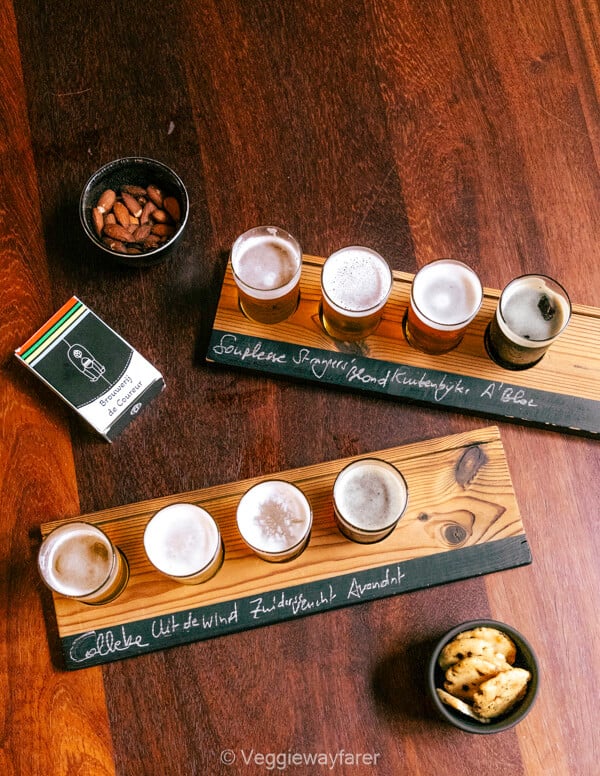
- Kuitenbijter, De Coureur, New England IPA, 6.3%. Named for a climb that bites your calves.
- Colleke, De Coureur, cream ale, 4.5%. Named for a hill you get up without noticing.
- Souplesse, De Coureur, golden tripel, 6.9%. Named for riding effortlessly.
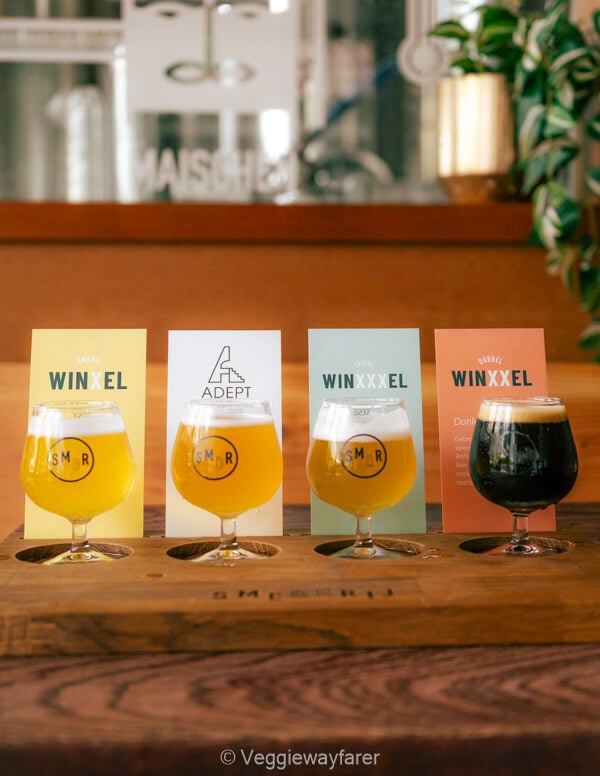
- Adept, blond, 7.5%, plus WinXel Enkel 4.7%, WinXXel Dubbel 5.6% and WinXXXel tripel 8%.
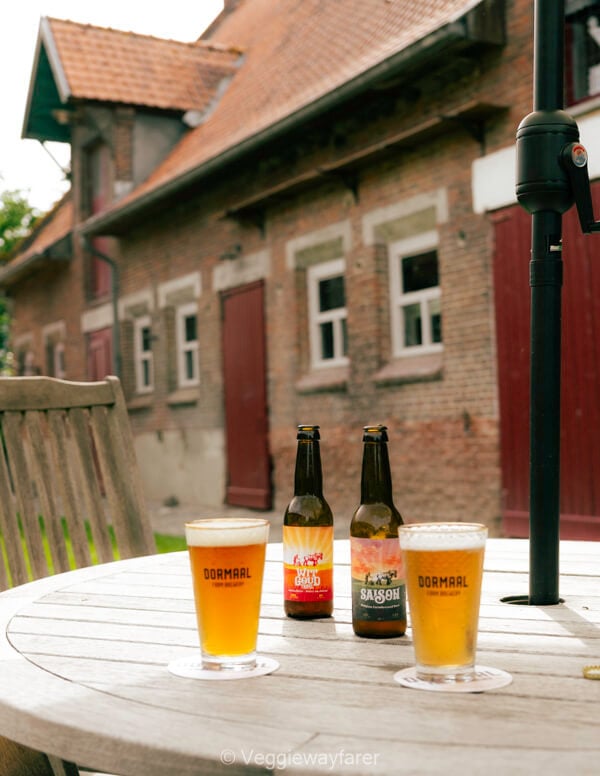
- Tripel Blond, Hof ten Dormaal, 8%, and Wit Goud, brewed with dried chicory instead of hops.
- Libertus 13, Braxatorium Parcensis, dark dubbel, 7%, brewed inside Park Abbey.
X, XX and XXX were the old Belgian brewers' marks for strength, which is where enkel, dubbel and tripel come from. Adept's village is called Winksele. WinXel, WinXXel, WinXXXel.
Domus, in the centre
Address: Tiensestraat 8, 3000 Leuven | Tours: groups of 8 or more, by reservation
The only brewery you can walk to from the Grote Markt, two minutes away, with six house brews and a medieval cellar. If you have one afternoon and no bicycle, this is your brewery.
De Coureur, Kessel-Lo
Address: Borstelstraat 20, 3010 Leuven | Friday: 17:00 to 22:00 | Website: brouwerijdecoureur.be
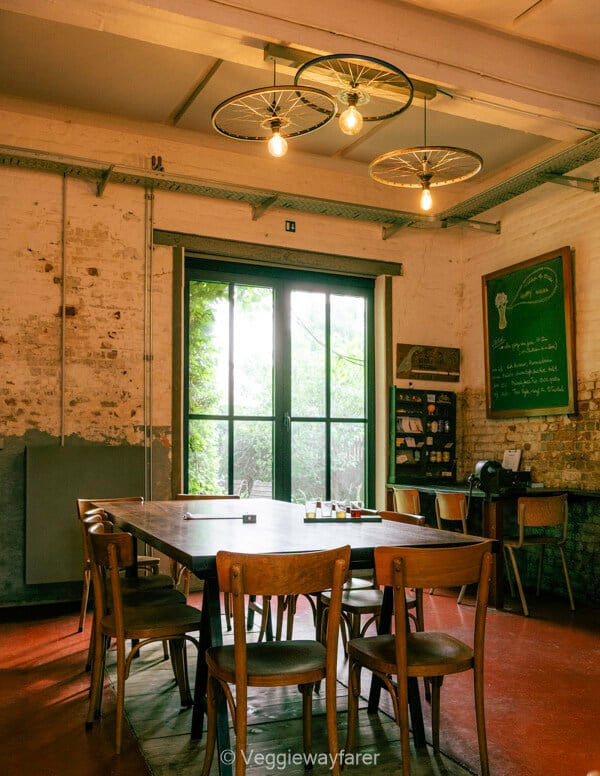
Bart Delvaux and Ine Van der Stock brewed their first commercial batch on 1 April 2020, a fortnight after Belgium locked down, and could not open the taproom until June, so for a time they sold beer at the door. They make around 10,000 litres a year on four small tanks, and pour draught only, no bottles at all, deliberately.
Which is why it has become a neighbourhood living room, with people turning up on a Friday carrying their own snacks. Three beers are permanent and a new one lands every month, so order a peloton, their tasting flight, and work through four in small glasses. We came nowhere close to trying them all, which I choose to regard as an argument for going back.
Good to know: bar stools made from old bike saddles, bicycles on the walls, and a logo drawn by their niece Lilia. Nothing here can be taken home.
Adept and De Smederij, Winksele
Address: Warotstraat 4, 3020 Winksele | Getting there: bus R92 from Leuven station, or on the Bouts & Beer cycle route Website: desmederijwinksele.be
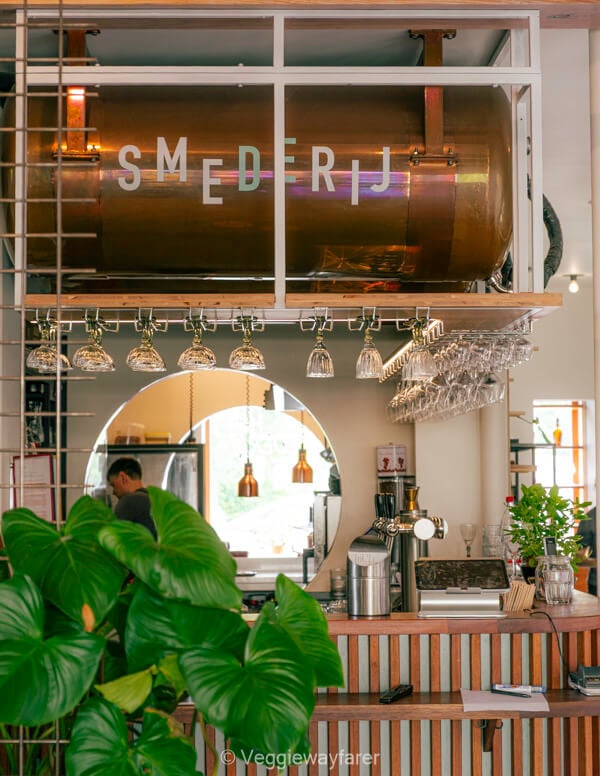
A microbrewery in a former blacksmith's shop, run as a cooperative with an eatery under the same roof, so you watch the tanks while you eat. The brewer is Dimitri Staelens, who spent twenty-five years at InBev and Duvel-Moortgat and worked alongside Professor Freddy Delvaux at De Kroon brewery before starting this, which his own channels describe as the realisation of his life's dream.
From outside it gives you nothing at all. Inside it is one of the nicest rooms we sat in all weekend; the staff were the friendliest people we met, and as a vegetarian I ate very well, which out on a cycle route in rural Flanders is not something I take for granted.
Good to know: order the proefplankje, four 10cl glasses talked through at the table. Brewery tours run 75 minutes at fixed times, private tours for groups of eight or more, and beer pairings with chocolate or cheese. Every tasting option can be taken alcohol free.
Hof ten Dormaal, Tildonk
Tasting room: Kraneveldhoeve, 3150 Haacht, Fri 17:00 to 21:00, Sat 12:00 to 21:00, Sun 12:00 to 17:00 | Brewery: Caubergstraat 2, 13:00 to 19:00
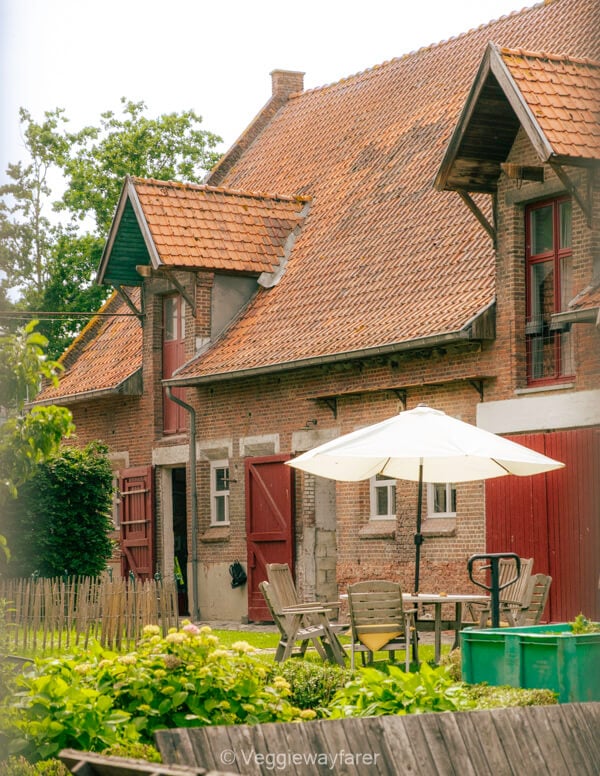
A farm brewery on a twelfth-century estate that grows its own grain, hops, fruit and yeast, which almost nobody does. The family moved here in 1998 wanting a quieter life. In 2009 André Janssens, an accountant, suffered a stroke, and the brewery grew out of his recovery. His own words: "We are not beer geeks. I was an accountant. He was the farmer."
His sons run it now, Dries farming and Jef brewing, and only about a third of the harvest ends up in beer, which means crop rotation obliges Dries to plant six hectares of wheat when Jef needs one. Then in January 2015 the whole thing burned down overnight, taking the bottling line, the conditioning rooms and nearly all the stock. Only the brew kit survived. It took four years to rebuild, and two weeks after the fire they brewed a collaboration beer they had already promised somebody.
I had cycled a long way on a hot day, wanted something light and refreshing, and ordered their Tripel Blond, which is 8%. That, I find, is what tends to happen at a good brewery.
Good to know: two places to drink, the tasting room and the farm itself. If the weather is kind, go to the farm, where the tables sit outside beside the water in a twelfth-century courtyard.
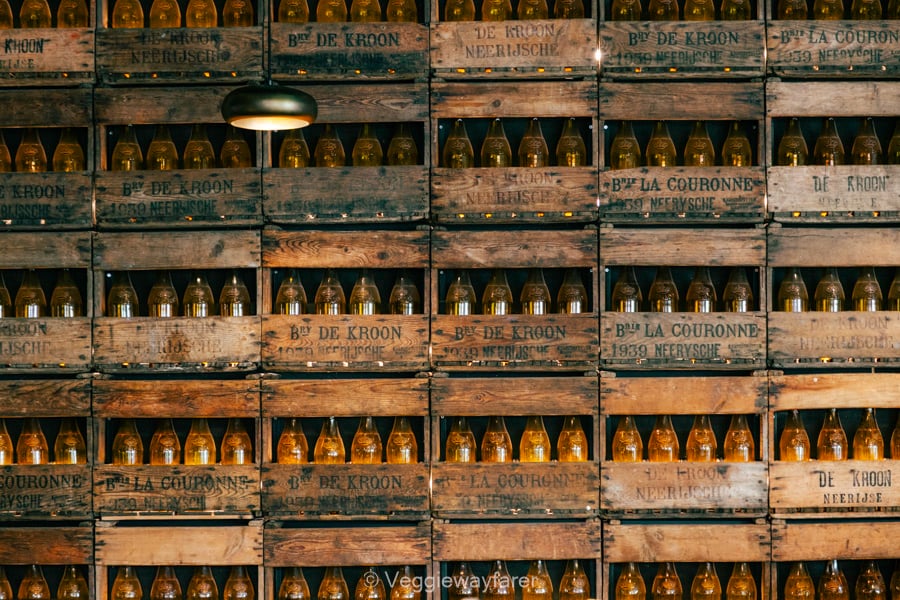
De Kroon, Neerijse
Address: Beekstraat 20, 3040 Huldenberg | Tours: first and third Saturday of the month, March to October, 16:00, no booking needed | Budget: around €40 a head to eat | Website: dekroonneerijse.be
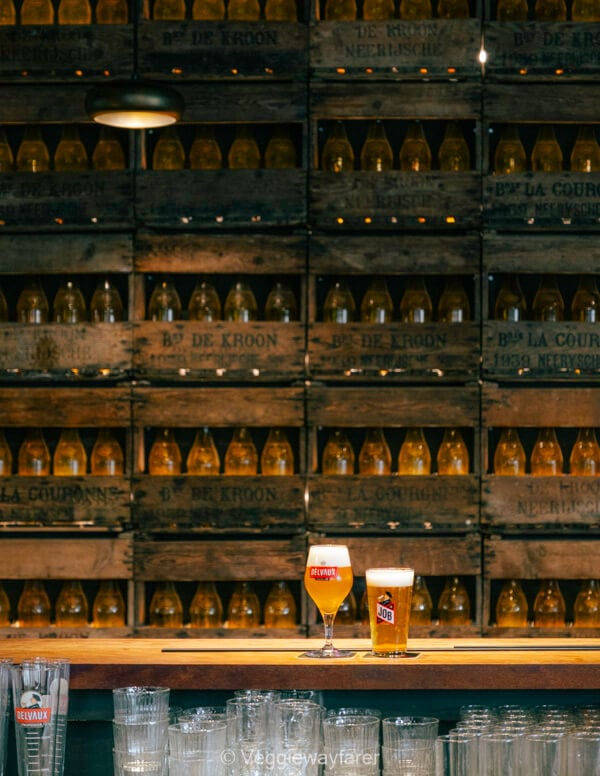
De Kroon opened in 1897 under the De Coster-Depré family and closed in 1983, and the reason to come is that nobody stripped it out. The mash tun, the direct-fired boiling kettle and the coolship all survive from the 1920s and 30s, which is why the Belgian state made the site a protected monument in 2003. There is a beer museum alongside the working brewery and a bistro attached.
The man who brought it back is Professor Freddy Delvaux, who took his doctorate in 1972, spent seventeen years at what is now AB InBev in Leuven, then founded the brewing science laboratory at the university. On retiring, he bought the place with his sons Filip and Peter. If the name rings a bell, it should: Dimitri Staelens, who now brews at Adept, worked alongside Professor Delvaux here before starting out on his own. One man connects the multinational, the university and half the small breweries in this guide.
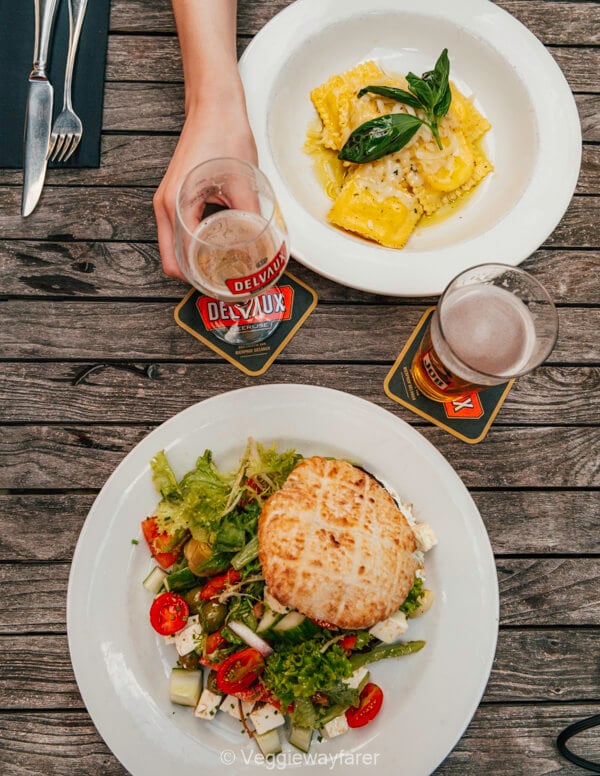
I had the dish of the day, a Greek salad with flatbread, and drank the Delvaux, a special blond at 8.5% with a genuinely distinctive character. My friend tried the Job, a 6% blond, and found it a touch bitter for her. Five beers make up the core range, with five seasonals that you can only drink here.
Good to know: the vegetarian choice is thin and mostly salads, so manage expectations, though the desserts are worth staying for. The new brewery and tasting room are step-free; the old brewhouse is not. The Margijs walk passes the door.
Braxatorium Parcensis, Park Abbey
Address: Park Abbey, Heverlee | Website: braxatoriumparcensis.be
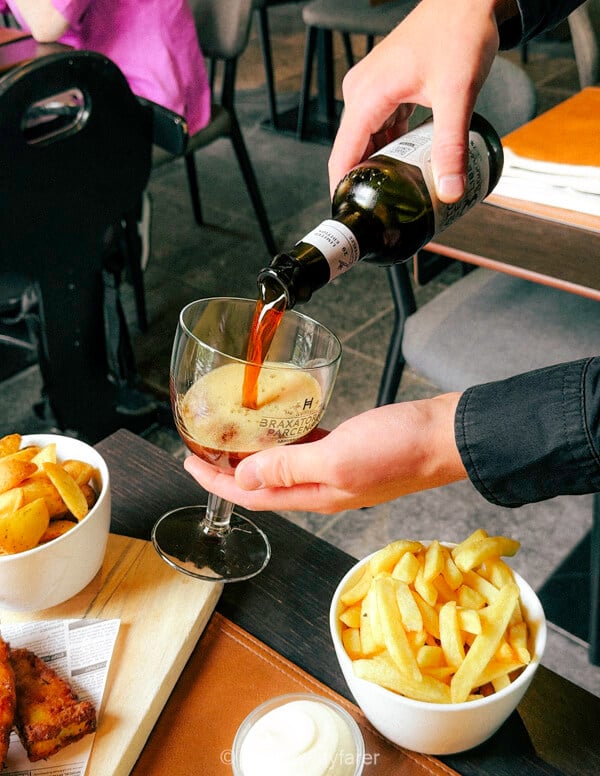
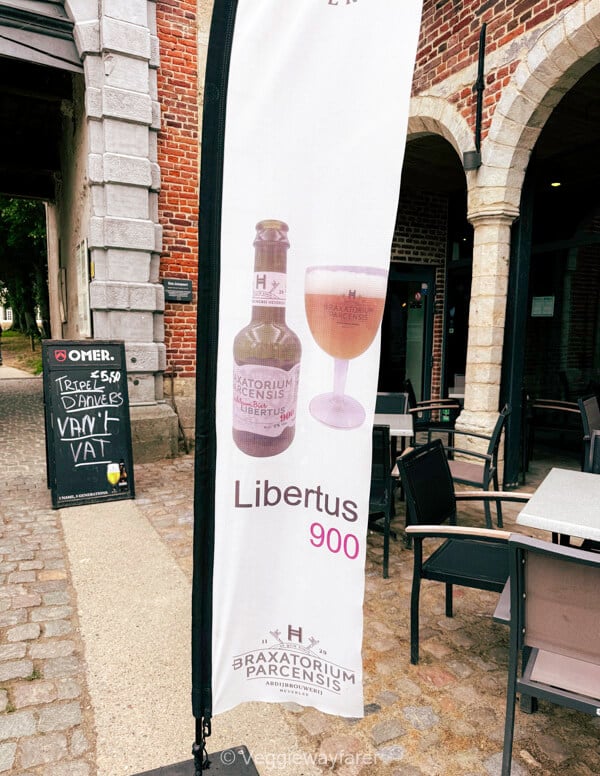
Brewing returned to Park Abbey in 2019, rebuilt in its original position on the ground floor of the guest quarters by brewer Joris Brams working with the Norbertine community. Because it is made inside the abbey walls it counts as a genuine abbey beer, on the same footing as the Trappists, though it is not one, since Park Abbey is Norbertine.
They make around 2,000 hectolitres a year from local organic ingredients. The beer is called Libertus, after Abbot Libert de Pape, the same man who commissioned the abbey's extraordinary library in 1672. I drank the Libertus 13, a dark dubbel at 7%, at the brasserie by the abbey gate, and it is a flavour you will not find anywhere else.
Good to know: sold at the abbey museum shop and the De Wikke farm shop on site, and served at Brasserie De Abdijmolen by the gate. The abbey itself is covered in the green belt section below.
Where to Eat in Leuven: Vegetarian Friendly Restaurants
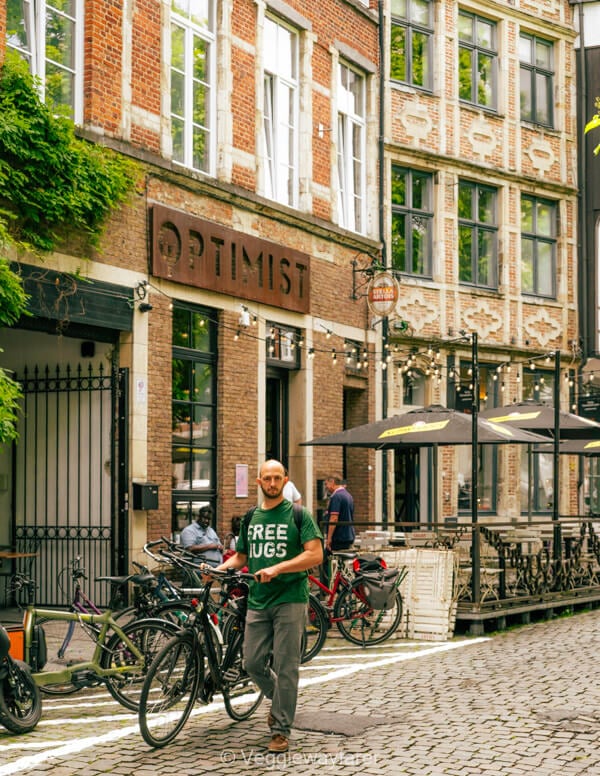
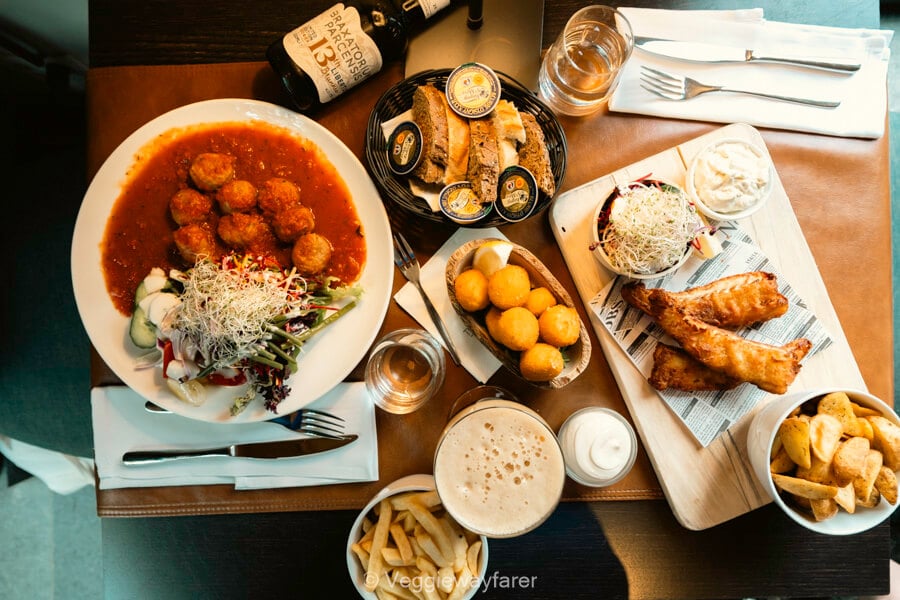
OPTIMIST | A food sharing restaurant serving small plates from all over the world, in one of my favourite corners of the city. You order a spread and pass them round. My father and I had five between two, which was about right. There is a great deal here for vegetarians, and every dish comes in three sizes specifically so people order what they will actually finish. A simple idea, rarely done.
HOP GASTROBAR | The place to go for an upscale dinner, down at the old harbour basin, with an open kitchen and a five-course menu (one menu for meat-eaters and the other for vegetarians). What makes it worth writing about is that where any other restaurant at this level pours wine, HOP pairs with beer; many of the beers stem from the region.
NOORDOEVER | A vegan, organic buffet where you pay by the weight of your plate, and the best value eating in Leuven. I have been vegetarian for a very long time, so when I say the food was doing things I had not come across before, I mean it. We finished with cake, which is where vegan kitchens usually give themselves away, and it was moist and quite delicious.
BODHI| Fully vegan Asian, absolutely rammed when we went, and entirely justified. I worked through a good part of the menu, buns to dumplings, and everything was excellent. It sits on one of the streets the Saturday market runs down.
STADSCAFE VAN DE VELDE | A café inside Tweebronnen, Leuven's public library, and a lovely spot for breakfast or lunch. Not the university library, the other one. Seasonal cooking, coffee roasted in Leuven by Naft, and a monthly brunch on first Sundays if you book.
HAL 5 (KESSEL-LO) | A former railway workshop turned food hall, five minutes from the station, doing Neapolitan pizza, Palestinian falafel and ice cream. Useful if you are out on a bicycle rather than in the historic centre. Camping Flamingo, a market of some forty makers, runs here on second Sundays.
Where to Stay in Leuven
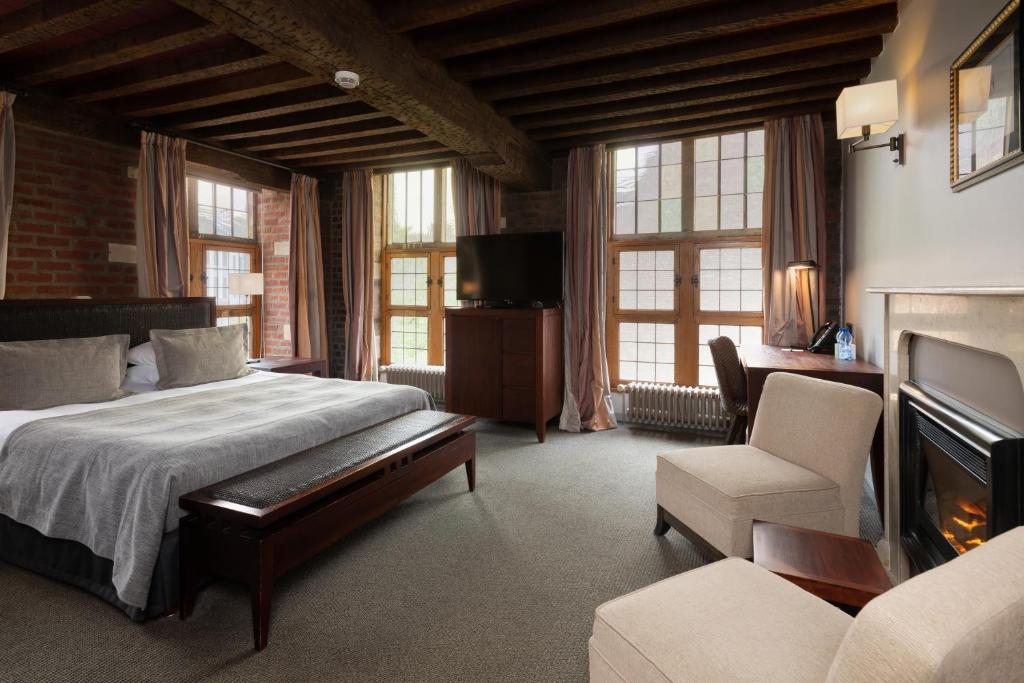
PERSONAL RECOMMENDATION: MARTIN'S KLOOSTER
Martin's Klooster is a sixteenth-century convent turned hotel in the middle of Leuven, with a second wing in the Gasthuis next door, an eleventh-century hospital building restored and folded into the hotel. Green Key certified, a few minutes' walk from the Grote Markt. Big fan of the breakfast buffet AND the architecture of the hotel itself. This is where I send friends who come to explore.
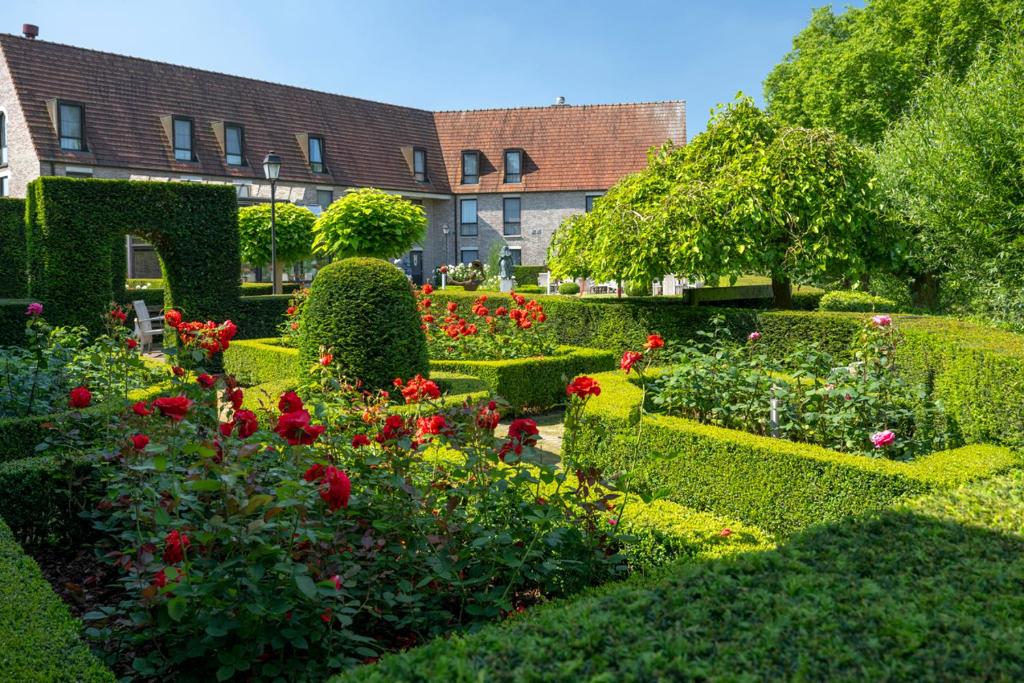
COZY GETAWAY: BEGIJNHOF HOTEL
This little hotel is nestled 200 meters from the 13th-century Begijnhof and has views over it from every room. It's locally run, has very limited rooms and features a sauna, a small fitness room, a wonderful garden and a terrace. The perfect spot for a romantic escape into Leuven.
Day Trips from Leuven: Things to See Around the City
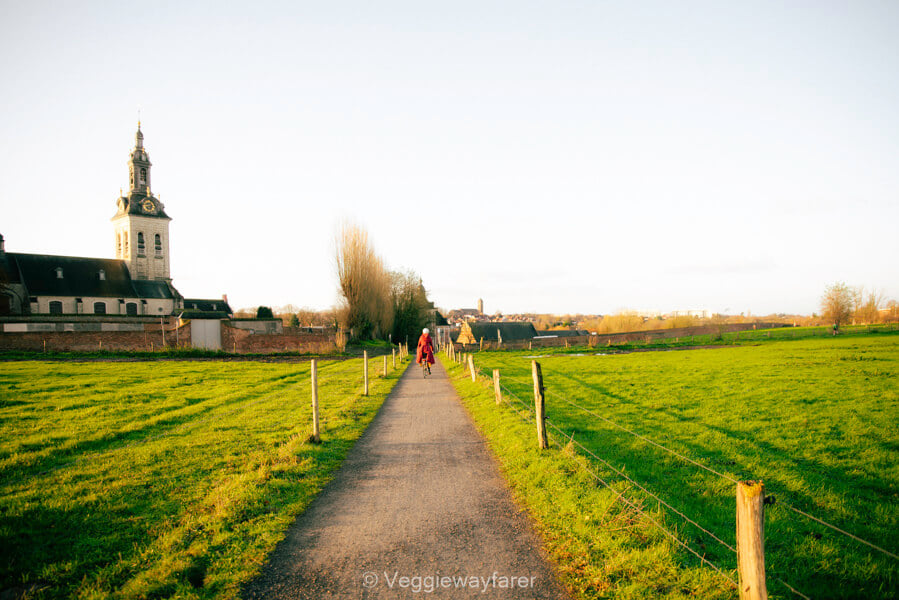
A fifteen-minute bike ride from the historical centre of Leuven will take you deep into an ancient woodland. What you are heading into is the Nationaal Park Brabantse Wouden, more than 10,000 hectares of forest, river valley and sunken lane recognised as a national park by the Flemish government in October 2023.
Heverleebos and Meerdaalwoud are the Leuven end of it, the Dijle runs south out of the city straight through the middle, and Leuven is one of the twelve municipalities that make up the park. The best things to do around Leuven are hiking, cycling, kayaking and even exploring an age-old abbey.
10. Walk the Vijf Eiken trail through Heverleebos
Distance: 9.2 km | Start: Arboretum Heverlee, Naamsesteenweg 500, 3001 Heverlee | Waymarking: walking knooppunten, no map needed | Surface: 93% unpaved | Bus: line 631 to Heverlee De Jacht | Map and GPX: visitvlaamsbrabant.be
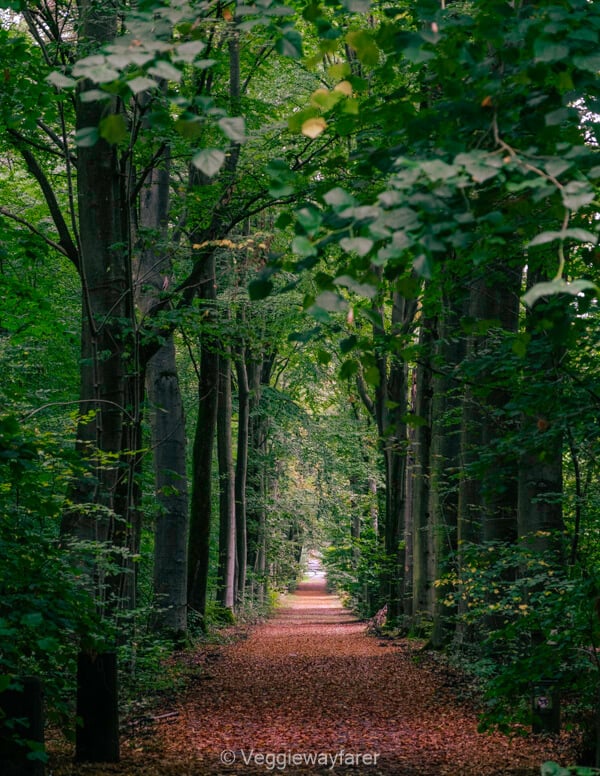
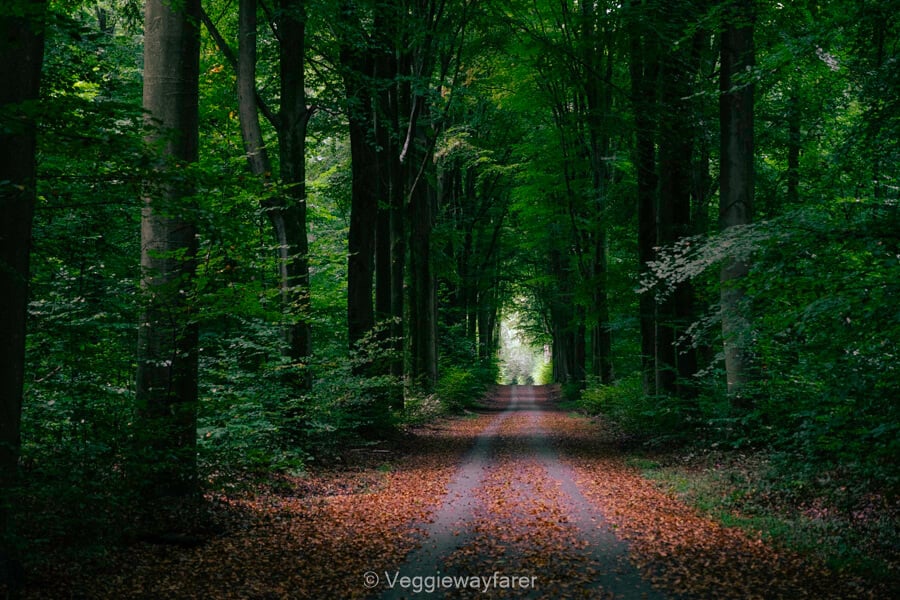
Heverleebos and its neighbour Meerdaalwoud are ancient natural woodland, with metres-tall beeches forming long wooded paths which feel like they are the scene of Alice in Wonderland. The Vijf Eiken trail loops nine kilometres through both, starting at the arboretum and climbing gently for most of its length.
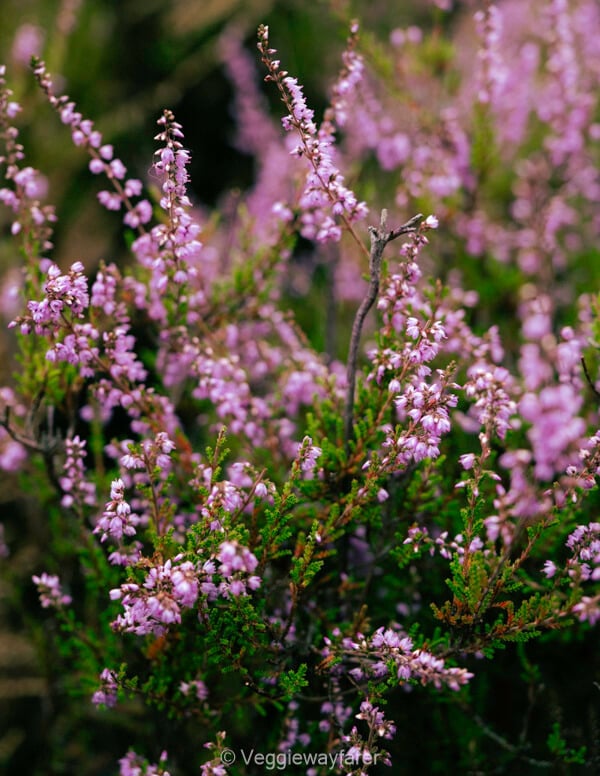
Go in late summer and the heather is out in the clearings. Go in October and the whole thing turns copper, the paths fill with leaves and you will very likely be rained on, which I consider a fair exchange. Either way this is the walk to do if you only have time for one.
The same woods carry the Meerdaal Route, a 31.6 km signed loop from Sint-Pieterskerk and officially one of Flanders' Finest Cycle Routes, so you can ride the forest instead of walking it if your legs prefer.
GOOD TO KNOW | Wear proper shoes, not trainers. Ninety-three per cent of this route is unsurfaced, and the Dijle valley soil holds water for days after rain.
11. Kayak the Dijle from Korbeek-Dijle
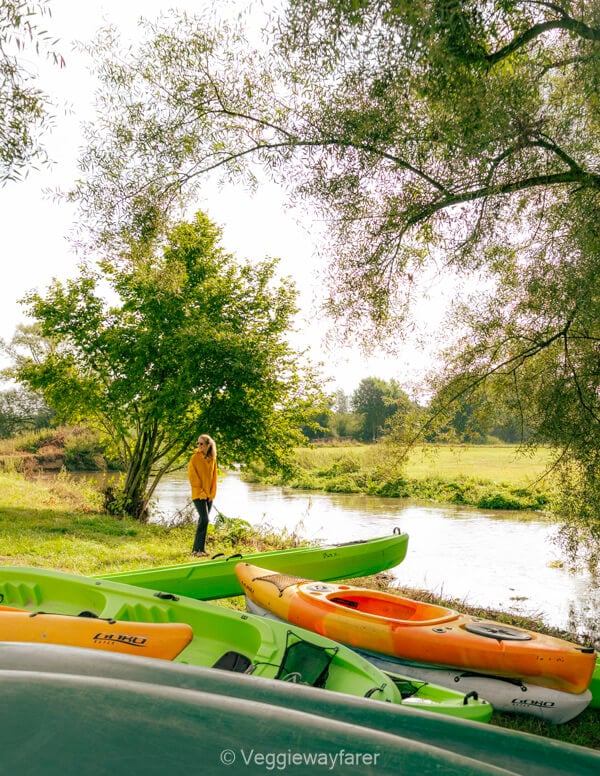
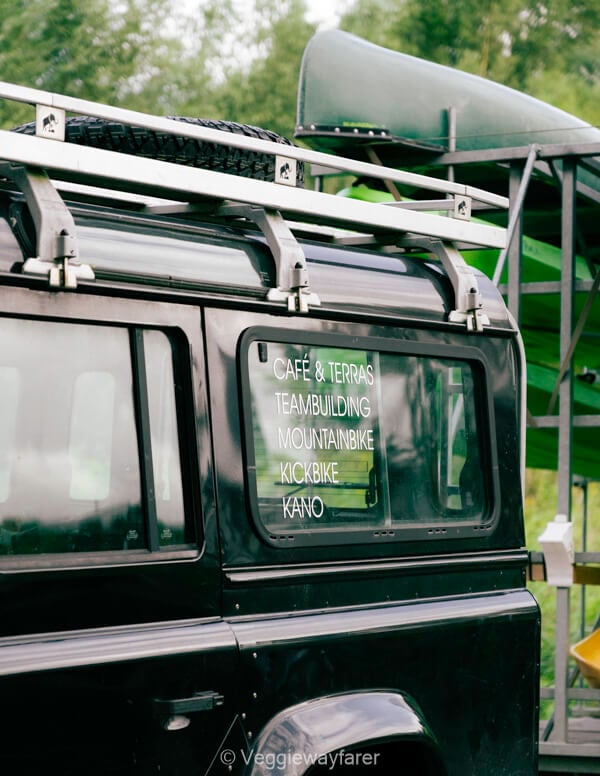
Operator: The Shelter, Stationsstraat 13, 3060 Korbeek-Dijle | Route: 6.5 km to the Leuven boundary, about 1 hour 30 | Price: €25, or €34 including the kickbike back | Return: 4 km, walk it in an hour or kickbike it in forty minutes | When: Wednesday afternoons and weekends, daily in July and August | Minimum age: 10, and you must be able to swim | Website: theshelter.be
The Dijle is the river I grew up beside. I learned to ride a bicycle along it, trained for marathons on its paths, walked off a heartbreak or two on its banks and celebrated a great deal of good news beside it with friends. In all that time it had never once occurred to me to get on it, partly because kayaking is not a thing I associate with Belgium. The little I had done was abroad, in warmer water and more obviously exotic places, so when this was suggested I needed a moment before saying yes.
All kayak-tours will start from the riverbanks by The Shelter in Korbeek-Dijle. We opted to paddle to the Leuven city boundary, six and a half kilometres. Someone was waiting at the take-out to lift the kayaks from the water, and we were handed a kickbike for the four kilometres back. Both can be done without a guide, but guides are on standby if you would prefer.
It had rained shortly before we went, so there was enough current to carry us and very little to do beyond steering. "Is this what it feels like to be a duck?" I asked my friend two minutes before sailing straight into low-hanging branches, once again. We were both total beginners and came out entirely unscathed, so if we can do it, for sure everyone can!
PRACTICAL | Departure slots are fixed, so book ahead. This stretch needs no guide, but if you want to carry on through Leuven and out the other side you will need one, because a few sections there are technical.
12. Walk the Margijs route through the Doode Bemde
Distance: 8.3 km | Start: Sint-Jansbergsesteenweg, 3040 Loonbeek | Waymarking: walking knooppunten | Map and GPX: visitvlaamsbrabant.be
If you are already out at De Kroon, the Margijs walk starts a few minutes away and passes the brewery door, which makes it the obvious pairing for a lunch out here. It runs 8.3 km through the Dijle and IJse valleys and the marshy nature reserve of the Doode Bemde, wetter and more open country than the beech woods above.
I can tell you it begins beautifully and no more than that. We were twenty minutes in when the notorious Belgian rain decided to make an appearance and quite literally rain on our parade. Luckily the hike is an easy day trip from Brussels, so I will be back for sure!
13. Explore the PARCUM Museum
Address: Abdij van Park 7, 3001 Heverlee | Grounds: free and open daily | Buildings: paid entry, site open 10:00 to 16:00 | Getting there: 2.4 km from Leuven station, or buses 4, 14 and 15 to Abdij van Park | Website: abdijvanpark.be |
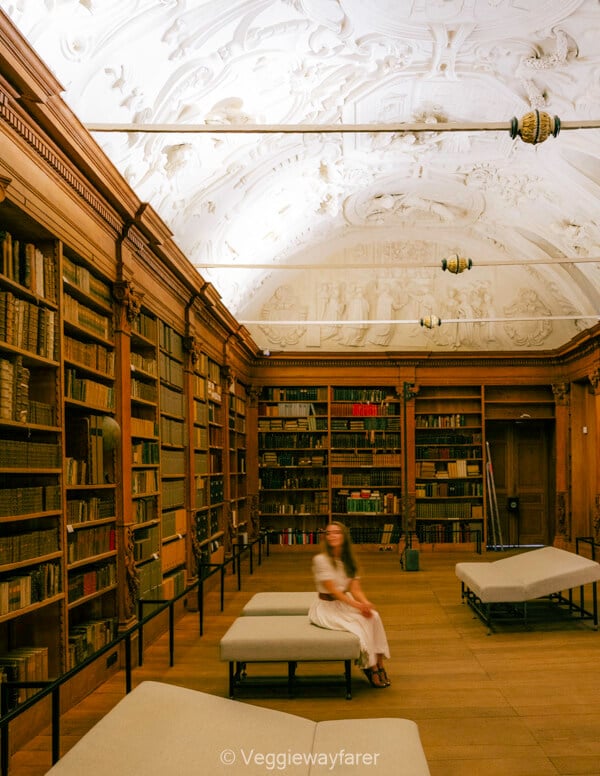
Park Abbey was founded in 1129, has been Norbertine ever since and still houses a small community, and it is the gateway to everything else in this section, with Heverleebos starting immediately behind it. In 1672 Abbot Libert de Pape had the stucco worker Jan Christiaan Hansche decorate the library, and Hansche and two assistants spent 107 days modelling the life of Saint Norbert overhead, lightning strike included. Figures lean out of the plaster far enough to cast shadows. It's my favorite room in the abbey.
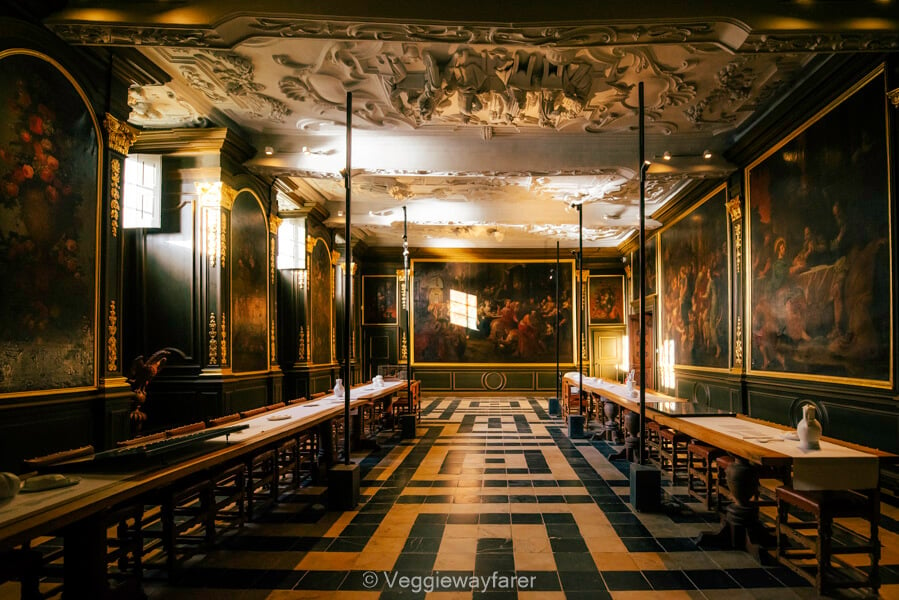
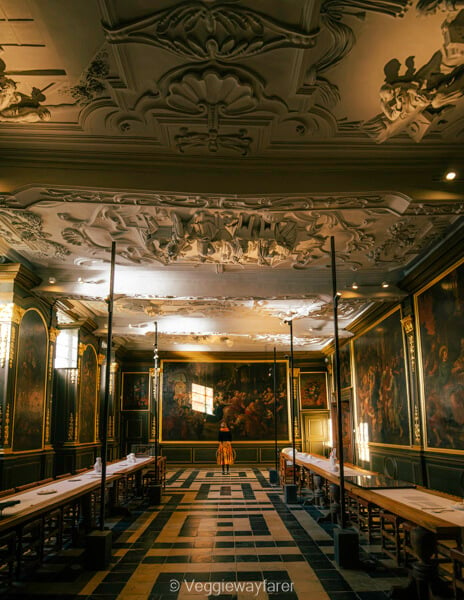
Then walk to the refectory, where the same abbot hired the same man again in 1679. Every scene on that ceiling is about eating, with the Last Supper in the middle, which makes it the second Leuven commission in this guide built entirely around bread. The first was Dieric Bouts, four centuries earlier and three kilometres away.
The restored west wing has held PARCUM since 2017, a museum for religion, art and culture that works through temporary exhibitions rather than a fixed hang. It is not a room of reliquaries behind glass. Each show takes a religious theme and puts contemporary work in conversation with the abbey's own heritage.
FOODIE TIP | Brasserie De Abdijmolen, Abdij van Park 4, in a watermill working since 1534. Proper vegetarian option, and they pour Libertus, the abbey's own beer, brewed inside the walls by Braxatorium Parcensis. Bottles to take home at De Wikke, the organic farm shop on site.
Where to eat around Leuven
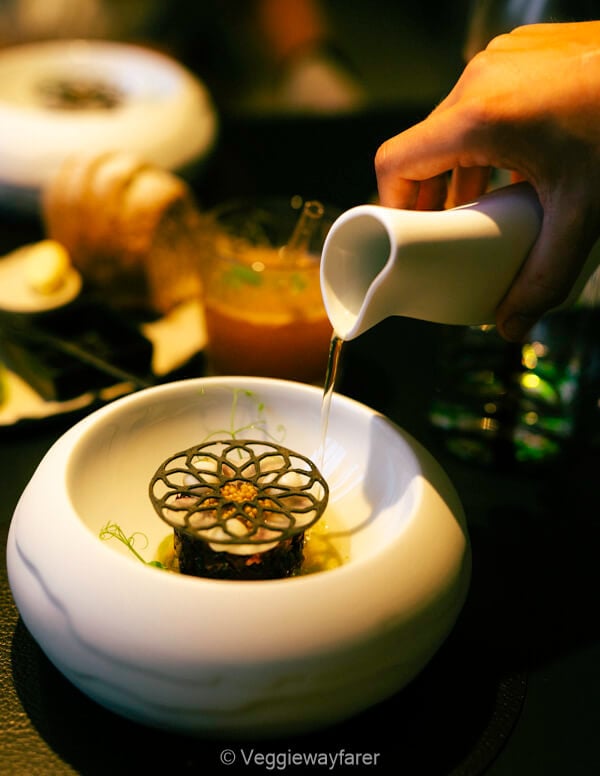
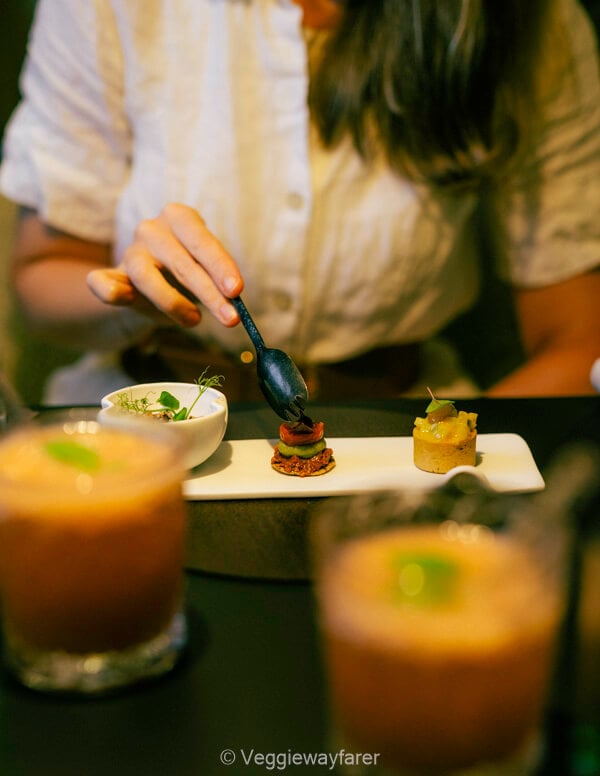
Louvain d'Anvers, Naamsesteenweg 20, 3052 Blanden | Lunch: Wed to Fri | Dinner: Mon and Wed to Sat | Closed: Sunday and Tuesday | Format: four or five course seasonal menu | Website: louvaindanvers.com
Fine dining in a 1776 building on the edge of the forest, with a fixed menu that follows whatever the season is doing rather than a card you choose from. Reserve, and say when you book that you are vegetarian, because the kitchen builds the menu around what arrives that week and needs the warning.
Otherwise, the green belt feeds you at Brasserie De Abdijmolen at Park Abbey and at De Kroon in Neerijse, both covered above, and neither of which requires a reservation on a weekday.
Where to stay around Leuven
You might have started off thinking "I want to see Leuven" and after reading through this verbose article, conclude that perhaps what you really are craving is an escape into the magnificent Brabantse Wouden around Leuven. In that case, I highly recommend booking B&B Miranosa
WHY STAY HERE: It is cozy, full of thoughtful details and run by the most gregarious Belgian you are likely to find. Probably the best B&B I have stayed in for a long time. Perfect stay if you want to focus on exploring the outdoors instead of the centre of Leuven.
Best Time to Visit Leuven
Anywhere between April and October works, and unlike Bruges you will never be choosing between decent weather and room to walk.
Two windows stand out. Late spring for the wisteria in the Kruidtuin, from early May to mid-June. I was there at the very end of May and found it in full flower, with cherry blossom having come and gone across the city around March. And October, when you will likely be rained on, but the woods around the city turn, and everything looks better for it.
July and August give the best weather and the quietest streets, which is precisely the trade. With the students gone, Leuven loses a good deal of what makes it Leuven.
Which day of the week should you come?
- Friday: market on the Ladeuzeplein until 13:00, beer tours from the Oude Markt, De Smederij open from 11:30. Hof ten Dormaal not until 17:00.
- Saturday: the browsing market, beer tours, and all three route breweries open from noon. The best single day.
- Sunday: Optimist and Stadscafé Van de Velde closed, and the Velo station branch shut, so hire bicycles at Rector De Somerplein.
- Monday: the thinnest day for eating, with many restaurants closed
- Tuesday and Wednesday: carillon concerts at the library tower.
Is Leuven Worth Visiting?
If this is your first trip to Belgium and you have three days, no. Go to Bruges and Ghent. Leuven is not your priority, and I am not going to pretend otherwise.
For everybody else, yes. Leuven has two UNESCO listings, the oldest university in the Low Countries, the oldest botanical garden in Belgium, forty pubs on one square and a national park on its doorstep, and almost nobody queuing for any of it. I climbed the library tower on a Saturday afternoon in May and waited behind four people. What it does not have is canals or a single world-famous sight, and if that is what you came to Belgium for, you should go elsewhere.
Where it earns its place is as a base. Stay in the centre, hire a bicycle, and spend your days in the Dijle valley, between breweries, or eating your way round a city that has become genuinely good at feeding vegetarians. If you liked Mechelen, you will like it here.
How to Visit Leuven Sustainably
Coming here twice in one year, the thing that struck me most is that I never once needed a car. Not for the city, and not for the countryside either. Land at Zaventem, fifteen minutes on a train, walk to everything in the centre, then hire a bicycle at the station and ride into farmland and abbeys before coming back for dinner.
Nor is that accidental. Leuven 2030 has been working since 2013 towards an eighty per cent cut in emissions by 2030, and the city holds both European Green Leaf and European Capital of Innovation titles.
Three practical things. Hire from Velo, who run the station bicycle points as a social enterprise, using repair work to move people into employment. Eat plant-based without trying, at Noordoever, Bodhi or on HOP's plant-based menu. And buy beer as your souvenir rather than a fridge magnet.
Good to know: Park Abbey sells its own Libertus through the museum shop and the De Wikke farm shop on site. Hof ten Dormaal sells bottles at the farm. De Coureur you cannot take home at all, since they only pour draught, which makes it the one you have to come back for.
Map of Things to Do in Leuven
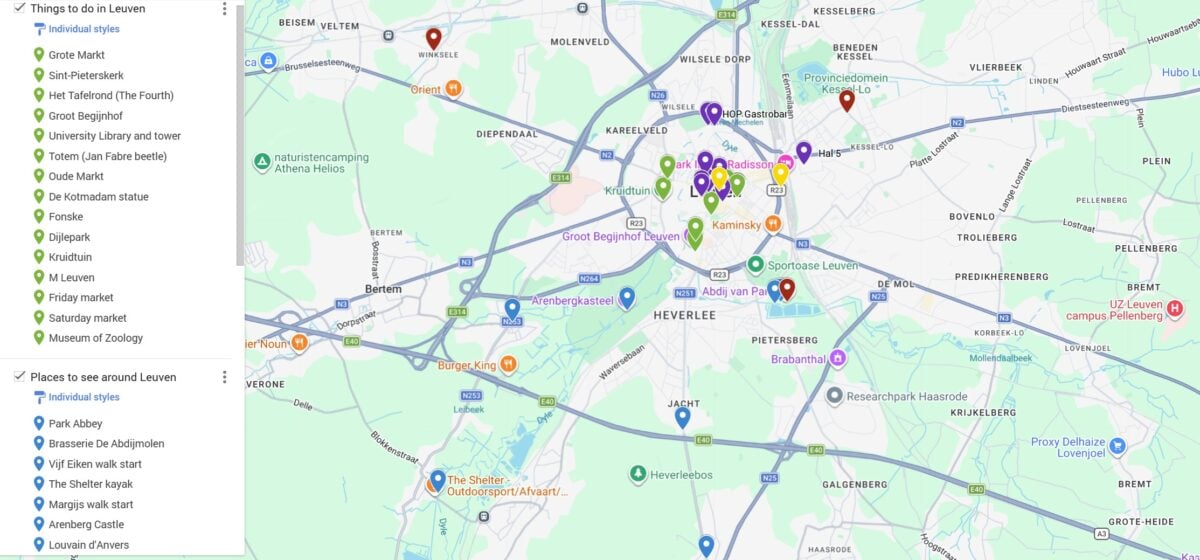
This map contains all the sights covered in this guide to Leuven. Click on this interactive Google map to have a better view.
How to Get to Leuven
From Brussels Airport: direct train, about 15 minutes, every 20 to 30 minutes, €10 to €13 including the compulsory €6.90 airport supplement | From Brussels Midi: about 30 minutes, every 15 minutes | Tickets: Book via Omio
Take the train. Leuven's centre is not built for cars, and you will not want one. The train from Brussels to Leuven takes half an hour and runs every quarter of an hour, which makes a day trip to Leuven one of the easiest of all the day trips from Brussels by train, and slots neatly into a longer Belgium itinerary.
Leuven FAQ
Why is Leuven famous?
Leuven is famous for its university, founded in 1425 and the oldest in the Low Countries, and for beer. The city is the global headquarters of AB InBev and the home of Stella Artois, brewed on a site where brewing has been documented since 1366.
Is Leuven French or Dutch?
Leuven is Dutch-speaking, in Flanders, in the province of Vlaams-Brabant. Louvain is the French name for the same city. Almost everybody here speaks excellent English.
How do you pronounce Leuven?
Roughly "LEU-vun", with the first syllable close to the vowel in the French peu. Not "loo-ven".
How many days do you need in Leuven?
One full day covers the historic centre. Two lets you add the cycle route or the green belt, which is where Leuven becomes genuinely special.
Is Leuven better than Bruges?
Different rather than better. Bruges is more beautiful and considerably more crowded. Leuven is more lived in and more everyday Flemish. If you have seen Bruges and wondered where the Belgians were, they are here. For the wider picture, see my guide to the most beautiful places in Belgium.
MORE TRAVEL RESOURCES FOR VISITING BELGIUM
BELGIUM: 3 to 5 Days in Belgium: A Local's Belgium Itinerary
BELGIUM: Beautiful Places in Belgium
BRUSSELS: 31 Day Trips from Brussels
BRUSSELS: Brussels Travel Guide
BRUSSELS: Hallerbos: Visiting the Bluebell Forest in Belgium
GHENT: Sustainable Things to Do in Ghent
MECHELEN: City Trip Mechelen

Things to do in Leuven: Pin it

RELATED POSTS
 2 Day Brussels Itinerary: How to Spend an Unforgettable Weekend in Brussels
 One Day in Brussels: A Local’s Guide for a Day Trip to Brussels
 The Perfect One Day in Bruges Itinerary: What to See, Do, Eat Incl. Map.
 From Medieval Bridges to Sauntering Around UNESCO Cathedrals: 7 Top Things to Do in Tournai

0 Comments