
A UNESCO monastery I only found because of a bottle of beer, a walled spring that has been calling itself the source of the Danube since the fifteenth century, seven hundred hectares of vineyard planted on an extinct volcano, and a tannery saved by the people who refused to let it be scrapped. These are a few of the delights waiting for you in five black forest towns and villages that almost nobody writes about.
The five are Bretten, Calw, Hirsau, Donaueschingen and Endingen am Kaiserstuhl, and I drove them over four slow days in an electric car. They sit on a Baden-Württemberg trail called Small Town Gems, or Kleinstadtperlen, which designates twenty towns almost nobody outside Germany has heard of, and I will tell you along the way where to charge, where to sleep and how a vegetarian eats out here in ham country.
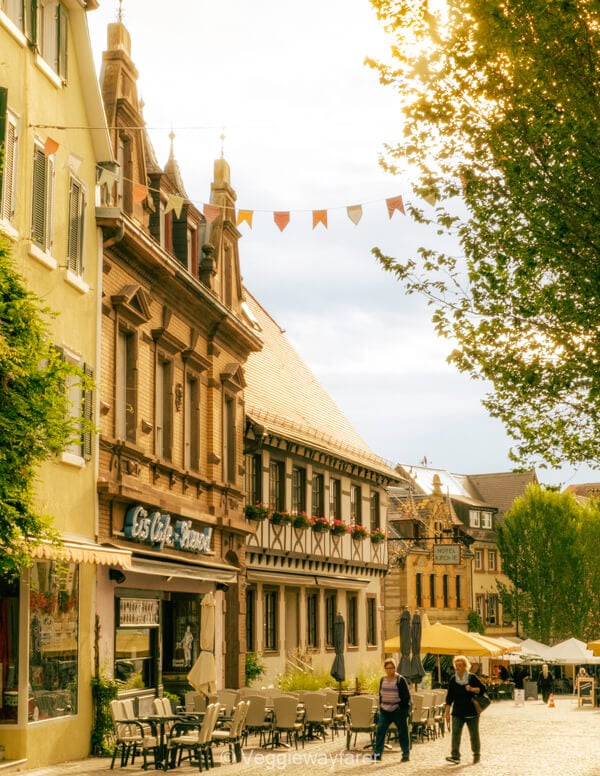
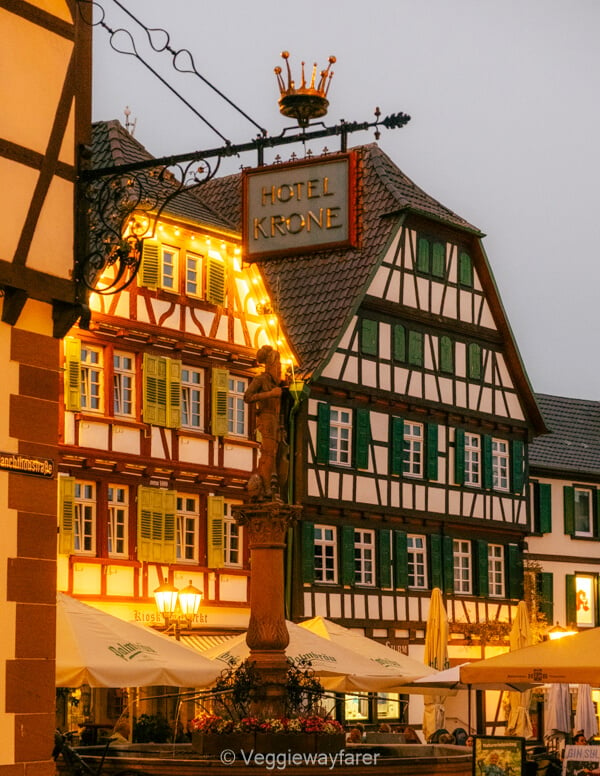
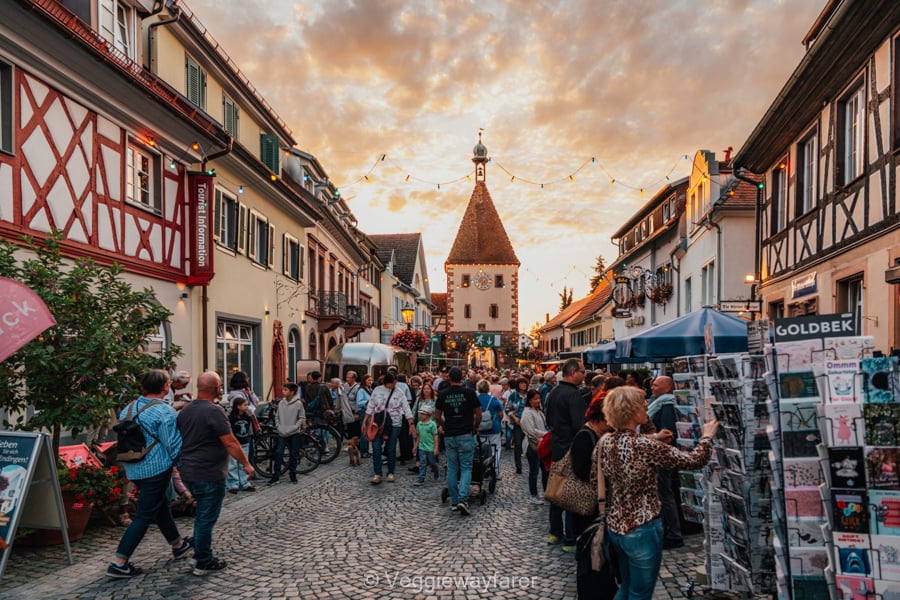
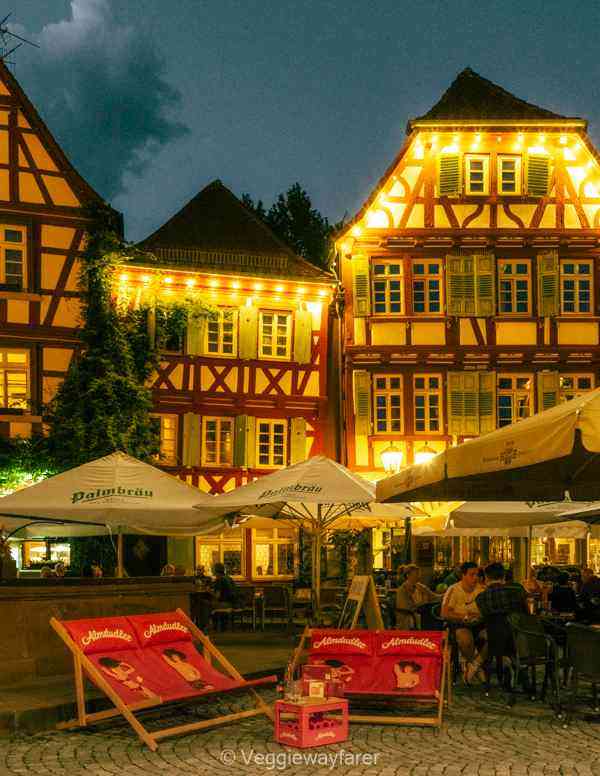
I arrived in the first of them after dark on a Tuesday, thoroughly expecting a shut town and a disappointing sandwich. What I found instead was a market square full of people who had simply come outside because the evening was warm, sitting under two half-timbered houses strung with lights, chatting away. There was a true sense of community.
NOTE: One honest note before we start: Calw and Hirsau are properly northern Black Forest, Donaueschingen sits on its eastern edge, and Bretten and Endingen lie just outside, in the Kraichgau and on the Kaiserstuhl.
Please note: This post contains affiliate links, meaning I may earn a commission if you make a purchase by clicking a link (at no extra cost to you). Learn more.
Black Forest Itinerary: Quick Guide
| Town | Region | Known for | Time needed |
|---|---|---|---|
| Bretten | Kraichgau | Melanchthon, half-timbering | 1 day |
| Calw | Northern Black Forest | Hermann Hesse, tanning | 1 day |
| Hirsau | Nagold valley | Benedictine abbey ruins | 3 hours |
| Donaueschingen | Baar, eastern edge | The source of the Danube | 1 day |
| Endingen | Kaiserstuhl | Volcanic wine, cheese | 1 day |
Practical Guide to Black Forest
WHERE TO STAY
- Bretten: HOTEL KRONE
- Calw: HOTEL RESTAURANT RATSSTUBE
- Donaueschingen: HOTEL ZUM HIRSCHEN
- Endingen: HOTEL GARNI PFAUEN
PRACTICAL INFO
- Book a rental car: Compare prices on Discovercars
- Book public transport: Compare prices on Omio
- Bring Cash: Many places do not accept cards!
- Charging Map EVs: Chargemap.com
DOWNLOAD BEFORE YOU GO: All 20 Small Town Gems are on the free ZEIGMAL app. It routes you through each old town and tells you the story behind what you are looking at, which is more than a map does, and it is also where you collect the digital stamps. One caveat: the interface is in English but not all the content is, and several of the local legends are German only.
USEFUL READING: The official website of Baden-Württemberg and the 20 small gems. If you are spending more time in the region, you might want to explore my guide to Karlsruhe
Why a Trip to Hidden Gems in the Black Forest Is Worth It
Almost everybody who sets out to visit Black Forest, Germany, goes for Triberg, Titisee and to buy an authentic cuckoo clock. Having browsed my fair share of blogs online, I can unequivocally say that most listicles of the best places to visit in the Black Forest will tell you the very same thing. Happy to report, they are wrong. This beautiful part of Germany has so much more to offer than these three highlights.
In fact, the state Baden-Württemberg (where the Black Forest is located) is actively trying to promote lesser-known towns in and around the region. They launched a cool campaign where one can collect stamps in 20 small town gems (more on that below).
As someone who does not love a horde of tourists, and who has watched what mass tourism has done to my beloved Sicily, I am wholeheartedly in favour of this sort of campaign. So I set off on a road trip to see a handful of these gems for myself.
And boy am I happy I did! These towns in the Black Forest and surroundings are beautifully authentic, filled with half-timbered houses and bustling with cool events (from candlelit shopping events to potlucks to bring the community together). Some created the monastery blueprint that medieval Europe copied across the continent, while others produce luscious wines on extinct volcanoes. Needless to say, there is plenty to see.
5 Black Forest Towns and Villages to Explore
1. Bretten (Kraichgau)
Region: Kraichgau, about 30 km from Karlsruhe | Tourist office: erlebebretten.de | Time needed: One day
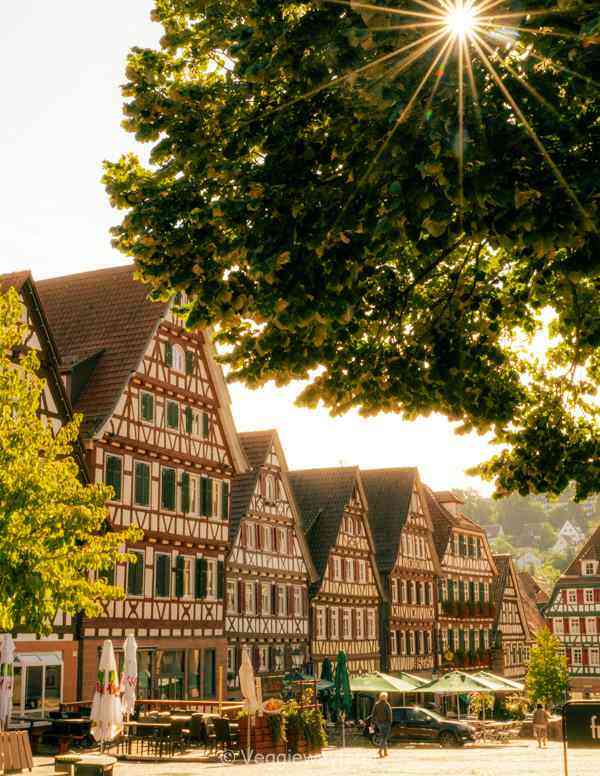
Bretten was the first stop of my Black Forest road trip. I rented a car in Cologne and drove about 4 hours to get here, pulling in well after dark. My growling stomach ended any half-baked idea I had of staying in the hotel, and so I set out in the direction of the historic centre in search of food. To my utmost surprise, the 13th century triangular market square of Altstadt (Historic Centre) was full of people.
Two half-timbered houses on the north side were strung about with fairy lights, and the whole scene looked like – for lack of a better word – the set of a Disney movie. My stomach was more than happy to tuck into a cold beer and a larger-than-life salade at the Altes Rathaus. This local restaurant serves a range of regional dishes and has a solid selection of choices for vegetarians.
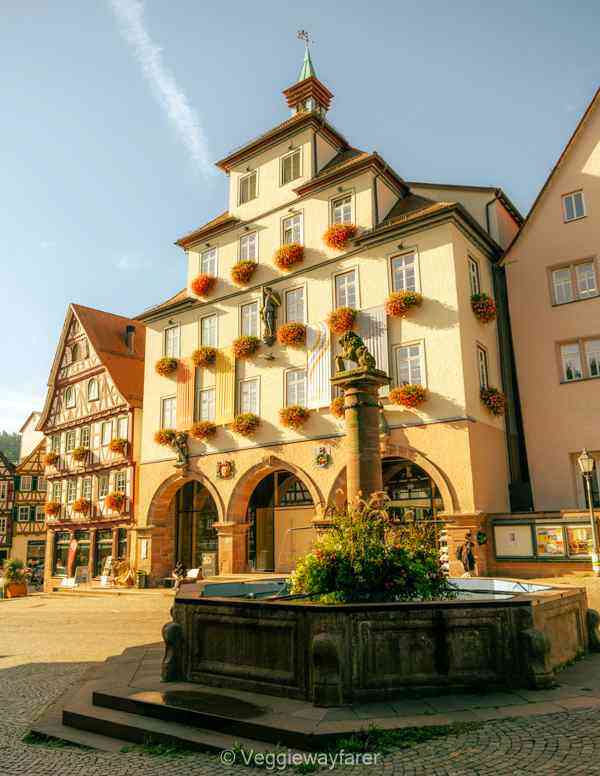
Bretten itself is tiny and can be toured in half a day. The highlights of the town are clustered around Altstadt with the beautiful Melanchthonhaus as its crowning jewel. Time your visit to coincide with market day (wednesday/saturday) and make sure to explore the nearby UNESCO World Heritage Site of Maulbronn Monastery.
THINGS TO DO IN BRETTEN
Explore the Altstadt with the ZEIGMAL app
I did not have a huge amount of time to explore Bretten as I had a pretty tight driving schedule. Therefore, the ZEIGMAL app really did save me from turning into a cultural barbarian by explaining the highlights of the city in a 60-minute tour with no less than 36 stops! It took me past the statue of the dog, the hotel Emperor Charles V slept in, as well as the various fortification tours in the town.
Collect your first stamp at the tourism office
The federal state of Baden-Württemberg set up a neat campaign to promote twenty of its Small Town Gems. Each of these gems has its very own stamp, which you can collect digitally through the ZEIGMAL app, or by rocking up to the tourism office. It’s a neat way to nudge tourists off the beaten path and venture into the lesser-known parts of the region.
Visit the Melanchthonhaus
Address: Melanchthonstr. 1 | Opening hours: Tue to Fri 14:00 to 17:00, Sat and Sun 11:00 to 13:00 and 14:00 to 17:00 | Ticket price: €3, or €5 guided
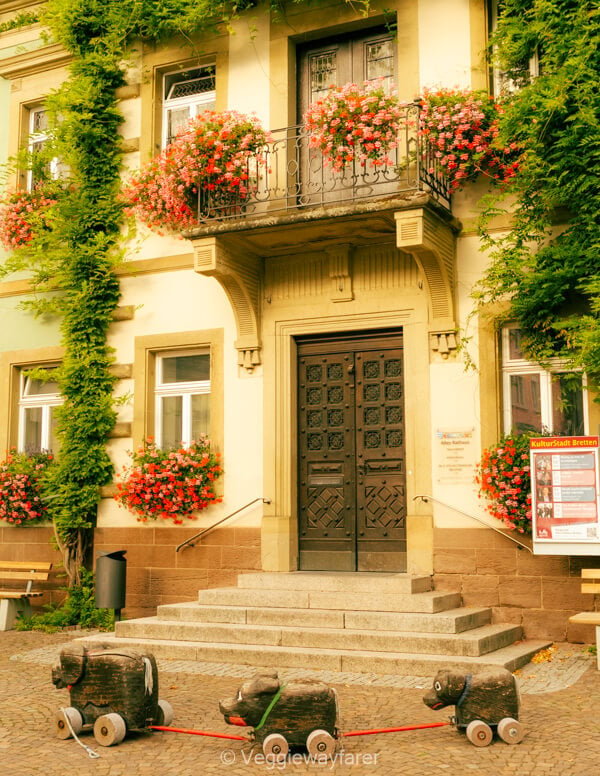
Philipp Melanchthon was born in Bretten in 1497, grew up to become Luther’s closest collaborator. The eponymously named house was built on the site of the house where Melanchthon was born, it holds nine thousand books and four hundred and fifty original manuscripts, and it is the second-largest Reformation museum in the whole of Germany. It also has the best view over the central square!
People watch at the local market
Where: Marktplatz | When: Wed and Sat, 08:00 to 13:00
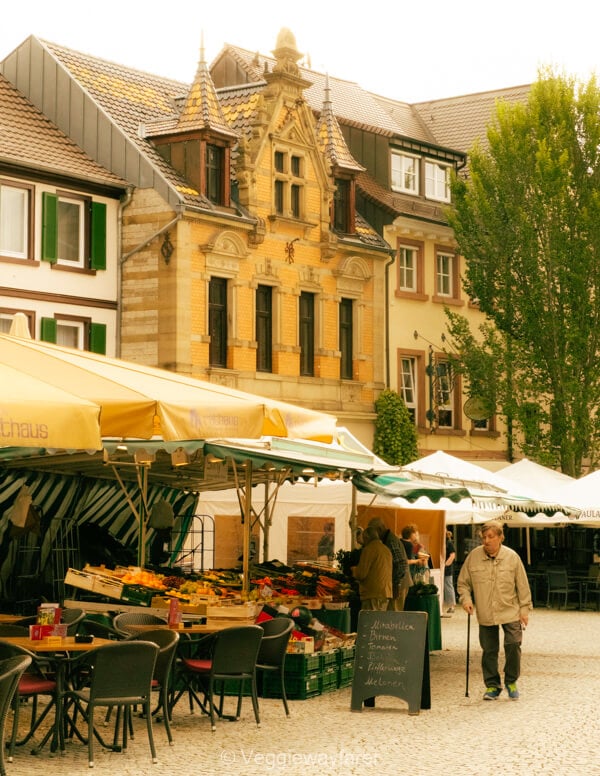
I got lucky and happened to be visiting Bretten on a Wednesday, which was a happy coincidence as it’s market day. Little stalls sprawled across the Marktplatz selling everything from knitwear to fresh cheese and sausages. The market itself is tiny, but what makes it worth experiencing is the people-watching. A quorum of men debating the state of the world at Kiosk am Altstadt, and a stall owner discussing the upcoming nuptials of their eldest daughter with a gaggle of rapt onlookers.
THINGS TO DO AROUND BRETTEN
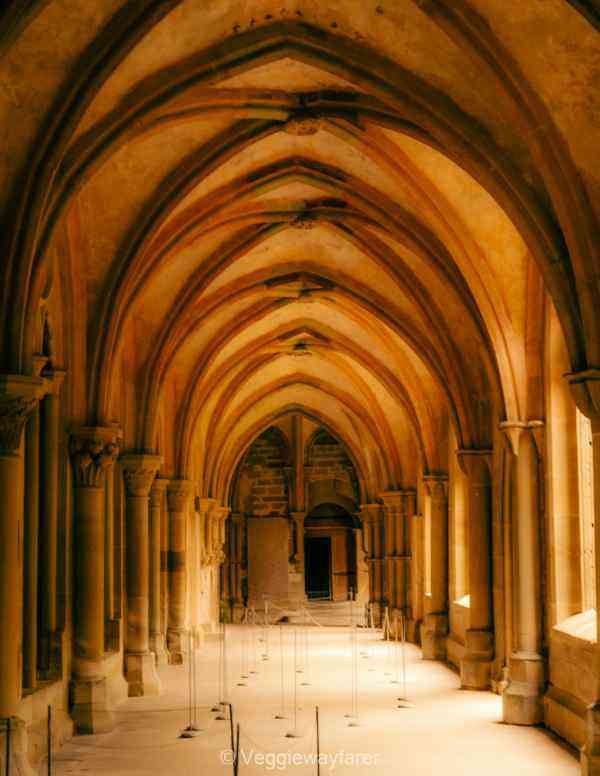
Get lost in the Maulbronn Monastery
Address: Klosterhof 5, 75433 Maulbronn | Opening hours: Mar to Oct daily 09:30 to 17:30, Nov to Feb Tue to Sun 10:00 to 16:30
| Ticket price: €10, €13 with an English audioguide | Drive: 20 min | Parking: Roadside parking available in front of the Monastery
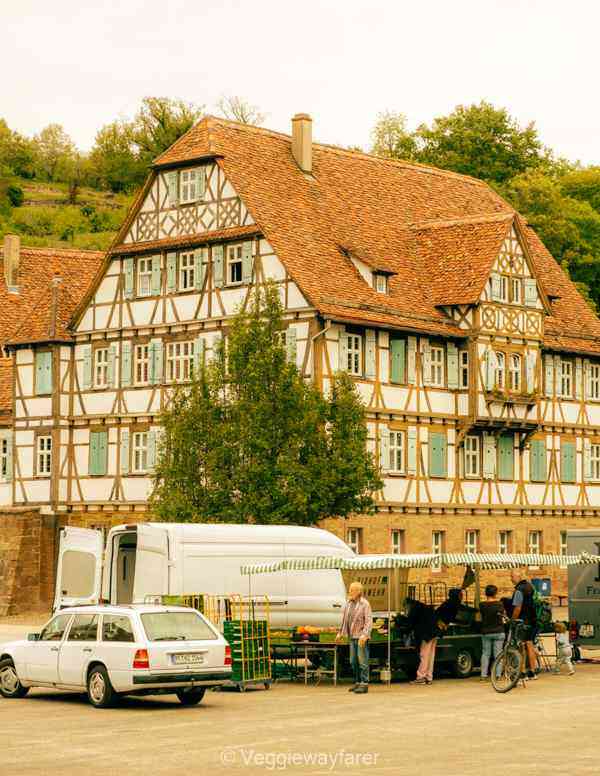
When I arrived in Bretten, the clerk at my hotel reception learned I was Belgian and promptly gave me a local beer to try. The bottle had a beautiful image of Maulbronn Monastery, a 20-minute drive from Bretten. My German is a little rusty, so in a true “lost in translation” moment, I thought the beer was brewed in the monastery. Clearly I had to go and check it out.
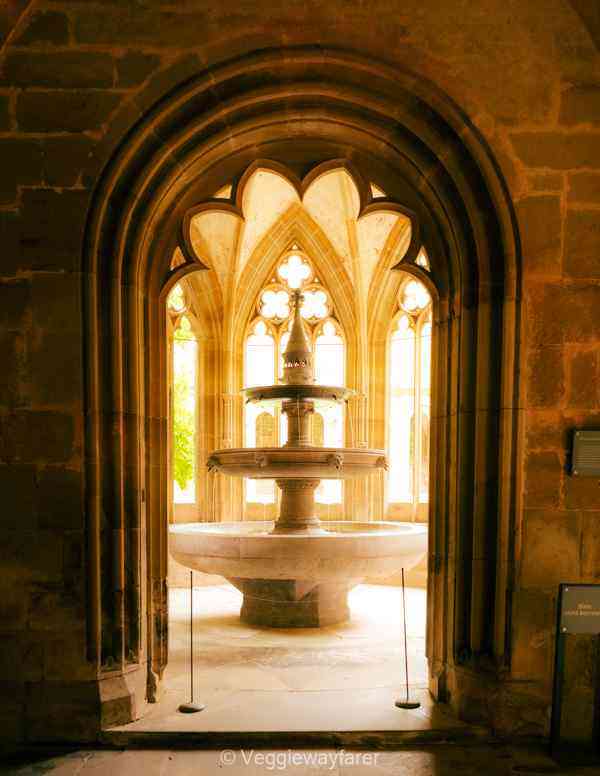
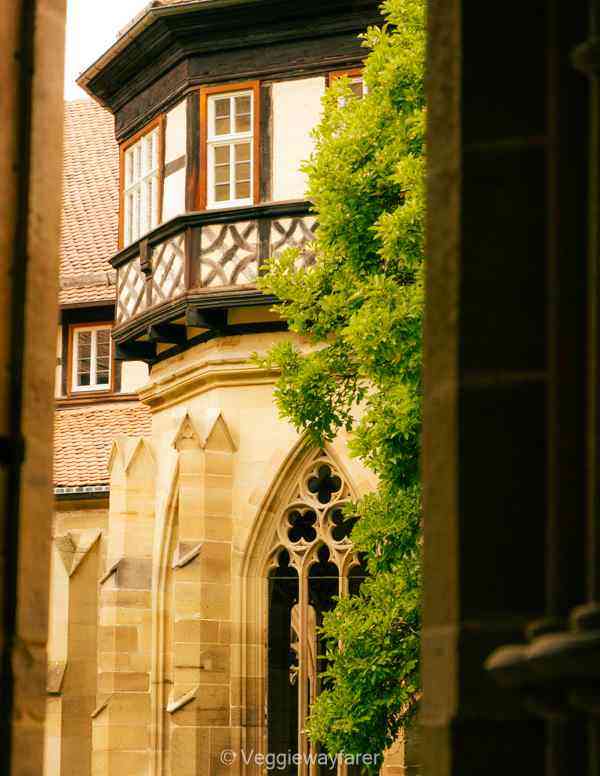
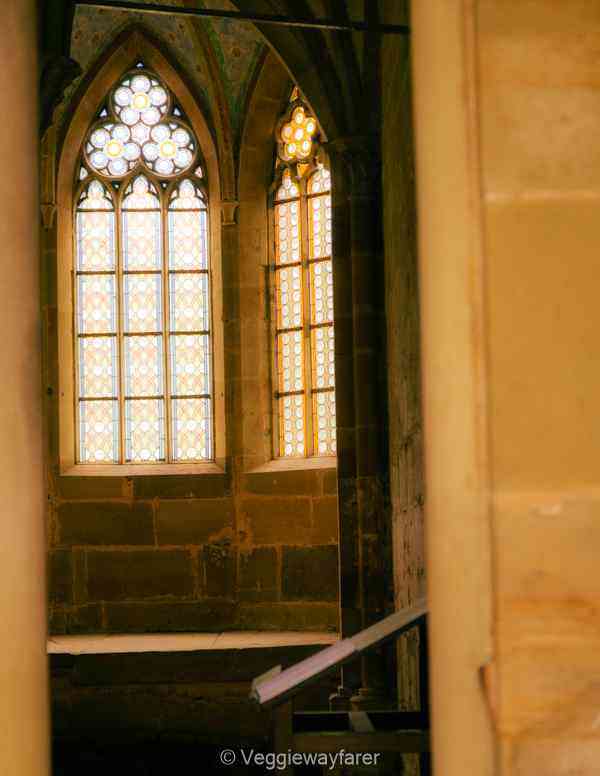
Alas, the beer is not actually brewed in the Monastery. It’s brewed in Palmbräu in Eppingen, fifteen minutes in precisely the opposite direction. I was a little crestfallen when I received this news at the ticket office of the Monastery. Nevertheless, the misscommunication bought me to this beautiful medieval monastery, which has been UNESCO-listed since 1993 as one of the most complete medieval monastery complexes left standing anywhere in Europe north of the Alps.
The €13 entrance ticket buys you an audioguide (highly recommended as information panels inside the complex have been sparingly used). It allows you to enter the core buildings around the cloister as well as the beautiful inner courtyard. Make sure to grab a map at the ticket office as the complex is pretty big. I ended up getting turned around a couple of times.
2. Calw, Northern Black Forest
Region: northern Black Forest, Nagold valley | Charging: Parkhaus Calwer Markt, and a fast charger at the Flusskraftwerk on Bahnhofstraße | Tourist office: calw.de
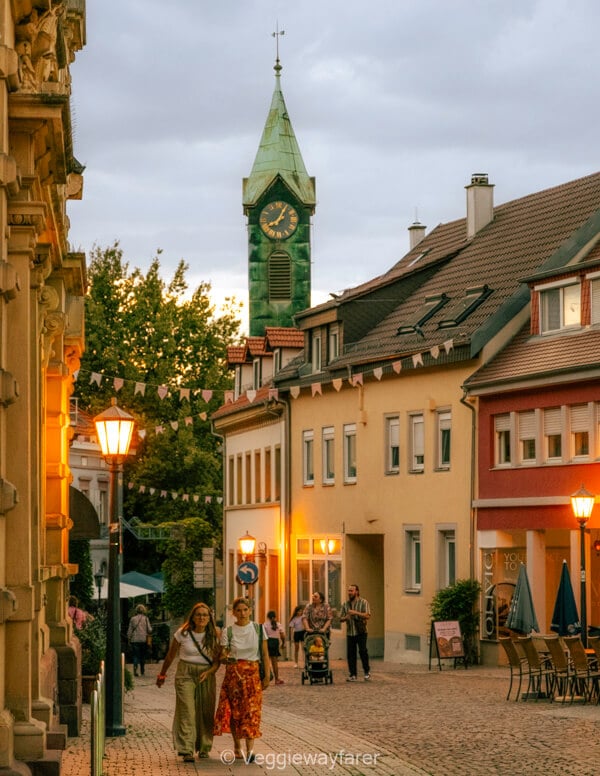
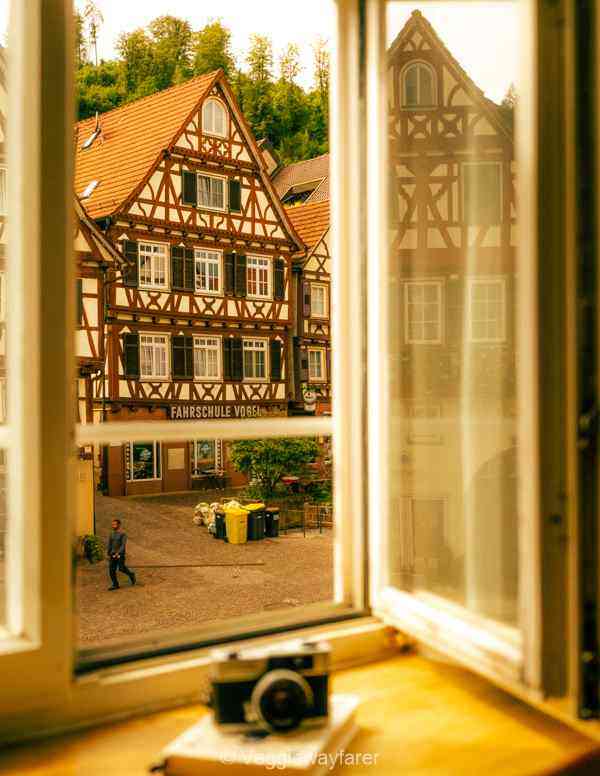
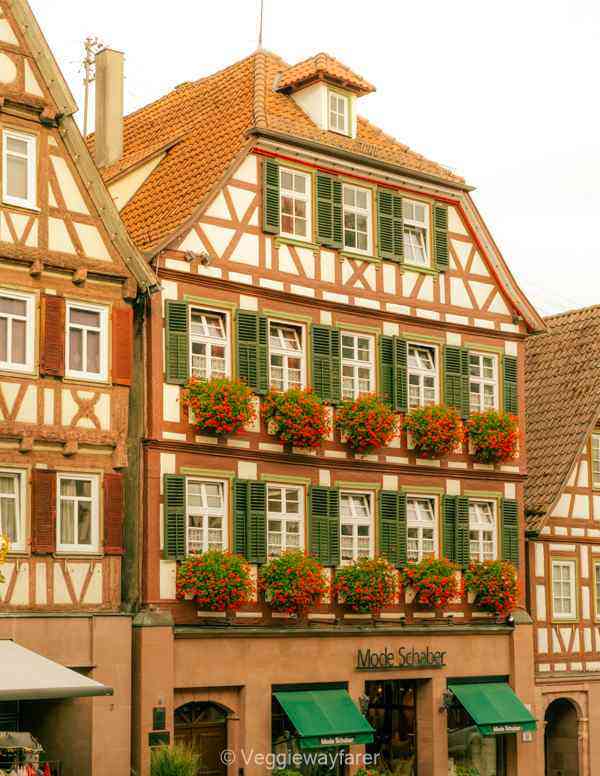
Arguably one of the better-known towns in the Black Forest, thanks to its rich history and beautifully preserved market square, lined with delicately painted, gabled, half-timbered houses. The German writer Hermann Hesse was born in this very town and returned to it again and again in his writing. And it’s not hard to see why; it ensnared me in its charm about 2 seconds after I walked out of the parking lot.
Calw is deceptively small, yet it was once the economic heart of the entire duchy of Württemberg. Money flowed down the Nagold on wool and leather, then on wood and salt, which were already running alongside the cloth trade long before that collapsed in 1797, undone by cheap cotton, changing fashion and a Napoleon who had just shut off the Italian markets.
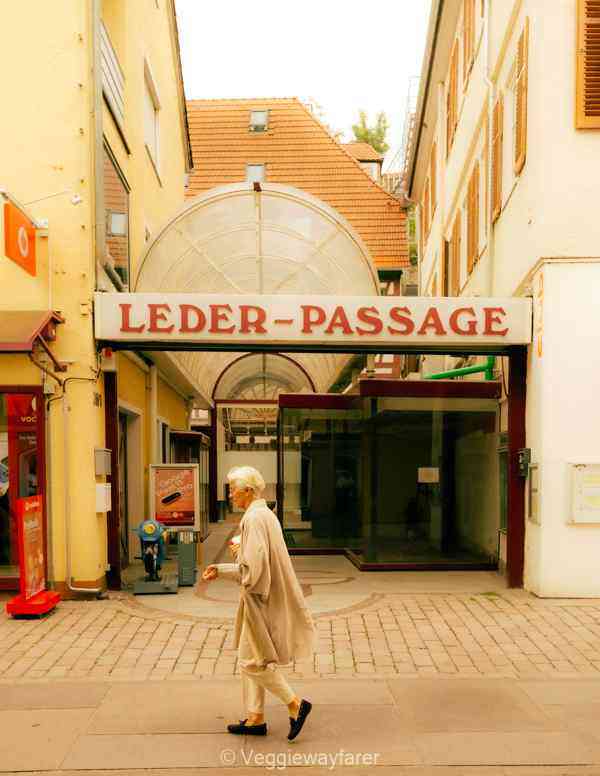
Remnants of all that money are still standing. The Palais Vischer, built between 1787 and 1791 for the man who ran Calw’s raft trade and now the town museum, the Salzkasten of 1696, half-timbered merchant houses like Haus Schnaufer on Lederstraße, and the old tannery on the river that is now the Gerbereimuseum.
FUN FACT | The same river that made the town rich now charges electric cars. ENCW, the municipal utility, runs its points on 100 percent hydroelectric power, and one of them sits at the Flusskraftwerk on the Nagold itself. There is more parking and charging at the Parkhaus Calwer Markt.
THINGS TO DO IN CALW
Walk the old town with the ZEIGMAL app
I explored Calw the way I did Bretten, with the app in one hand and my camera in the other. I opted to take the 80-minute tour in the app, which stops at 43 different places. Despite there being a lot of stops, you only cover about 1.9 km. The reason for this is that the main sights of Calw are densely packed in the historical centre.
As someone who is curious to a fault, I actually really enjoy the way the app takes you through the history of the various half-timbered houses. From the house Herman Hesse was born in, to various palaces built by members of the Calwer Zeughandlungscompagnie (who owned the rights to trade wool, cloth and leather) and even random stops like the first and second pharmacy.
Tour the Gerbereimuseum
Address: Badstraße 7/1 | Opening hours: April to October, Sundays 14:00 to 17:00 and by arrangement | Run by: Bürgerverein Alte Gerberei
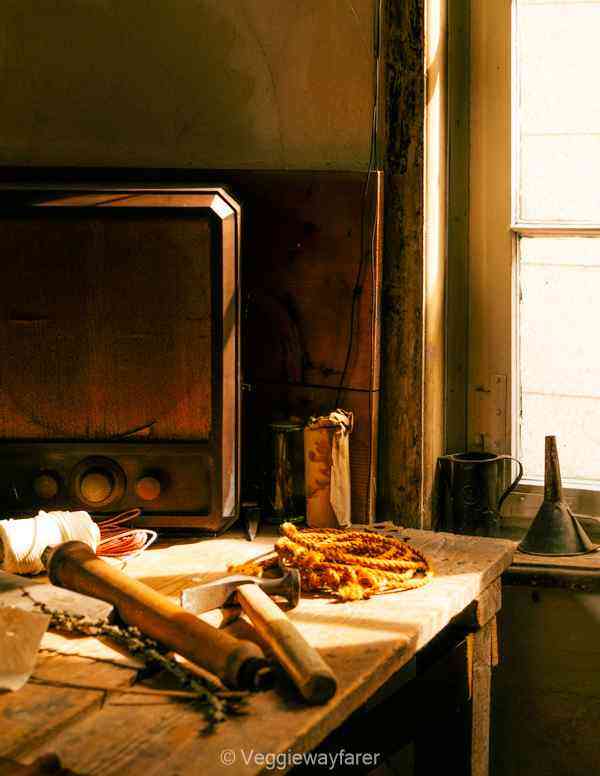
I will be honest, I hesitated over this one. I am vegetarian, and an afternoon devoted to the business of turning animals into handbags is not my definition of fun. That being said, I am really happy I went because not only was I granted a very warm welcome by the local volunteers running the museum, I also got a unique insight into how tanneries operated in the closed confines of the town.
The museum is a tannery from around 1800 and every last machine in it still works. You could literally walk in and start up a tannery business if you so fancy. It’s pretty unique, and not something I have seen elsewhere. Tanning swallows extraordinary quantities of water, so the workshops sat right on the Nagold and the hides were washed in it, held by a rope and left to soak for days. Remnants of this tradition can still be found in the German expression seine Felle davonschwimmen sehen. To watch your hides float away (because the rope was cut or frayed). In layman’s terms, to see everything you worked for come to nothing.
When the last tanner in Calw shut up shop, the building and the equipment were going to be scrapped, so the townspeople formed an association and now run the place themselves. Visits are run by the association weekly on Sunday. Make sure to book in advance.
Follow Hermann Hesse around town
WHERE HE WAS BORN | Marktplatz 6, the second-floor flat on the right, on Monday 2 July 1877 at half past six in the evening. You cannot go in as it is privately owned.
WHERE HE WENT TO THINK | Legend has it Hermann Hesse would sit on the Nikolausbrücke and watch the rafters (carrying 100 logs of wood as far as Amsterdam) float by. Nowadays there is a chapel and a statue dedicated to the author.
HERMANN HESSE MUSEUM | An entire museum dedicated to his life and his work. Closed for renovations until 2027
Find the Salzkasten
The salt house was built in 1696 to store the salt, and it is where the second half of Calw’s money came from. From 1730 one Calw family held the privilege of bringing Bavarian salt into Württemberg. During Hermann Hesse’s schooldays one of the Latin school classes was taught inside the Salzkasten, and the building turns up later in his story Unterbrochene Schulstunde.
Walk the Rund um Calw trail
Distance: 6.81 km | Elevation gain: 216 m | Time: 2 hr 10 | Difficulty: easy | Start: the upper market fountain
If you are looking to stretch your legs and see a little of the verdant surrounds of Calw, you will definitely want to plan in this hike. Forty-two numbered stops, the Drei-Bahnen-Blick looking out over three separate railway lines, the Kuckucksfelsen rock formation, and a long view across the valley to Hirsau. It splits neatly into two halves if the whole thing feels like more than you fancy. Unfortunately, I was caught in a torrential downpour when I arrived, so hiking was not an option.
3. Wander the ruins of Hirsau (Northern Black Forest)
Address: Kloster Hirsau, 75365 Calw-Hirsau | Drive from Calw: 5 min | Charging: at the monastery | Site: klosterhirsau.de
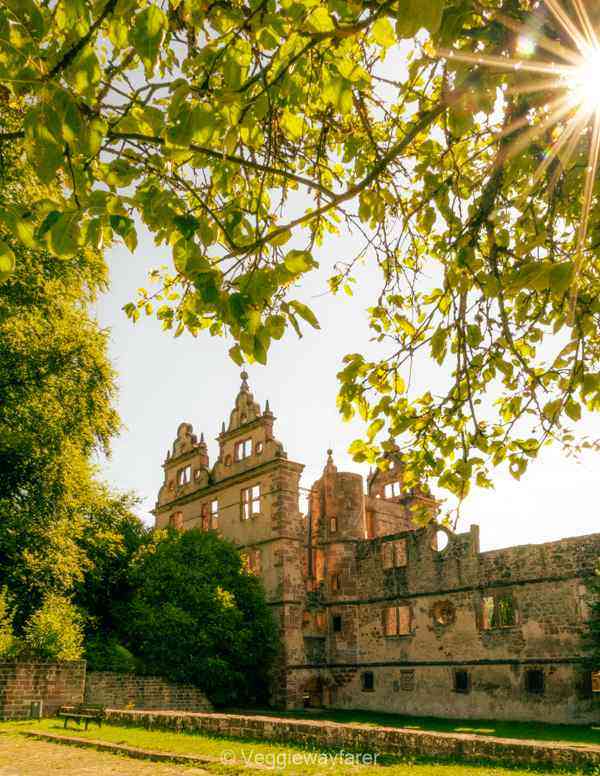
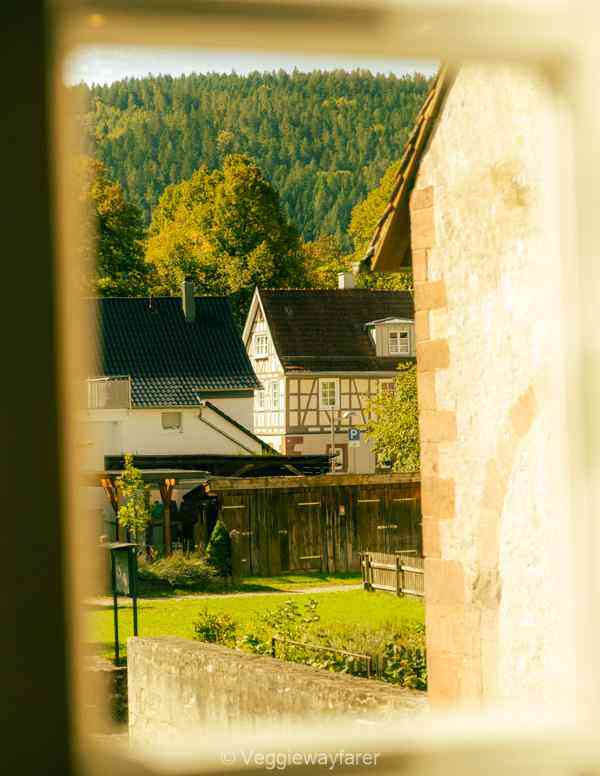
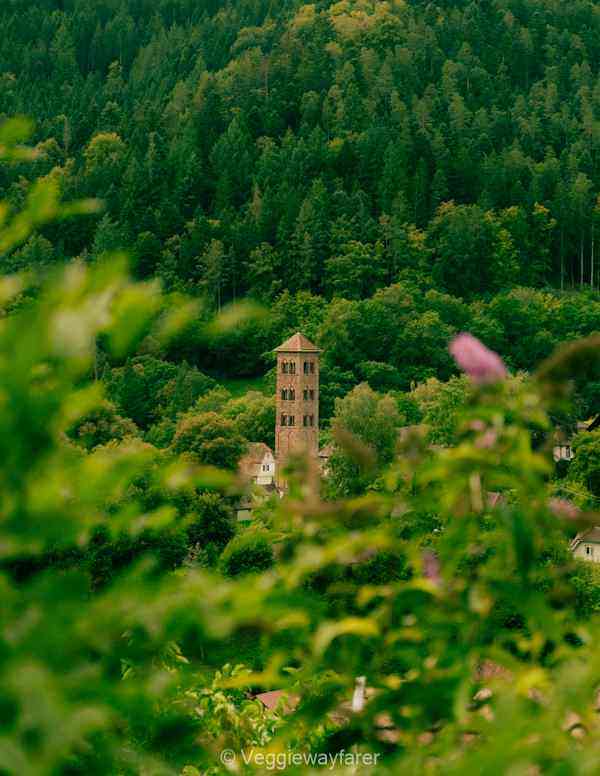
Of all the attractions in Black Forest that I saw on this trip, Hirsau is probably the one I would send you to first. It is barely five minutes down the valley from Calw, of which it is technically a district. The site holds not one monastery but two, built two hundred and fifty years apart on the same patch of ground.
The first arrived around 830, when Count Erlafried of Calw founded a monastery here to house the relics of Saint Aurelius, an Armenian bishop who had died around 475 and whose remains had been carried up from Milan. The church built for him was consecrated in 838. The remains of the church sit next to the current-day Klostermuseum.
The second is the reason anyone in medieval Europe had heard of this valley. In 1069 a monk called William arrived, and within a couple of years he had sent his own monks off to Cluny in Burgundy to learn how the greatest abbey in Christendom actually ran itself. He brought those customs home, wrote them down as the Constitutiones Hirsaugienses and built himself a new monastic complex (St Peter and Paul) in 1091 entirely modelled on Cluny.
WHAT TO DO IN HIRSAU
Start at the Aureliuskirche
Opening hours: all year. Mon and Wed to Sun 10:00 to 18:00, Tue 10:00 to 12:00 and 15:00 to 18:00 | Entry: free
Begin where the site began, with the older of the two monasteries, standing just beside the museum. The remains of Aurelius have traveled far and wide over the last 400 years but finally made it back to Hirsau in the 1950’s. The church as you see it today still has the 11th-century Romanesque column intact, which formed the central nave.
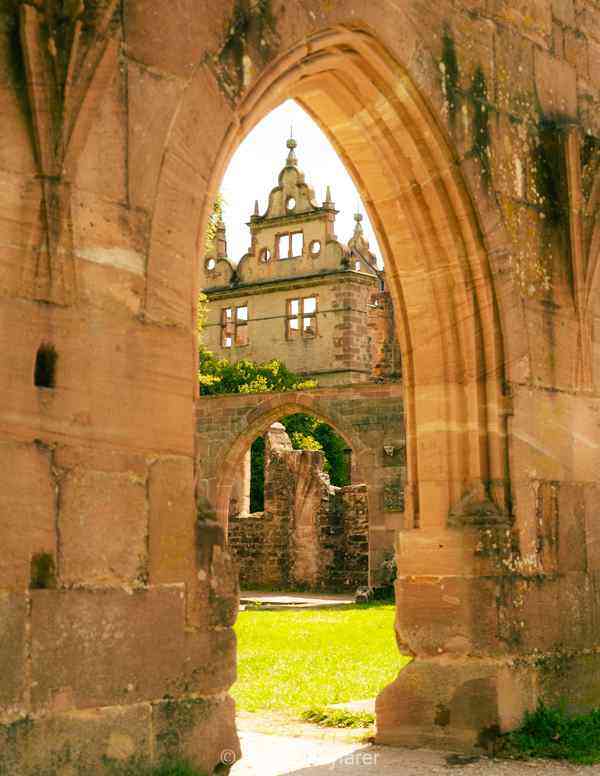
The west towers, choir and transept were pulled down in the 16th century by Duke Ludwig of Würrtemberg, who would later go on to build himself a Renaissance pleasure house in the middle of the monastic ruins down the road.
Take a tour of the Klostermuseum
Address: Calwer Straße 6 | Opening hours: 1 Apr to 31 Oct only. Tue to Fri 13:00 to 16:00, Sat, Sun and holidays 12:00 to 17:00. Closed all winter | Ticket price: €2.50, €1.50 reduced
Do this before you go anywhere near the ruins, because it hands you the story of the site and, just as usefully, puts the surviving architectural fragments in front of you at eye level where you can actually see them. The building itself was added onto the north side of the Aureliuskirche back in Romanesque times, which is why the two sit together the way they do.
Take a guide too, if you possibly can. Mine was Brigitte Bernert, an architect by training, which was really nice because I spent the morning learning about architectural details I would absolutely have missed otherwise. She spent a glorious stretch of time on the Hirsauer Nasen, the small nose-shaped ornaments carved into the column capitals, which are the unmistakable signature of the Hirsauer Bauschule (Hirsau building style)
Explore the ruins of the St Peter and Paul Church
Opening hours: freely accessible during daylight hours, all year | Entry: free | Parking: free for 2 hours with a Parkscheibe
Marienkapelle: 1 Apr to 31 Oct, daily 10:00 to 18:00. Closed all winter | Combined guided tour and museum ticket: €8, or €6 with a guest card
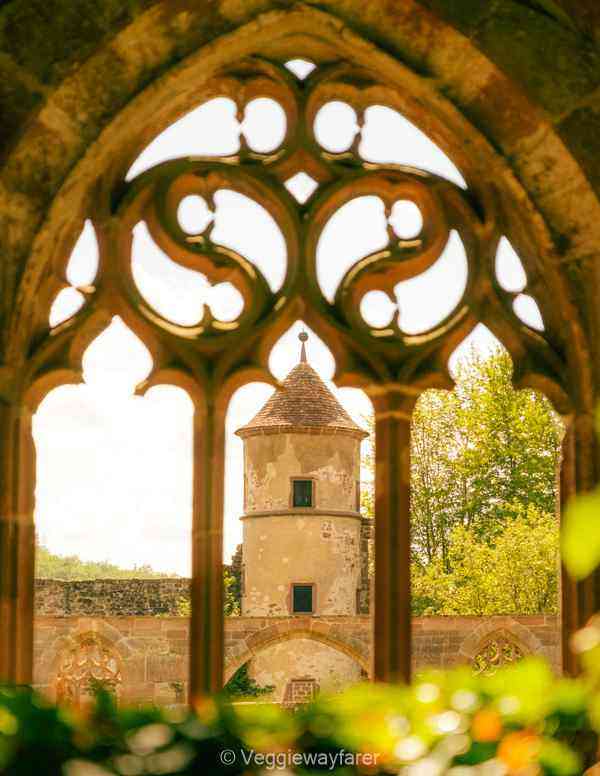
I highly recommend getting a guide, because it brings the place to life. I am not much good at walking around ruins, since I cannot picture the buildings that once stood there, but Brigitte made it far more interactive. We went through the Marienkapelle, built between 1508 and 1516 as a chapel for the sick with the library above it, the hospital at one end and the cemetery at the other, so an elderly monk could get from his sickbed to the church without much of a walk. The cemetery, of course, was the last stop on the route.
It is also the only building on the site that survived. Württemberg turned Protestant in 1534, the Benedictine convent was dissolved in 1536, the monks were sent away, and by 1556 Duke Christoph had turned the buildings into a Protestant school. Duke Ludwig then dropped a Renaissance hunting lodge into the middle of the cloister. On 29 September 1692, French troops under General Mélac burned the monastery, the school and the lodge together, and the last abbot walked out that year.
Hirsau was built on the blueprint of Cluny, and Cluny was destroyed outright and quarried for its stone, while nobody ever built over St Peter and Paul. The layout is still plainly readable under your feet, and that is why the two sites are now going for UNESCO World Heritage status together, because between them they show how Benedictine monks actually lived.
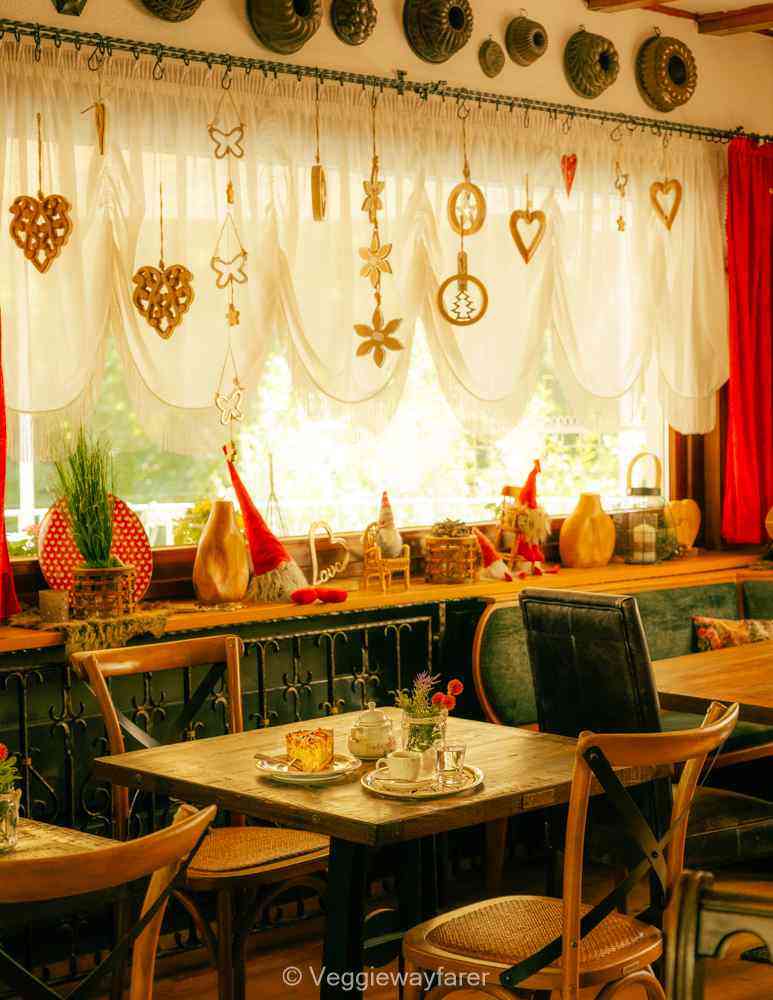
FOODIE TIP | Before heading on to your next destination, grab a slice of cake at the cute Café Gugelhupf. On weekends they serve up a fluffy Black Forest Cake, while during the week they have a selection of different seasonal cakes. I had the apple cake and it was the best I had during this trip. Cash payment only.
4. Donaueschingen (Baar)
Drive from Calw: 1.5 hr | Charging: NaturEnergie at the Donauhallen | Tourist Office: Donaueschingen.de
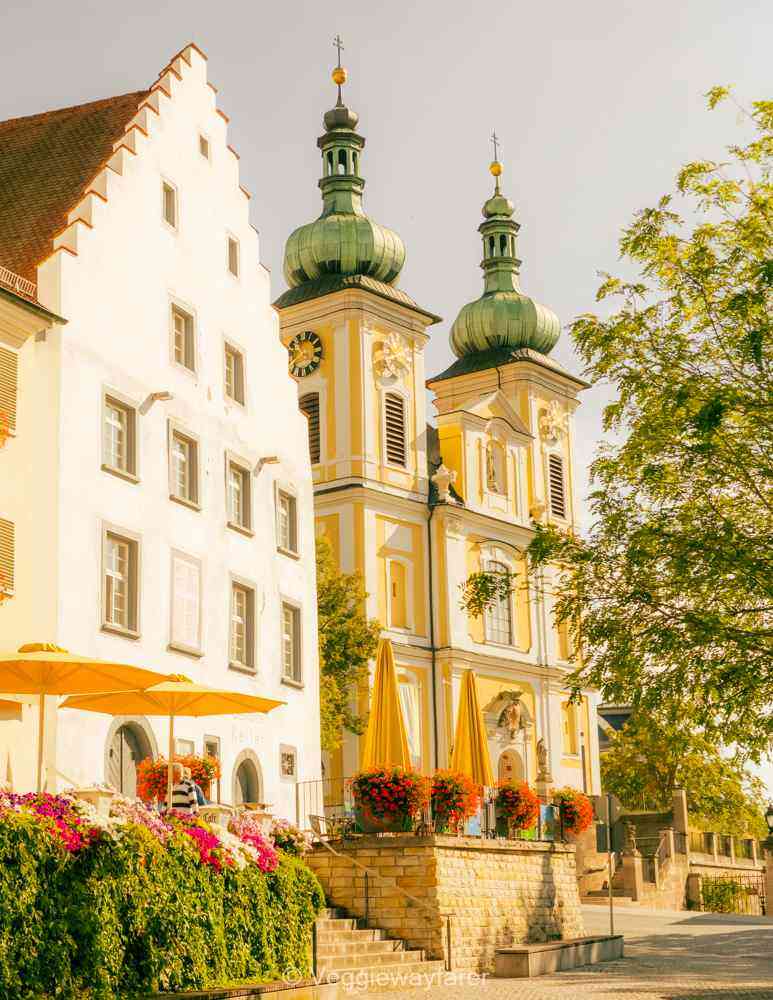
My next stop along this Black Forest road trip was Donaueschingen. If it doesn’t ring a bell, fear not; I had never heard of this cute little town either. That said, it is known as the source of the Danube and was a beloved hangout for none other than Kaiser Wilhelm II. Judging by the cyclists whizzing past at every hour of the day, I had a sneaking suspicion that within Germany this bolthole might be rather famous. Turns out I was right: the Danube Cycle Path begins here, and runs 588 kilometres to Passau and 2,859 all the way to the Black Sea.
For those not in the know, myself very much included, the town turns up in the records as far back as the 9th century. By the 13th century the reins had been handed to the Fürstenberg family by the reigning Habsburgs, and so began a long and symbiotic relationship between family and town. By 1664 the family had been raised to a principality answering directly to the Emperor, only for Napoleon to dissolve the whole thing a century and a half later. Oh dear.
To this day the Fürstenberg influence is everywhere. An eponymous brewery, now in the hands of the Paulaner Brauerei Gruppe and no longer family-owned, a music festival dating back to 1921, and a plethora of beautiful buildings lining Karlstraße, the main shopping street. You could confidently say this town was shaped by one family.
GOOD TO KNOW | A word of warning before you set off, learned the hard way: charge the car somewhere between Hirsau and Donaueschingen rather than waiting until you arrive, because this is one of the longer legs of the trip.
THINGS TO DO IN DONAUESCHINGEN
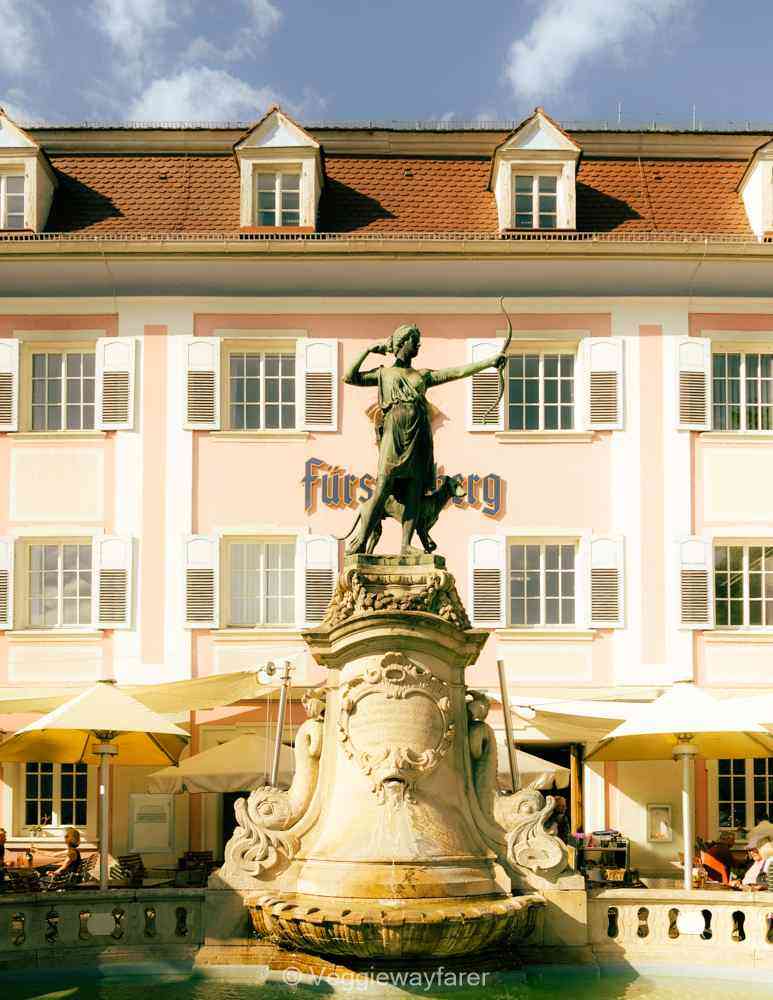
Drink a beer under the watchful eye of the Goddess Diana
Fürstenberg Bräustüble | Postplatz 1-4, 78166 Donaueschingen | Open: daily from 11:00 | Kitchen: 11:30 to 14:00 and 17:30 to 20:45, Sundays and holidays until 19:45 | Phone: +49 771 3669
Kaiser Wilhelm II was a close friend of the Fürstenberg family. It is well documented that he came to Donaueschingen often for a bit of hunting. It was upon the suggestion of the Emperor himself that a statue of Diana, goddess of the hunt, was erected right here in front of the Fürstenberg Bräustüble. If you are going to try the Fürstenberg beer, this would be the perfect spot to do so.
The brewery’s flagship brew is the Fürstenberg Premium Pilsener. Kaiser Wilhelm II was a big fan and even elevated it to the Tafelgetränk Seiner Majestät, the table beverage of His Majesty. The brewing rights here go all the way back to 1283!
Explore the eclectic architecture
On the fifth of August 1908, a fire caught in fresh hay in a farm outbuilding. Within five hours it had taken a hundred and twenty-five houses and a hundred and sixty-eight farm buildings, which was roughly a third of the town.
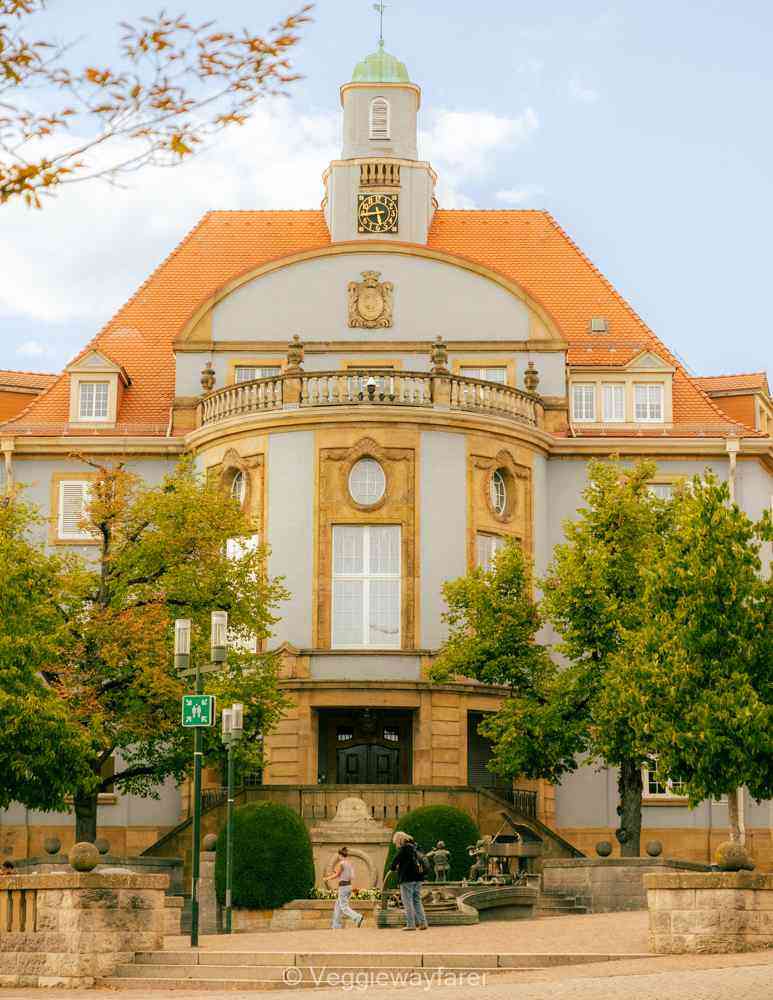
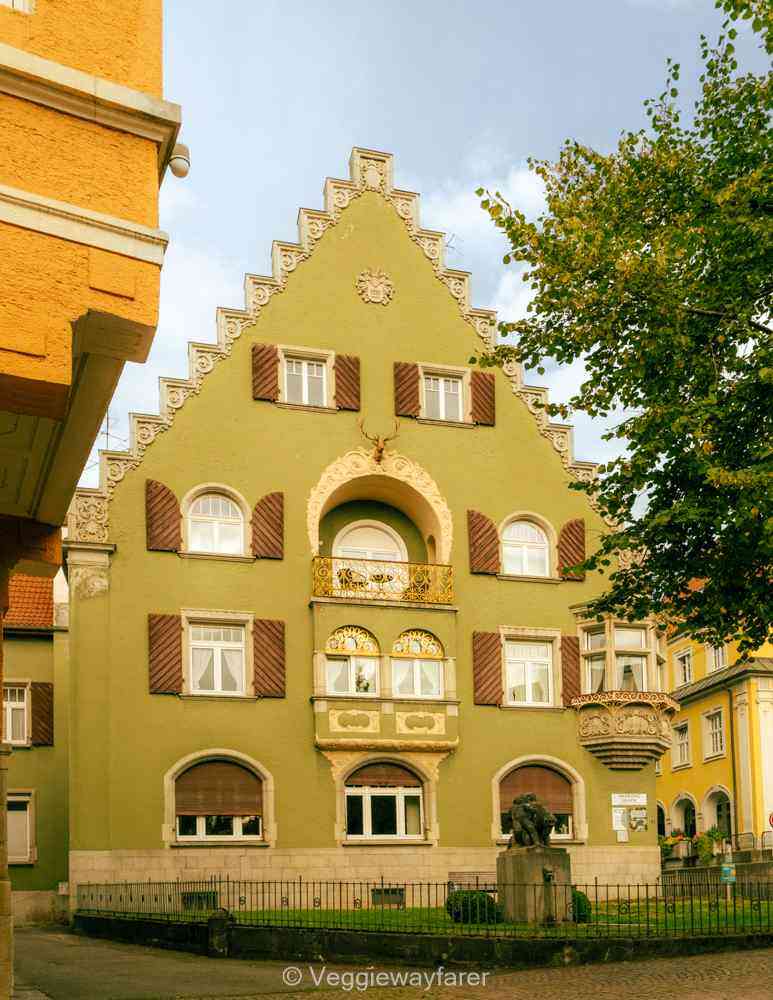
Kaiser Wilhelm II ran an appeal for donations in the Berlin papers and had a relief committee set up to help out the town. With these funds, the town rebuilt, and some of the Donaueschingen Jugendstil buildings can still be admired today as you walk along the Karlstraße.
- HAUS RASINA (Zeppelinstraße)
- HAUS MIT HIRSCHKOPF (Corner of Karlstraße and Zeppelinstraße)
- HAUS RIEPLE (Max-Egon-Straße)
- TOWN HALL (Rathausstraße)
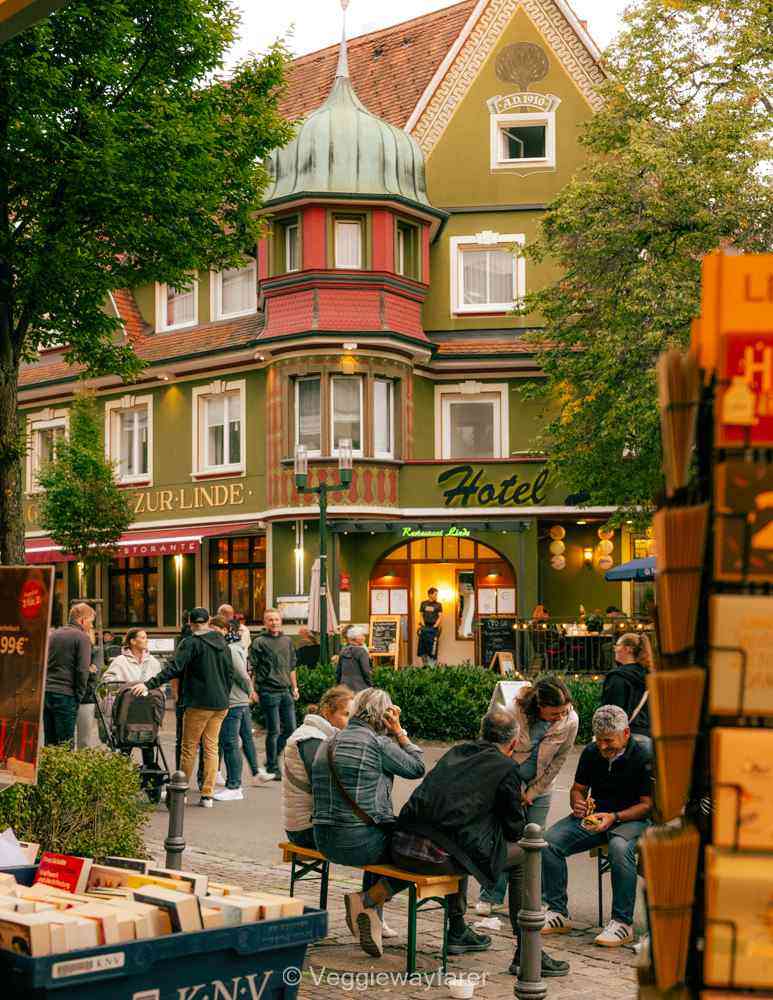
- HOTEL ZUR LINDE (Karlstraße)
GOOD TO KNOW | Outside the Blue Town Hall stands the Musikantenbrunnen, made by Bonifatius Stirnberg in 1989. The musicians’ arms actually move, entirely on purpose, because he builds fountains that are meant to be touched. My guide told me it is her children’s favourite thing in the whole town, and having watched a small boy work one of the arms for a solid five minutes, I believe her.
Find the (real) source of the Danube
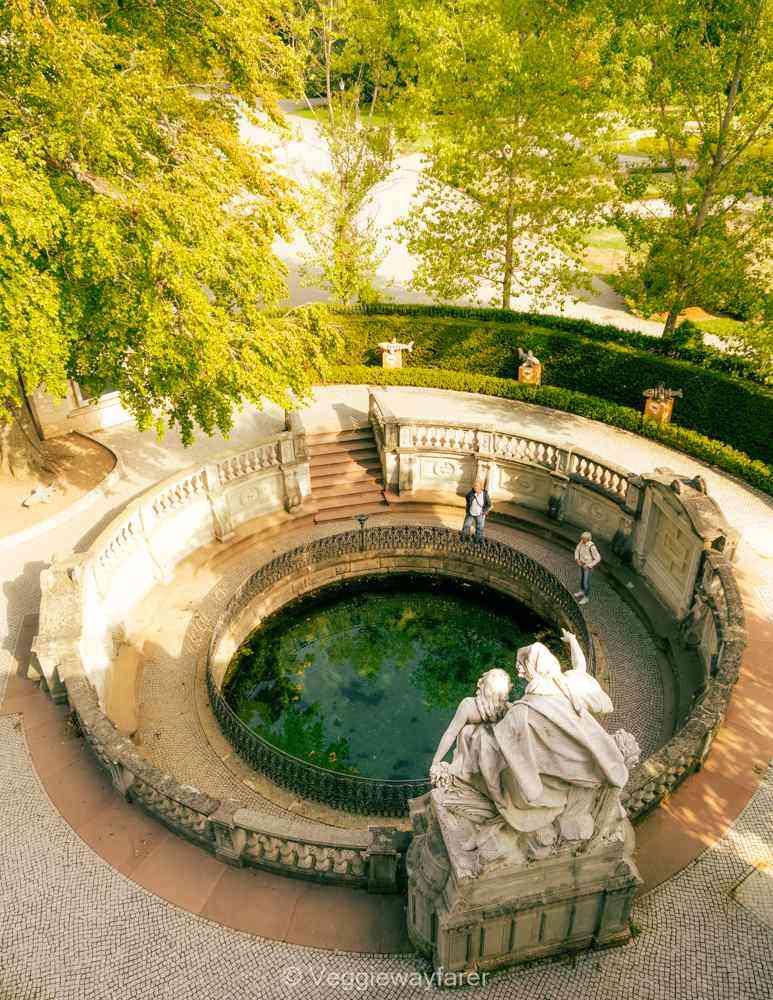
Chances are that if you have done a little research on Donaueschingen, you will have stumbled across the image of the Donauquelle or the ceremonial source of the Danube (picture above right). The walled karst spring is absolutely beautiful and well worth taking a look. However, this is not the actual source of the river Danube.
If you want to make it to the real start of the river, you will have to walk through the Schlosspark towards the edge of town. The spot you want to reach is Donauursprung (where the rivers Brigach and Breg merg). A marble statue marks the spot. This part of town is currently in the process of being renaturalised so there are plenty of viewing platforms, hiking and cycling paths all around. On a sunny day it’s well worth the little walk.
5. Endingen, Kaiserstuhl
Region: Kaiserstuhl, not the Black Forest | Charging: EnBW at Freiburgerstraße 2, inside the old town walls | Tourist office: endingen.de
I arrived late and flustered, having sat in a great deal of traffic around Freiburg, and I rang ahead fully braced for the sigh down the phone that I felt I deserved. There was no sigh. Instead, Sonia from the tourism board came out to meet me at the hotel on what was comfortably the busiest evening of her entire year.
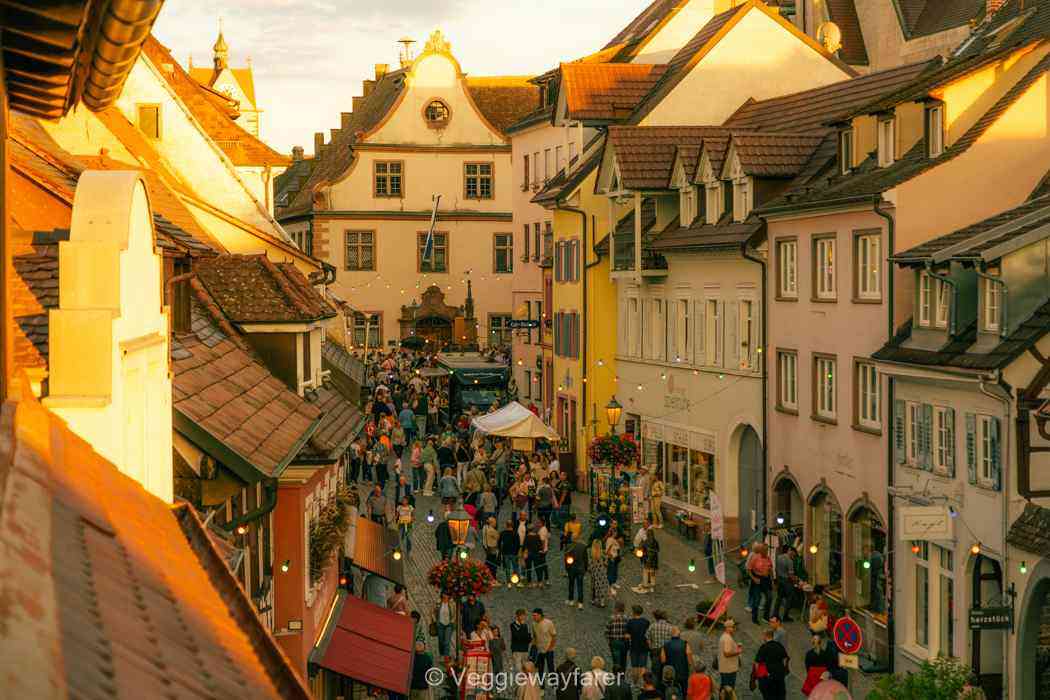
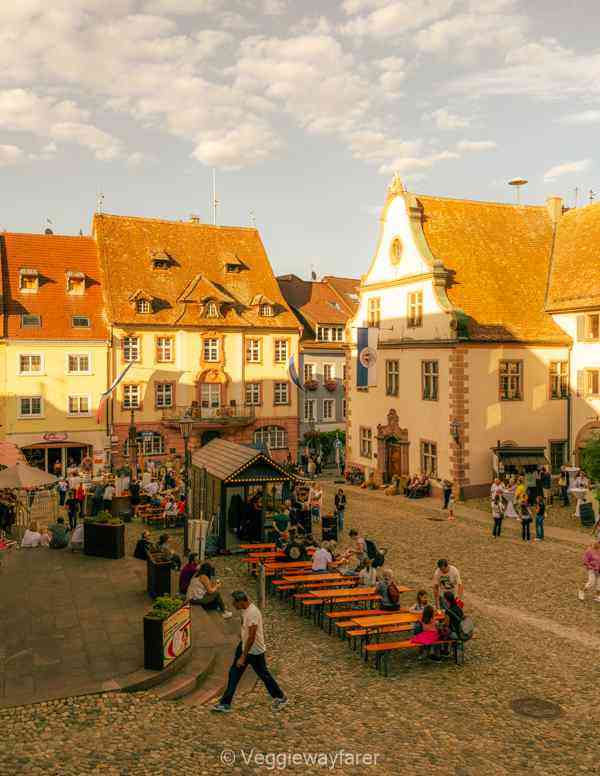
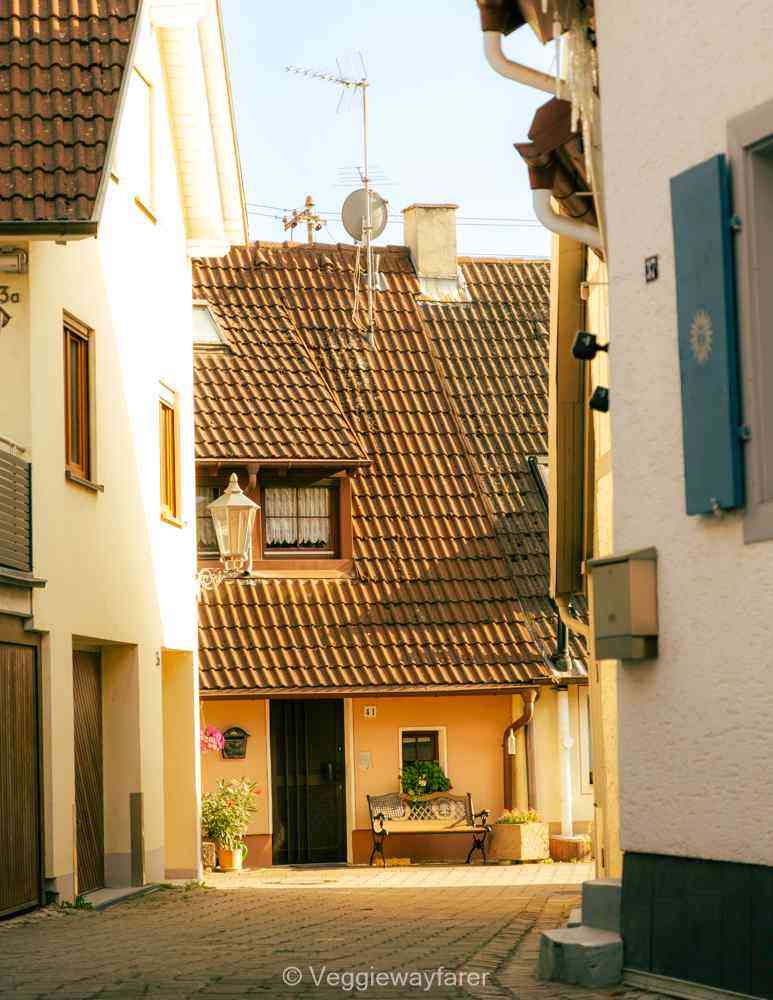
Because for one night every year Endingen fills its alleyways with candles for the Lichternacht. Long communal tables go up beneath buildings several hundred years old, and everybody simply sits down at them with a glass of wine, listening to live music being crooned out by rockers with graying temples and expanding waistbands. It is nothing short of wholesome.
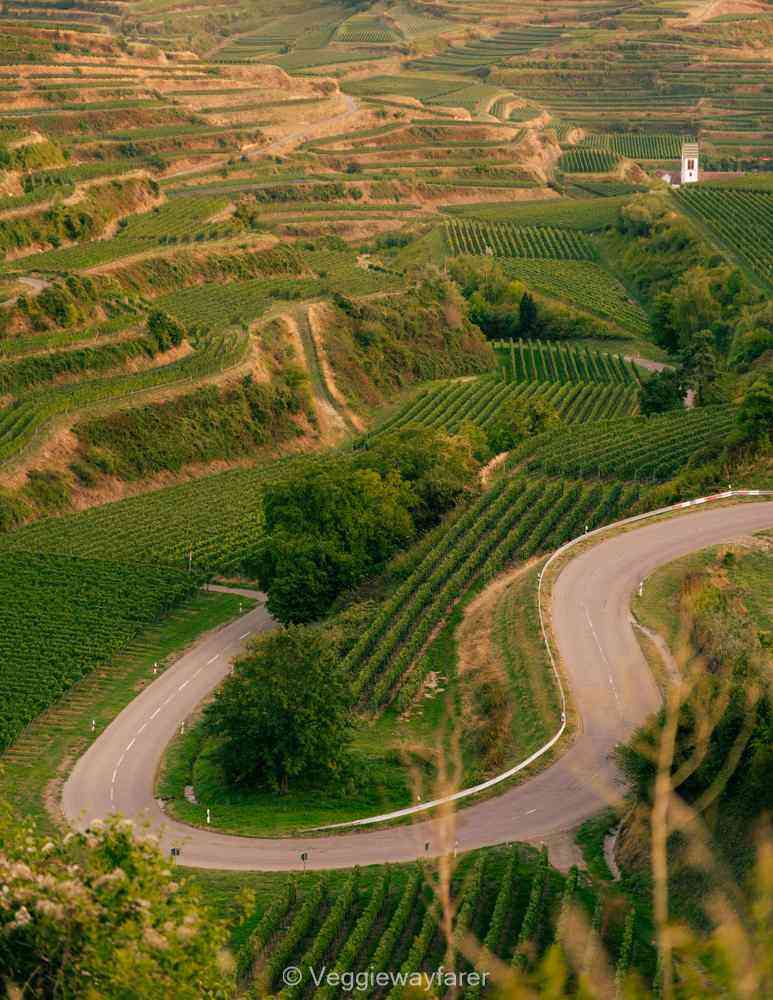
Said wine is proudly local. As one of the largest wine-growing communities in the whole of Baden, they have enough to fill your glass several times over. Seven hundred hectares of vineyard across the town and its three villages, planted on the slopes of a volcano that stopped erupting some fifteen million years ago, in the sunniest corner of the country.
FUN FACT | The figure in the market square fountain is the Jokili, the main character of the Endingen carnival, first recorded in 1782 and named from the Latin for jester. He lives in that fountain. Every Fat Thursday the town gathers round it in nightshirts shouting “Jokili kumm” to wake him. For the Lichternacht they had drained it, boarded him over, and built a wine bar on top of him.
THINGS TO DO IN ENDINGEN
Visit the cheese museum
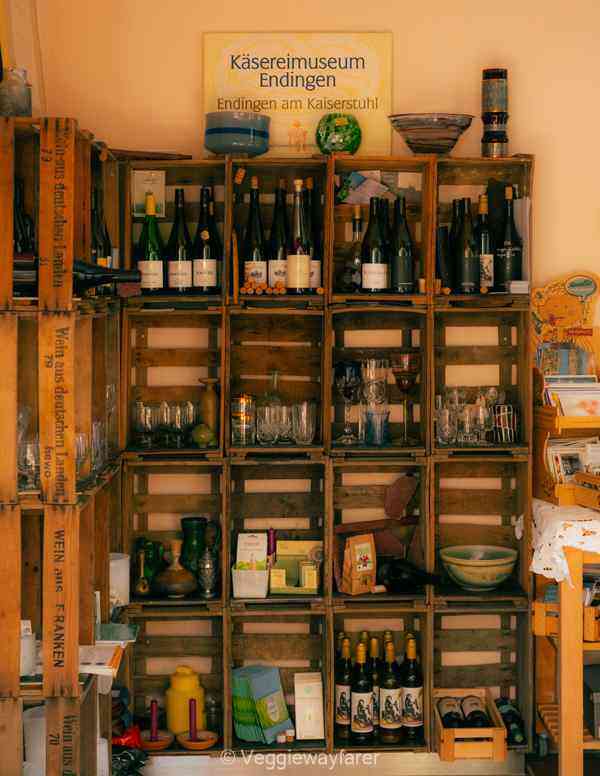
Address: Rempartstraße 7 | Duration: about an hour | Price: from €20 | Language: German, English on request
The Käserei Museum sits in a dairy where a man called Seraphin Risch made cheese from 1901 onwards, using milk brought in from the villages all around. The museum is a cute little place to visit if you have some additional time in Endingen. You learn about the production process of cheese, back in the day and today; get to try local cheeses (delish) and even learn how to read the packaging of your favorite cheese products (where it was produced, when, where the milk comes from).
Book a wine tasting at Weingut Knab
Address: Hennengärtle 1a | Opening hours: Mon to Fri 17:00 to 18:30, Sat 10:00 to 14:00, or by appointment | Phone: +49 7642 6155 | Website: knabweingut.de
The estate dates back to 1894; the family Rinkers bought it in 1994, and today Thomas and Regina Rinker own it while their son Johannes makes the wine. They work twenty-three hectares, the overwhelming majority of it Burgundy varieties. Weißburgunder is the flagship, with some vines now over forty years old, alongside Grauburgunder and Spätburgunder, and then Auxerrois and Chardonnay for good measure.
The farming is done close to nature, with reduced yields and a selective hand harvest rather than a machine going through the rows. If you are here, make sure to book yourself into a Wine and Terroir Experience, which takes you up into the vines in a vintage Unimog. I ran out of time and did not get to do this, so I settled for a lovely glass of wine in the garden of the estate.
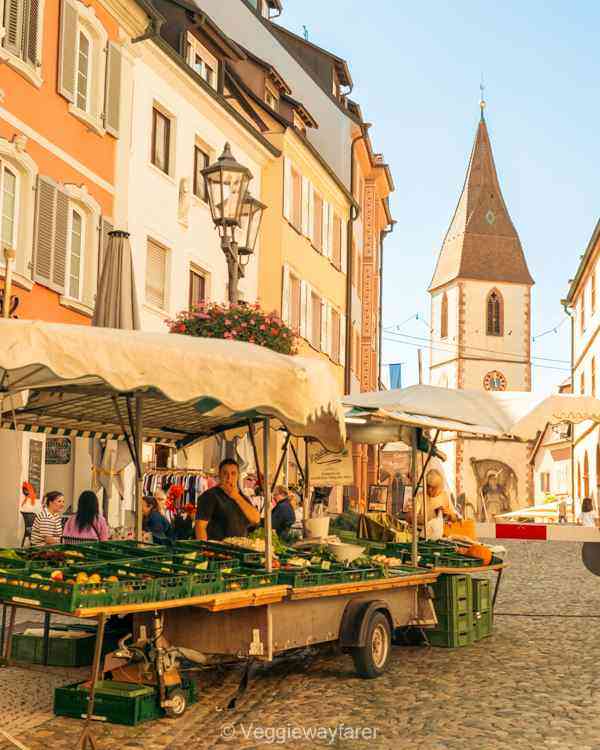
Explore the little town with the ZEIGMAL app
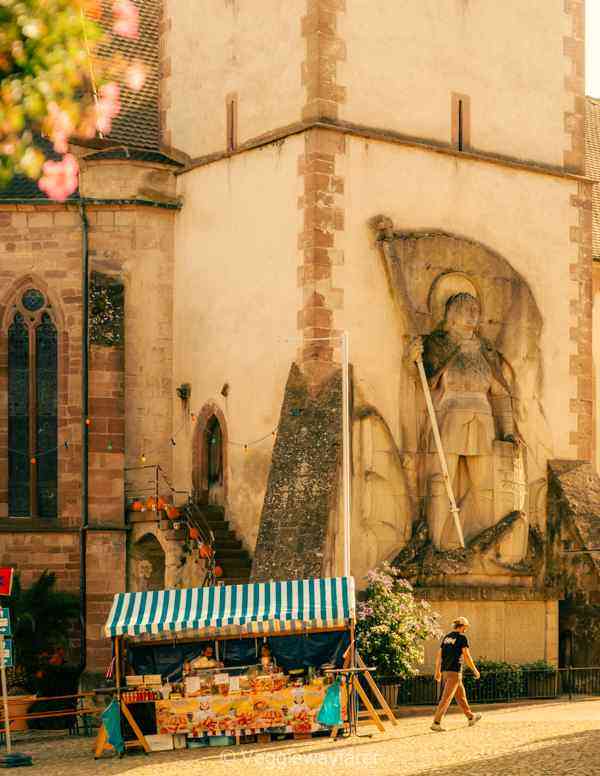
I had a guided tour of Endingen, and the town holds more than a few hidden nooks and crannies well worth seeing. If you are short on time (and budget), you can always refer to the ZEIGMAL app as your trusted guide. If not, your best bet is to head to the tourism office and ask what their options are for a guided tour.
Catch sunset over the vineyards
As a photographer, I am always on the hunt for a nice place to catch sunset. Around the Kaiserstuhl area there are a few spots well worth adding to your list of places to go:
- Texaspass: Beautiful view over winding roads leading to the Totenkopf. Requires no hiking; the viewpoint is directly from the parking lot.
- Amoltern: There is a signed walk from Amoltern over the Galgenberg to a viewpoint literally called Vogesenblick, the Vosges view. There is also the Amolterer Heide nature reserve and a herb trail.
- Mondhalde: A 360-degree panorama at 354 metres. This is a roadside viewpoint; it does not require any hiking.
Where to Stay in the Black Forest, Germany
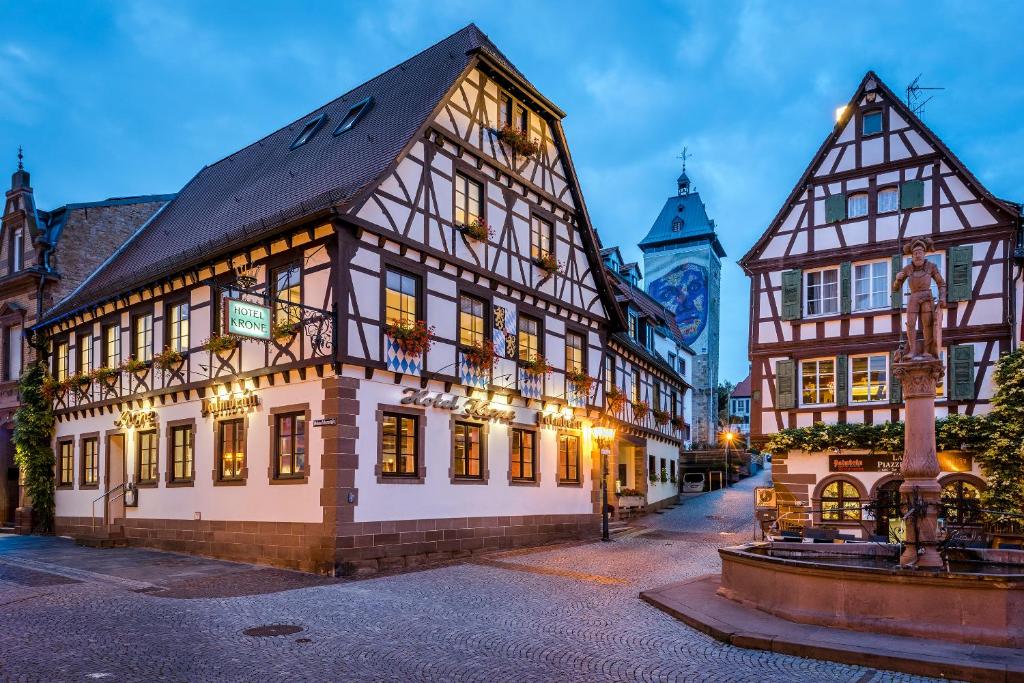
BRETTEN: HOTEL KRONE
The hotel where Emperor Charles V slept in 1550 sits right on the corner of the central market in a beautiful half-timbered house. I did not stay here, but the reviews speak for themselves on this cozy little hotel.
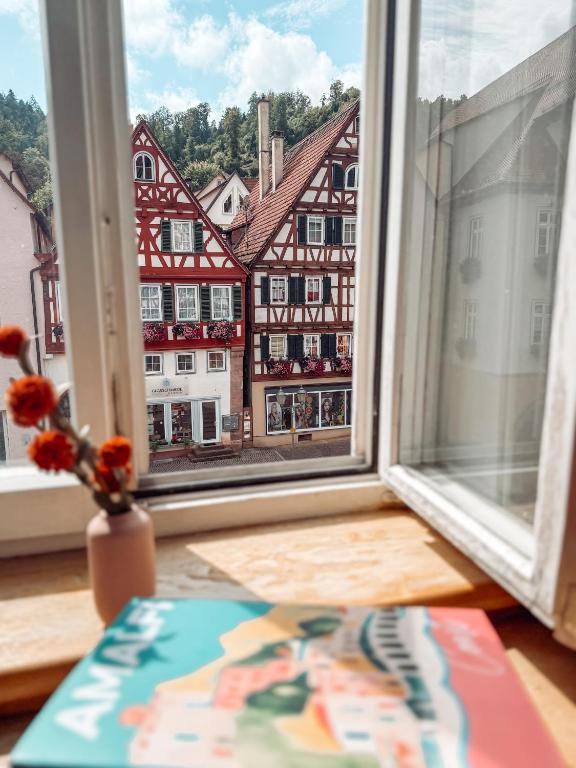
CALW: HOTEL RESTAURANT RATSSTUBE
I walked into this room and was immediately drawn to the view. No other hotel in Calw offers these views over the main square. Rooms are spacious, the bed was nice and comfortable, and the staff was extremely friendly. Parking is available 150 meters from the property.
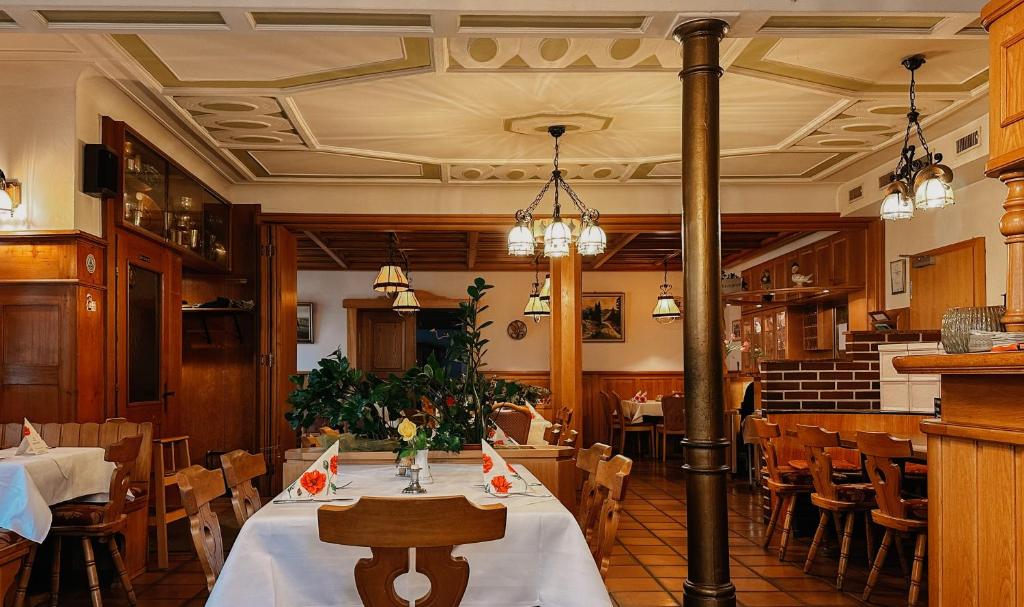
DONAUESCHINGEN: HOTEL ZUM HIRSCHEN
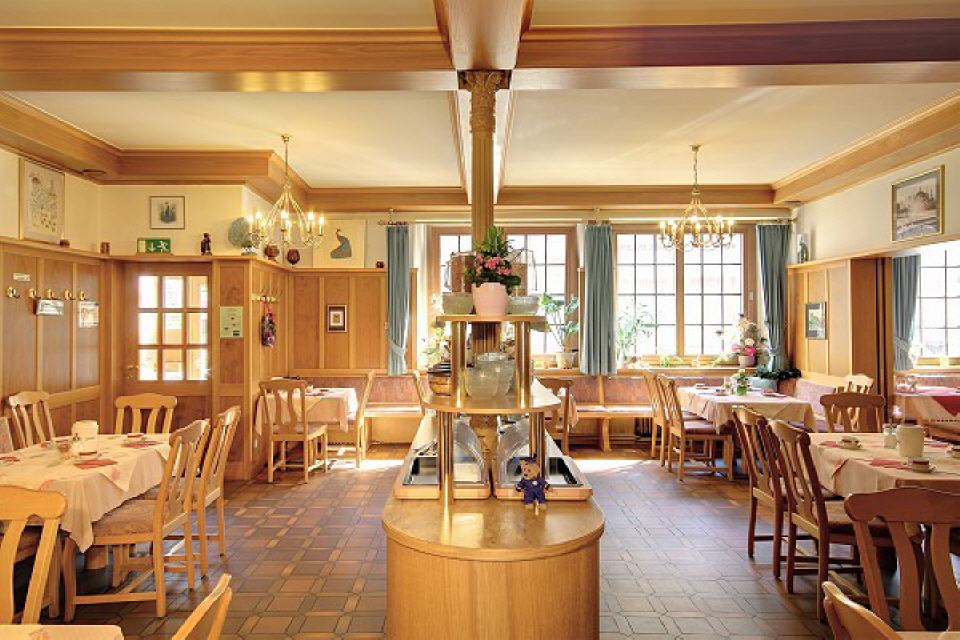
The Höfler-Früh family have been running the Hirschen for three generations now. Wonderfully located, 5 minutes’ walk from the Art Nouveau city hall. The beds are comfortable, the breakfast served in the prettiest room (think wooden chairs, warm orange lamplight and cozy vibes). There is also parking directly behind the building!
ENDINGEN AM KAISERSTUHL: HOTEL GARNI PFAUEN
Slap in the middle of Endingen, in a cozy locally run hotel. I was met with a very warm welcome by the owner, slept in a super comfortable bed and had a beautiful view over the main landmarks over Endingen from my room. This hotel had the best breakfast of the entire trip, made with products from local suppliers. On-site parking is also available.
Getting There and Getting Around
I did the entire thing in an electric car, and it worked beautifully. Most of the legs are short, with the exceptions of Calw to Donaueschingen and Donaueschingen to Endingen, which run to about ninety minutes each, so do charge somewhere between Hirsau and Donaueschingen rather than leaving it until you have arrived.
Calw is a designated charging model town with twenty points inside the town itself and over forty across the district, including one at the monastery in Hirsau. Donaueschingen has NaturEnergie at the Donauhallen, easily walkable from the hotel, and Endingen has an EnBW charger at Freiburgerstraße 2, inside the old town walls.
The one thing I would not do again is drive down from Cologne, which made for an extremely long first day. Take the train to Karlsruhe and pick the car up there instead, and you turn that into a short one. That is the version of this black forest road trip I would happily repeat.
If you are weighing up whether an electric car is really workable in Germany, this was not my first attempt at it. I did a seven-day road trip through northern Germany entirely in an EV before this one, and between the two I have yet to be stranded.
Can you explore the Black Forest without a car?
Not easily, and I would far rather tell you that than pretend otherwise. The towns themselves are perfectly walkable and every one of them has a station, but the connections between them are slow, and the timetable will end up shaping your day far more than you shape it.
A Black Forest day trip by train from Stuttgart, Karlsruhe or Freiburg to any one of these towns works perfectly well. Stringing all five of them together is where it falls apart.
Germany does reward train travel elsewhere, mind you. My round-up of day trips from Berlin by train, all of them under two hours, is the version of this idea that genuinely works without a car.
Best Time to Visit Black Forest
September, and I will happily defend it to anyone. In a single week I managed to catch the grape harvest at Endingen, the Lichternacht and Donaueschingen’s Culinary Shopping Night, which is three town-wide events inside four days and none of them planned.
Late October has an argument of its own. The Donaueschinger Musiktage, founded in 1921 and the oldest festival for new music anywhere in the world, runs on the third weekend of the month, and Richard Strauss sat on the original honorary committee.
I would avoid deep winter unless you are specifically coming for the Christmas markets. The Gerbereimuseum only opens April to October, and a great many of the small places simply shut their doors.
Eating Vegetarian in the Black Forest
Is it hard to eat vegetarian in the Black Forest? Absolutely not!
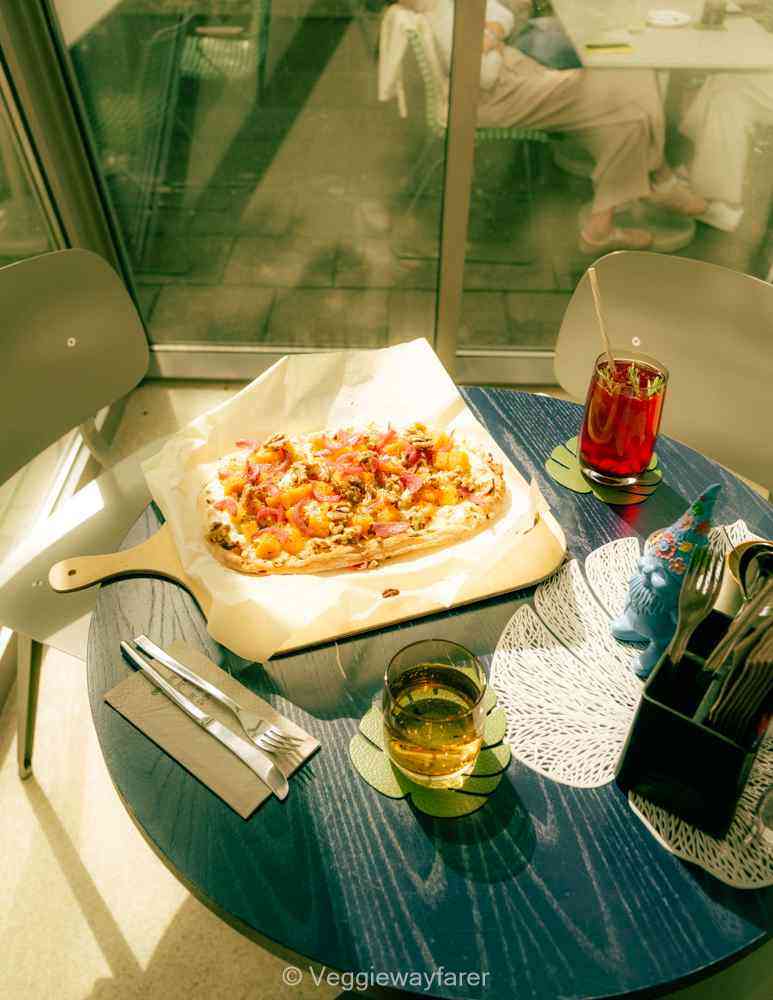
I have been three times now and never once had a problem. There is nearly always something meat-free on the menu, and on the rare occasions when there is not, order a salad, because on a German menu a salad can arrive before the main course or simply be the main course, and either way what turns up is a proper plate of food rather than a garnish.
It gets considerably easier if you know what to ask for by name. Bibiliskäs, a herbed fresh cheese, usually served alongside Brägele, which are fried potatoes done from raw. Schupfnudeln, those lovely thick potato noodles. Kratzete, a pancake torn into pieces. Käsespätzle, obviously.
And then every dessert Baden has ever invented, including a Schwarzwälder Kirschtorte eaten in the very region it was named after.
GOOD TO KNOW | Two things that look vegetarian and often are not. Baden potato salad and Flädlesuppe are both broth-based and the broth is frequently meat. And Speck turns up uninvited in sauerkraut, Flammkuchen and Zwiebelkuchen, so say ohne Speck before anyone brings you anything.
Additional Things to Do in the Black Forest
There are seventeen more Small Town Gems out there, among them Waldkirch, Bad Liebenzell, Mosbach, Freudenstadt and Bad Säckingen, which makes this route roughly one quarter of the trail.
And if you do want the most beautiful places in Black Forest Germany as they are conventionally understood, Baden-Baden, Triberg, Gengenbach and Titisee are all within easy reach, and not one of them is a bad day out. Freiburg and Strasbourg both work rather nicely as bookends.
And if what you actually want is another German region of small towns, forest and walking that nobody has written to death, the Harz mountains are the closest thing I have found to this trip anywhere else in the country.
Pair two or three of the best towns in the Black Forest with two or three of these smaller ones and you will come home with a week that nobody else on your flight will have done.
Trip to Black Forest FAQ
Why is the Black Forest called the Black Forest?
Because of the trees. The fir and spruce canopy grows so dense that it blocks most of the light, and the forest floor underneath genuinely does read as black. The Romans knew it as the Silva Marciana, and the “black” name comes later, from the same impression.
How big is the Black Forest?
Roughly 160 km north to south and up to 50 km across, covering around 6,000 square kilometres in the southwest corner of Germany. The highest point is the Feldberg at 1,493 m.
What are the best things to do in the Black Forest?
The famous answers are Triberg’s waterfalls, Titisee and a cuckoo clock workshop, and they are famous for good reason. The better answer, if you have a car, is a run of small towns like these five, where the museums are run by volunteers and nothing on earth needs booking three weeks in advance.
What to see in the Black Forest if you only have a weekend?
Calw and Hirsau, which are five minutes apart and give you half-timbering, a Nobel laureate’s birthplace and an eleventh-century monastery in two days. Add the Rund um Calw trail if the weather holds.
How many days do you need in the Black Forest?
Four is comfortable for a route like this one. Two or three works if you pick one valley and stay put rather than moving hotel every night.
Where does the Danube actually start?
Officially at the confluence of the Brigach and the Breg just east of Donaueschingen. The walled spring in the castle park is the symbolic source, and Furtwangen makes a rival claim for the Breg’s own spring further up.
Can you visit the Black Forest without a car?
You can visit any single town by train easily. Linking several in one trip is where it becomes difficult, and an EV is the compromise I would make.
Is Calw worth visiting?
For half a day, yes, and for a full day if you walk the Rund um Calw trail or go on to Hirsau, which is five minutes away and better than the town itself.
Map of Black Forest Itinerary
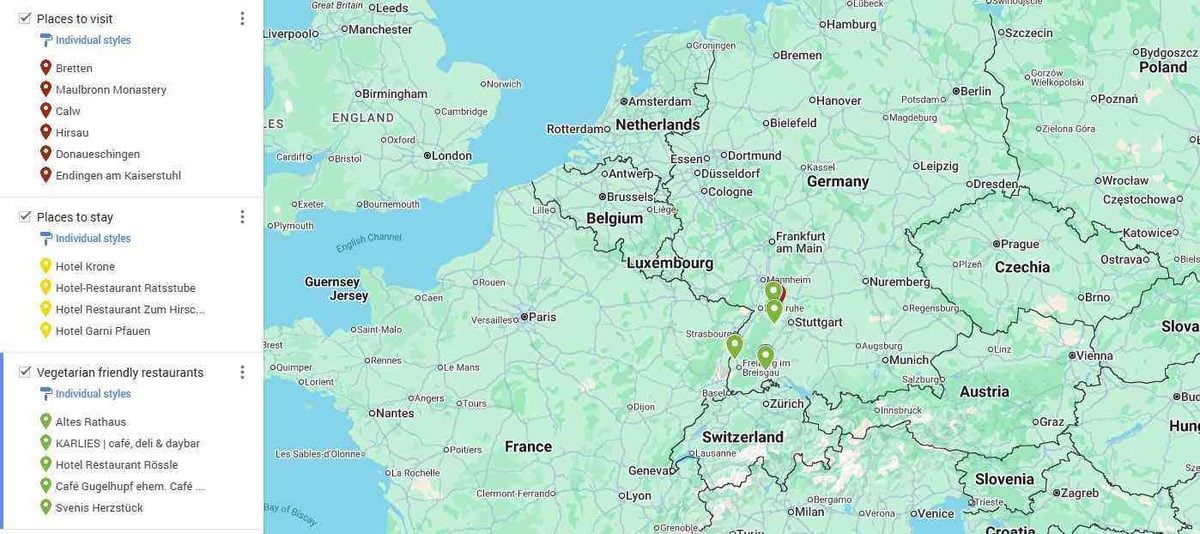
This map contains all the sights covered in this guide to Leuven. Click on this interactive Google map to have a better view. The red pins are the black forest towns, the yellow pins are the hotels and the green pins are vegetarian friendly restaurants.
MORE TRAVEL RESOURCES FOR VISITING GERMANY
KARLSRUHE: Top things to see in and around Karlsruhe
NORTHERN GERMANY: 7-Day Roadtrip in EV through Northern Germany
CENTRAL GERMANY: 15 Things to do in Harz National Park
BERLIN: Day trips from Berlin in under 2 hours by train

Exploring Towns & Villages in Black Forest: Pin it



0 Comments